Clean water isn’t just about taste, it’s about consistency, protection, and long-term exposure reduction. As more households move beyond basic pitcher filters, multi-stage filtration systems have become the gold standard for people who want deeper contaminant removal and more reliable performance.
Rather than relying on a single filter material, a multi-stage filtration system uses sequential layers, each designed to target different categories of contaminants. This layered approach is what separates entry-level filters from truly advanced filtration technology.
What Is a Multi-Stage Filtration System?
A multi-stage filtration system treats water in phases, with each stage performing a specific function. Instead of asking one filter to do everything, contaminants are reduced step-by step, improving efficiency, extending filter life, and delivering more consistent water quality.
This is especially important for modern municipal water, which may meet safety standards but still contains:
- Chlorine and disinfection byproducts
- Heavy metals from aging infrastructure
- Organic compounds and trace chemicals
- Sediment, rust, and particulate matter
A properly designed water filtration system doesn’t just remove what’s visible, it targets what you can’t see or taste.
The P1 Four-Stage Filtration Approach
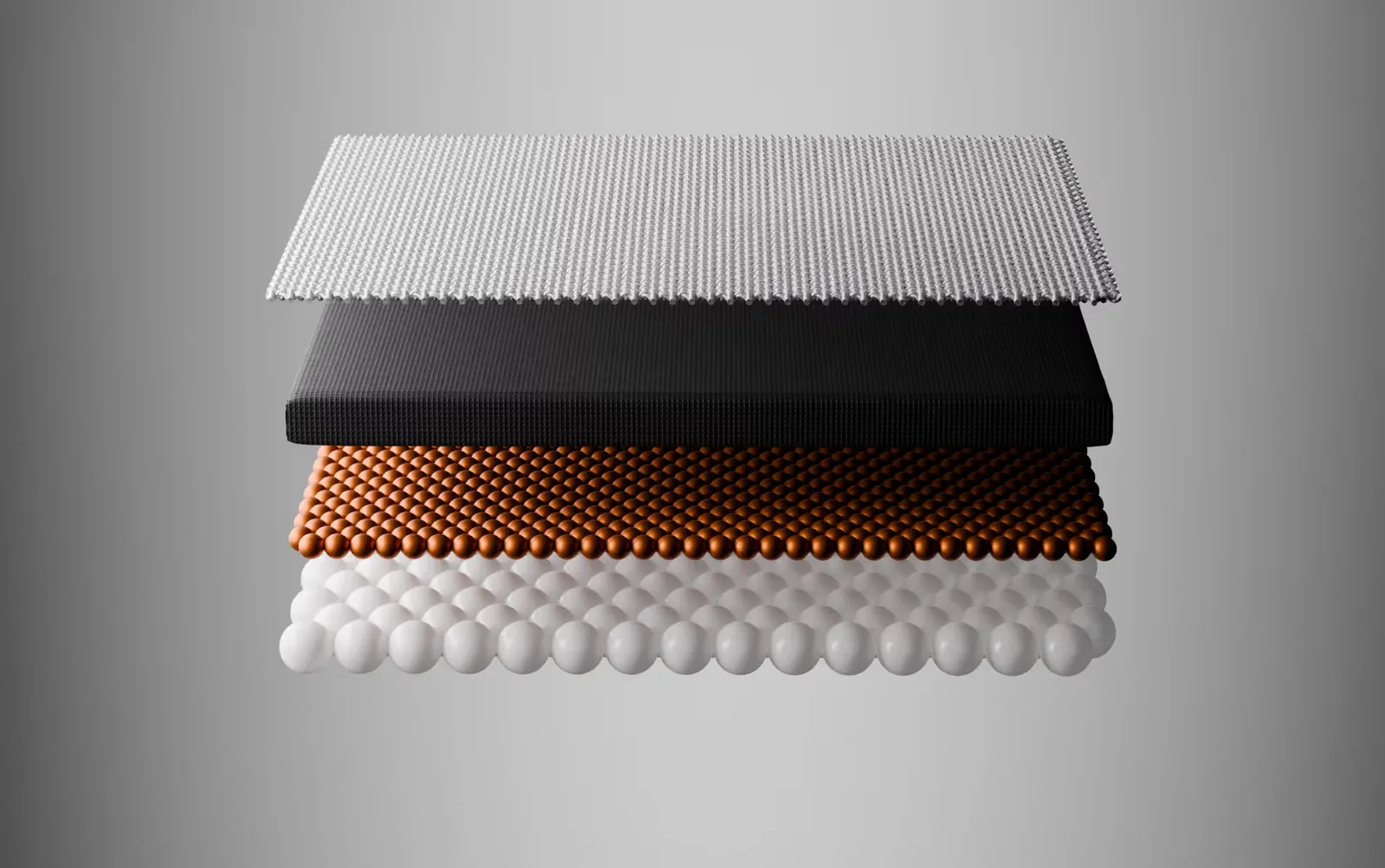
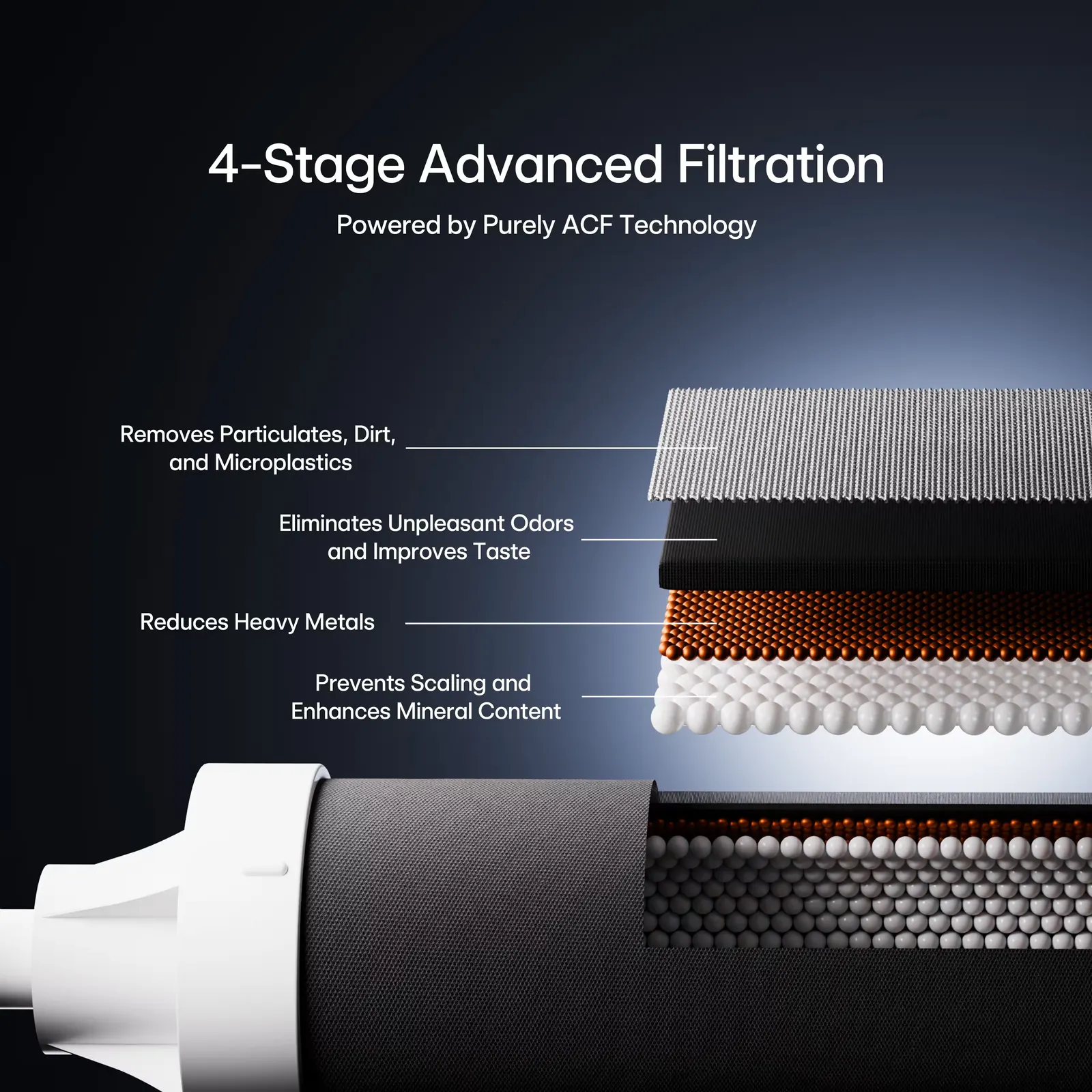
The P1 under-sink system is a clear example of how a premium water filter benefits from a multi-stage design. Each stage builds on the previous one, allowing for broader and more reliable contaminant removal.
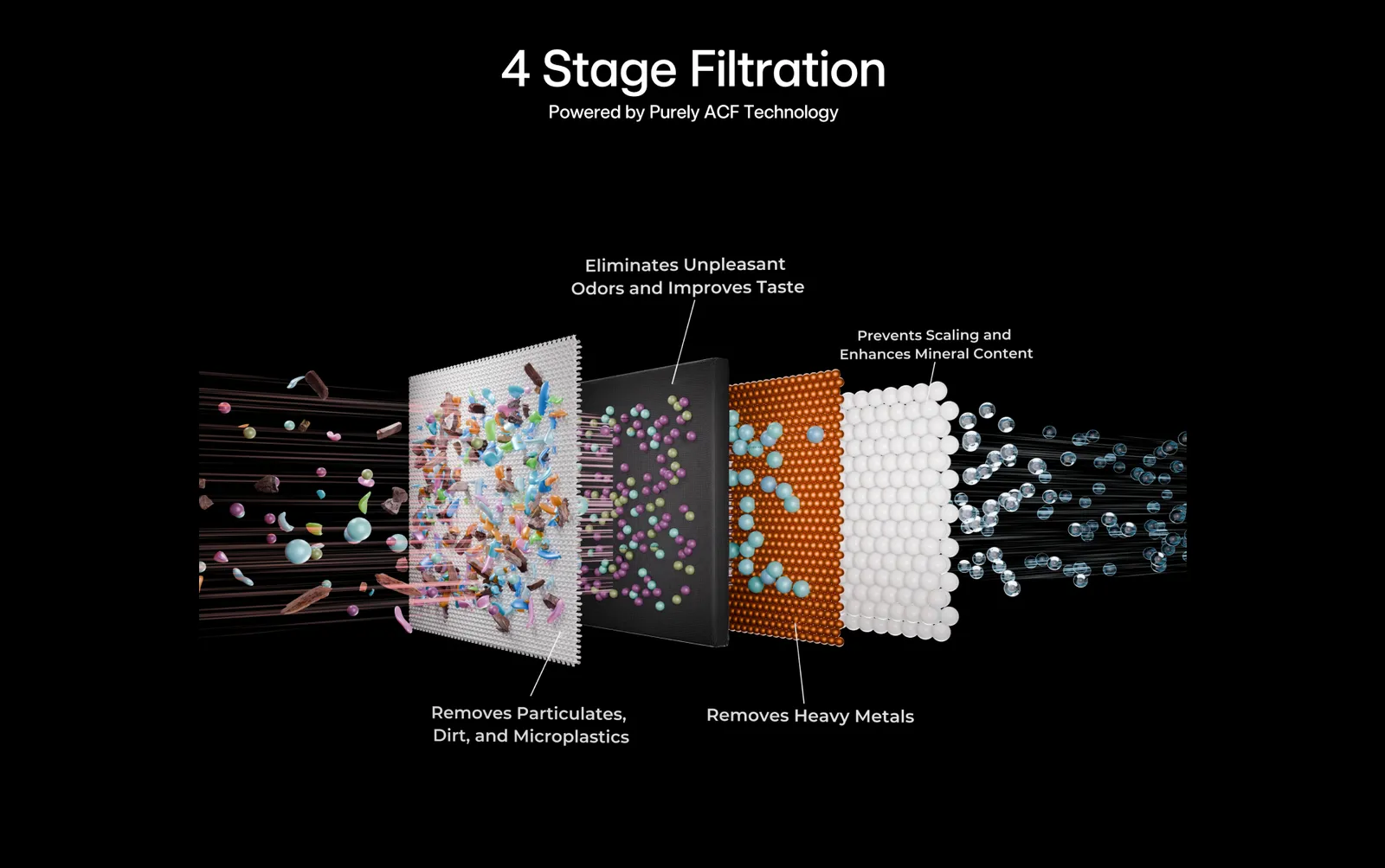
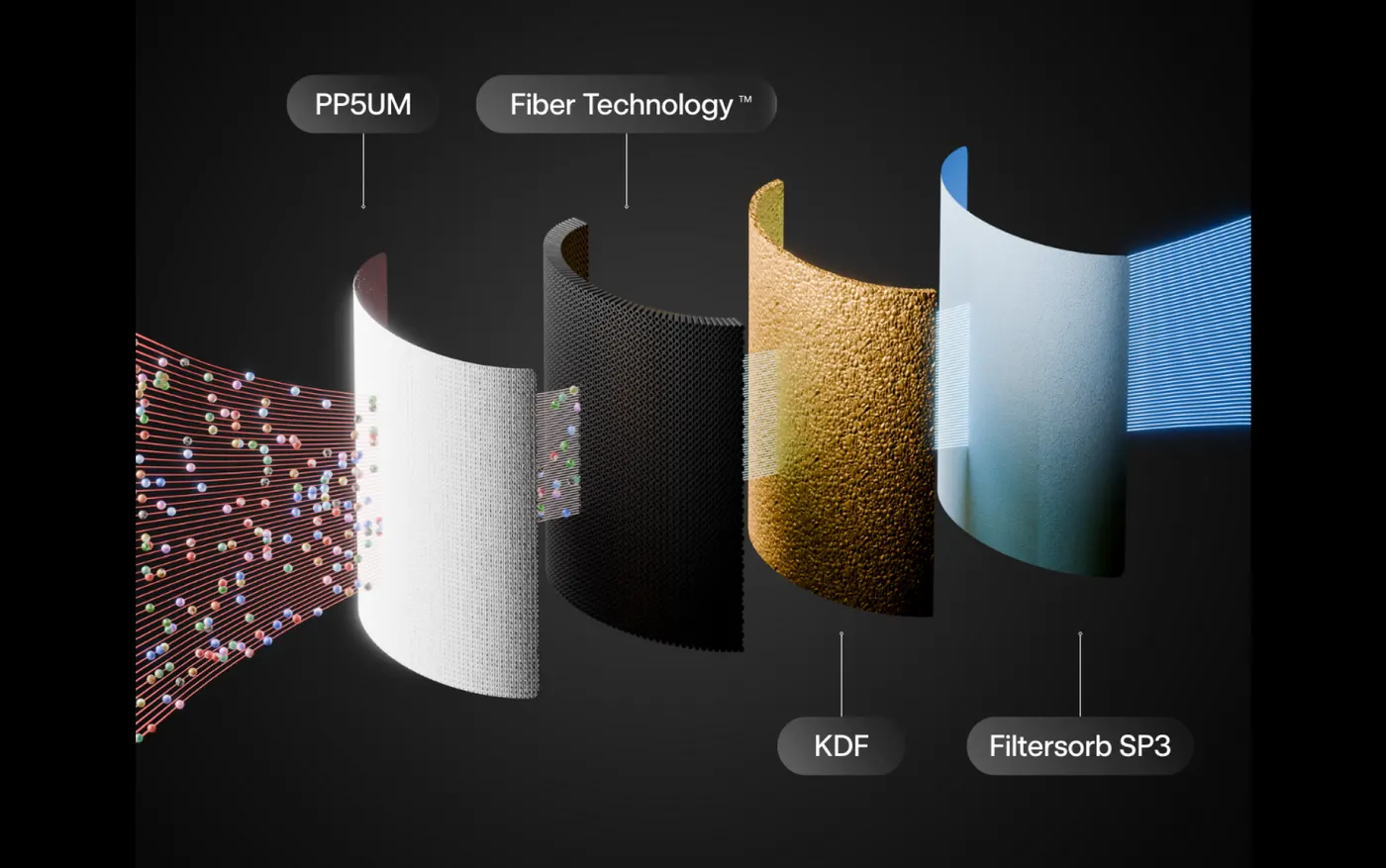
Stage 1: 5-Micron Polypropylene (PP) Sediment Filtration
The first stage uses a 5-micron polypropylene (PP) filter to capture physical debris such as sand, rust, silt, and pipe scale.
By removing particulate matter early, this stage protects downstream filtration media from clogging and premature saturation, an essential step for long-term performance.
Stage 2: Activated Carbon Fiber (ACF)
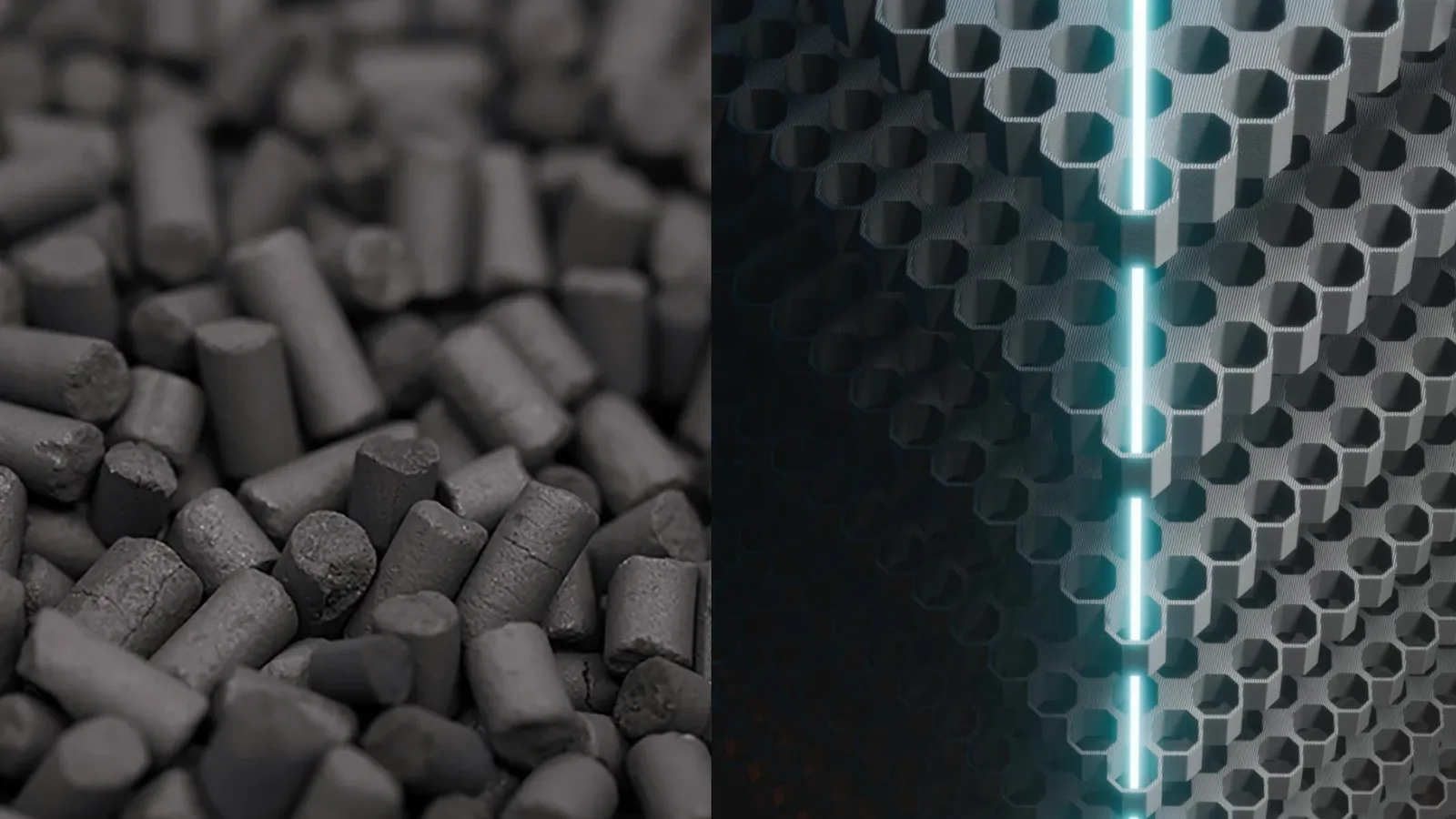
Activated Carbon Fiber (ACF) provides a significantly higher surface area than traditional granular carbon, allowing for faster and more uniform adsorption.
This stage is highly effective at reducing:
- Chlorine and chloramine
- Volatile organic compounds (VOCs)
- Taste- and odor-causing compounds
ACF is a core component of modern advanced filtration technology, especially in drinking water applications where contact efficiency matters.
Stage 3: SP3 FilterSorb® (Nucleation-Assisted Crystallization)
SP3 FilterSorb® is a nucleation-assisted crystallization (NAC) media designed to condition scale-forming minerals in water without removing them.
- Converting dissolved calcium and magnesium into stable, non-adherent micro-crystals
- Reducing limescale buildup on fixtures, plumbing, and internal components
- Maintaining the water’s natural mineral balance (no salt, no chemical softening)
Within a multi-stage filtration system, SP3 functions as a protective conditioning layer that helps preserve system efficiency and extend component lifespan, especially in areas with moderate to high water hardness.
Stage 4: KDF55 Redox Filtration
The final stage uses KDF55, a copper-zinc alloy that works through an oxidation–reduction (redox) process.
KDF55 helps reduce:
- Heavy metals like lead and mercury
- Free chlorine
- Bacterial growth within the filtration system
It also helps control scale buildup, a hallmark of a true premium water filtration system.
Why Multi-Stage Filtration Delivers Better Results
The effectiveness of a multi-stage filtration system comes from specialization. Each stage is designed for a specific role, resulting in:
- More complete contaminant removal
- Longer filter lifespan
- Stable flow rates
- Consistently better taste and odor
Instead of overloading a single filter, filtration is distributed across multiple stages, delivering cleaner water and more predictable performance.
A Smarter Way to Filter Drinking Water
For households focused on everyday drinking and cooking water, an under-sink multi-stage water filtration system offers an ideal balance between performance, convenience, and reliability.
By combining sediment filtration, advanced filtration technology, specialty media, and redox filtration, systems like P1 go beyond basic filtration, delivering water that’s not just filtered,but thoughtfully treated.
Clean water shouldn’t rely on shortcuts. When each stage has a purpose, the result is water you can trust, every day.