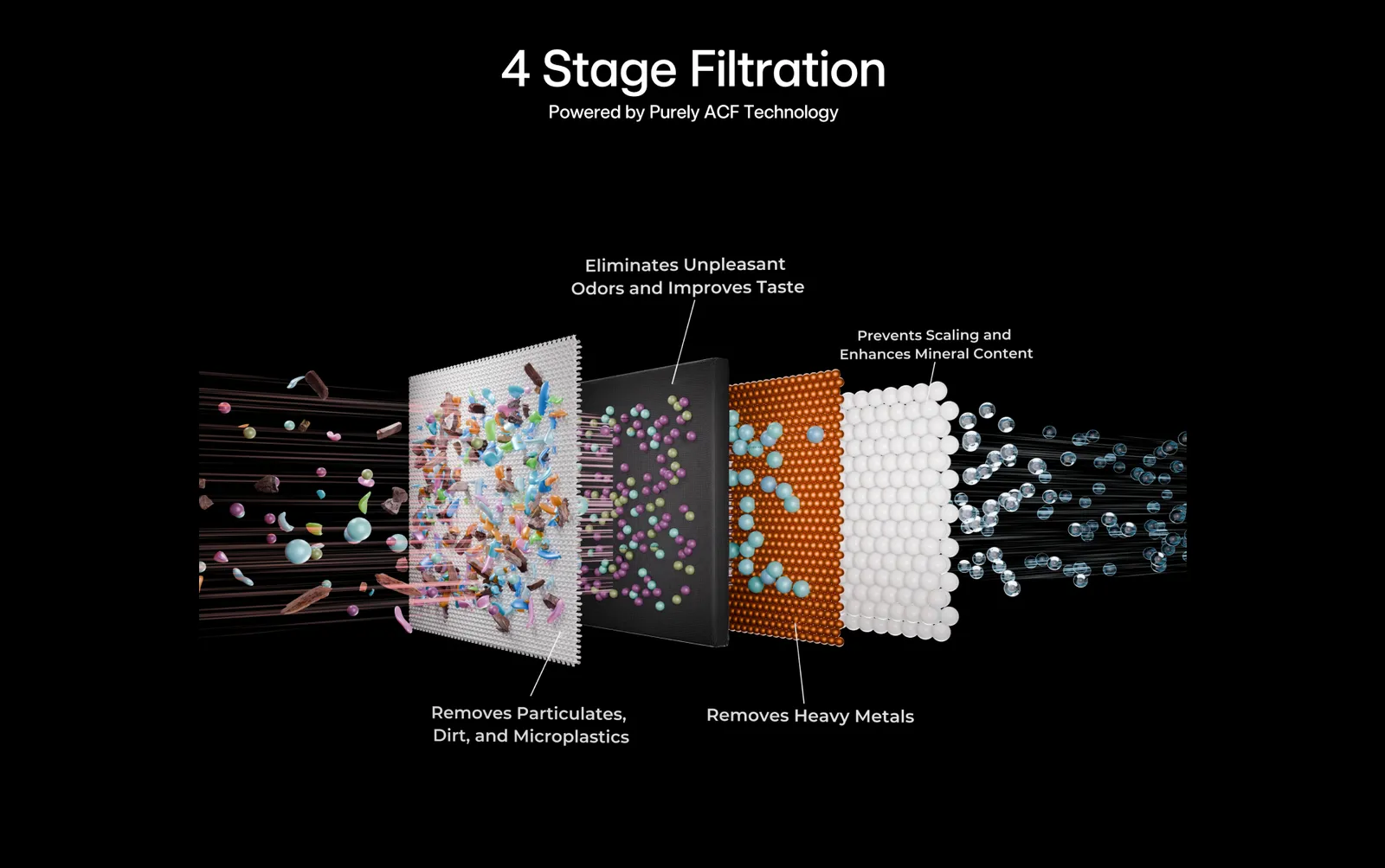
When people shop for a carbon filter, they usually assume “carbon is carbon.” If it’s activated carbon, it should all do roughly the same thing, reduce chlorine taste, improve odor, and help with certain chemicals.
In practice, carbon filtration technology isn’t just about the material. It’s also about the form factor, how that carbon is structured, how water moves through it, and how consistently the water is forced to interact with the carbon over time.
That’s where Activated Carbon Fiber (ACF) enters the conversation. Traditional carbon filters,like granular activated carbon (GAC) and carbon block, have been used for decades and can perform extremely well. ACF filtration is simply a different approach: it focuses on high surface interaction, controlled flow paths, and stable performance in a compact design.
Traditional carbon can be the right choice in certain situations. But if you’re trying to understand what really separates ACF from other activated carbon filter types, there are a few practical factors that matter more than marketing buzzwords.
What carbon filtration is actually doing
Before comparing types, it helps to know what carbon is good at.
Activated carbon is primarily an adsorption media (not absorption). That means contaminants are attracted to and held on the carbon’s surface, especially compounds that affect taste and odor, and many organic chemicals.
In real-world water filtration, carbon is commonly used to reduce:
- Chlorine (taste/odor and “pool water” smell)
- Many VOCs and organic compounds that can impact odor and flavor
- General “water harshness” in taste (often from chlorine-related compounds)
Carbon is not typically the main solution for:
- Hardness / scale (calcium, magnesium)
- TDS/mineral removal (that’s more the job of reverse osmosis)
- Nitrates
- Microbial disinfection (usually UV, membrane filtration, or chemical disinfection)
So if your goal is better-tasting water and reduction of certain chemical contaminants,carbon filtration is often central. The question becomes: which carbon structure delivers those benefits most consistently for your use case?
Traditional activated carbon filter types (GAC and carbon block)
“Traditional carbon” usually refers to one of two formats:
1) Granular Activated Carbon (GAC)
This is loose, granular carbon media. You’ll find it in:
- Pitchers and faucet attachments
- Inline filters (some fridge lines, some under-sink designs)
Strengths:
- Can offer excellent performance with enough bed depth and proper flow control
- Often supports higher flow in larger formats
- Long history of use and well-understood design principles
Tradeoffs:
- Performance depends heavily on water distribution through the media bed
- More susceptible to performance inconsistency if the water finds “easy paths” (more on that below)
2) Carbon Block
Carbon block is activated carbon that’s been compressed into a solid form. You’ll find it in:
- Under-sink drinking water cartridges
- Point-of-use systems that want consistent filtration at a defined flow rate
Strengths:
- More uniform structure than loose granules
- Reduced risk of water “short-cutting” around the media
- Often better at consistent filtration in compact cartridges
Tradeoffs:
- Can create more pressure drop as the block gets finer or loads with particulates
- Flow rate is more constrained than large GAC tanks in some designs
Both formats work. The “best” result usually comes down to design details like flow rate,contact time, and water distribution.
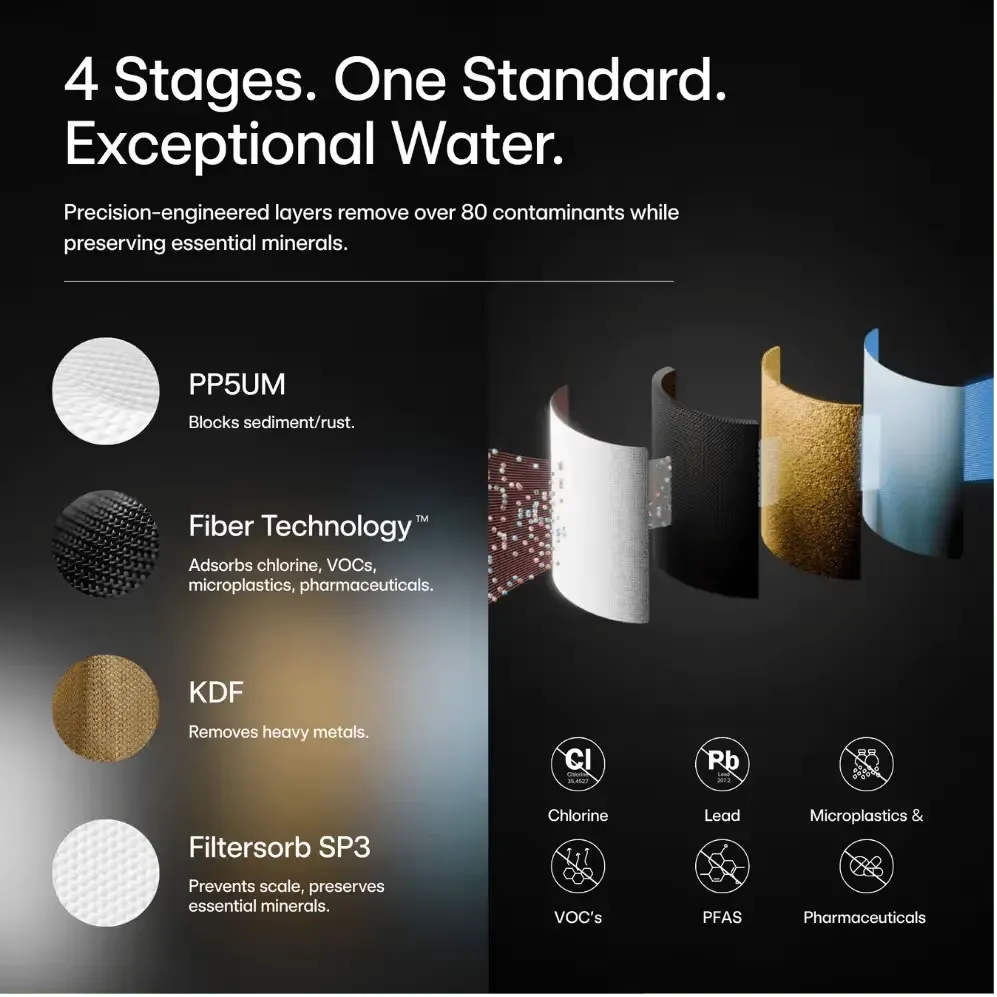
What is Activated Carbon Fiber (ACF)?
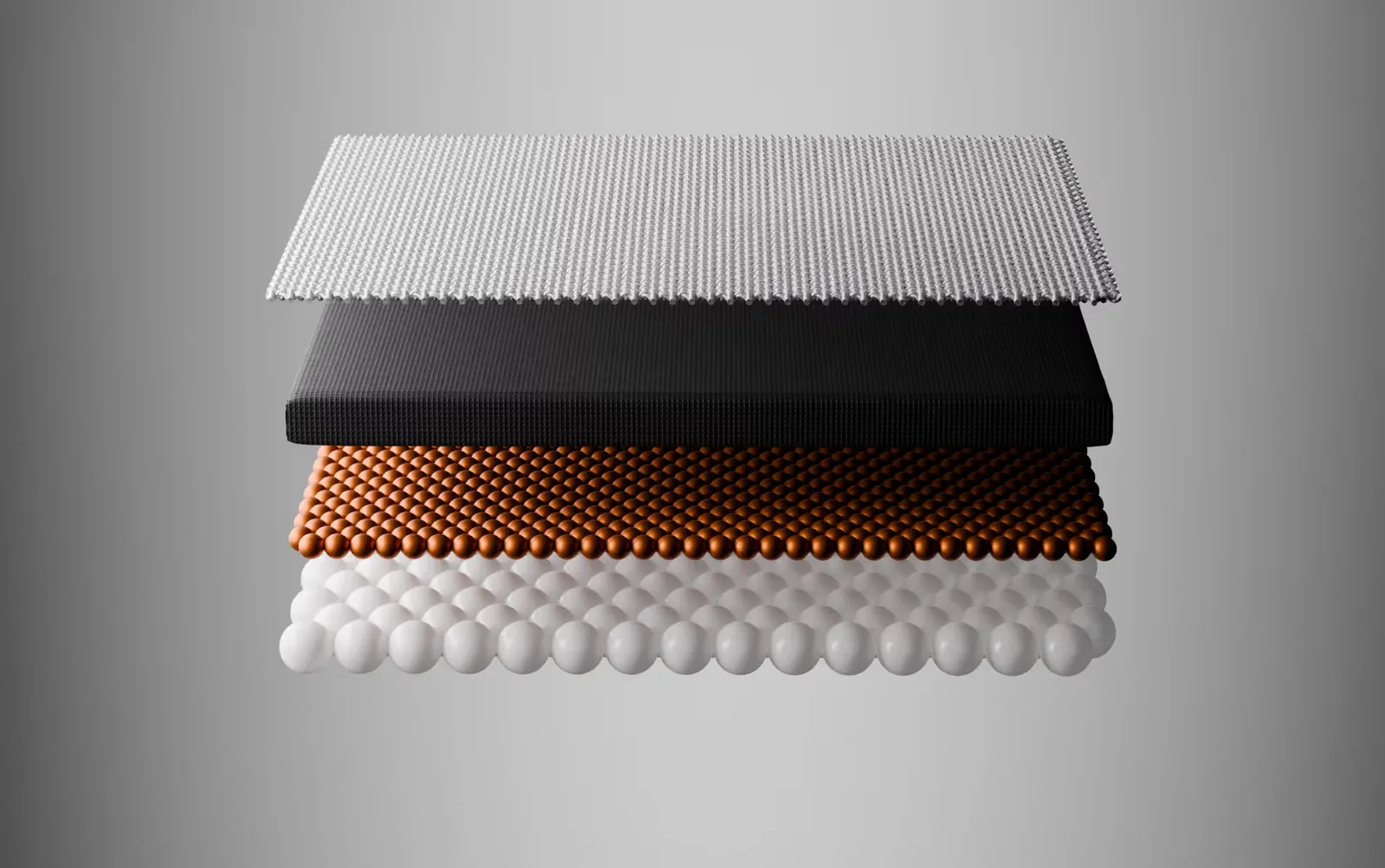
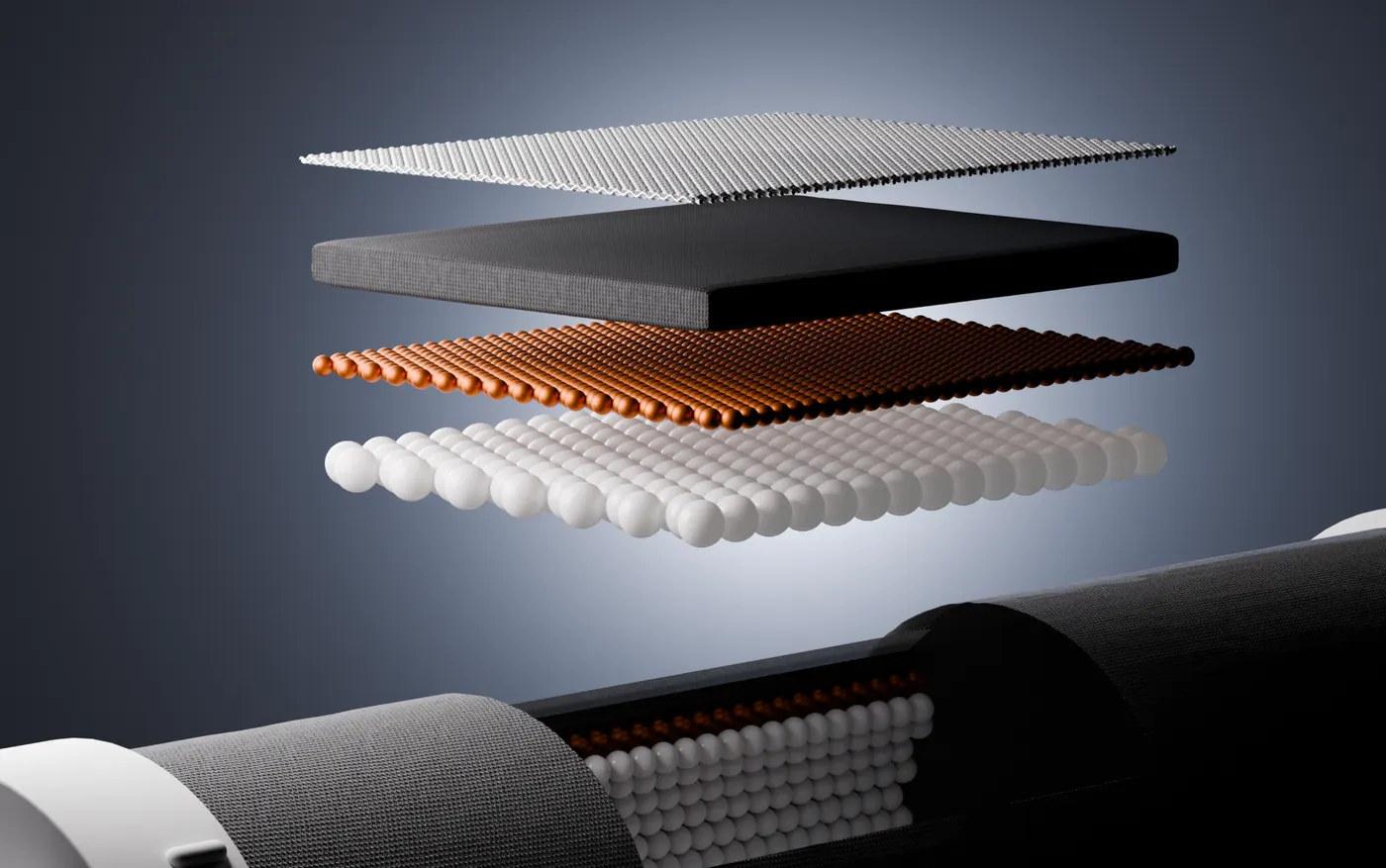
Activated Carbon Fiber (ACF) is activated carbon formed into a fiber-based structure rather than loose granules or a compressed block of particles.
In ACF filtration, the media is engineered so water interacts with a dense network of carbon fibers, which creates two major practical effects:
- High surface interaction: a lot of accessible adsorption sites are exposed to flowing water
- Controlled flow paths: the structure encourages more uniform contact rather than random pathways
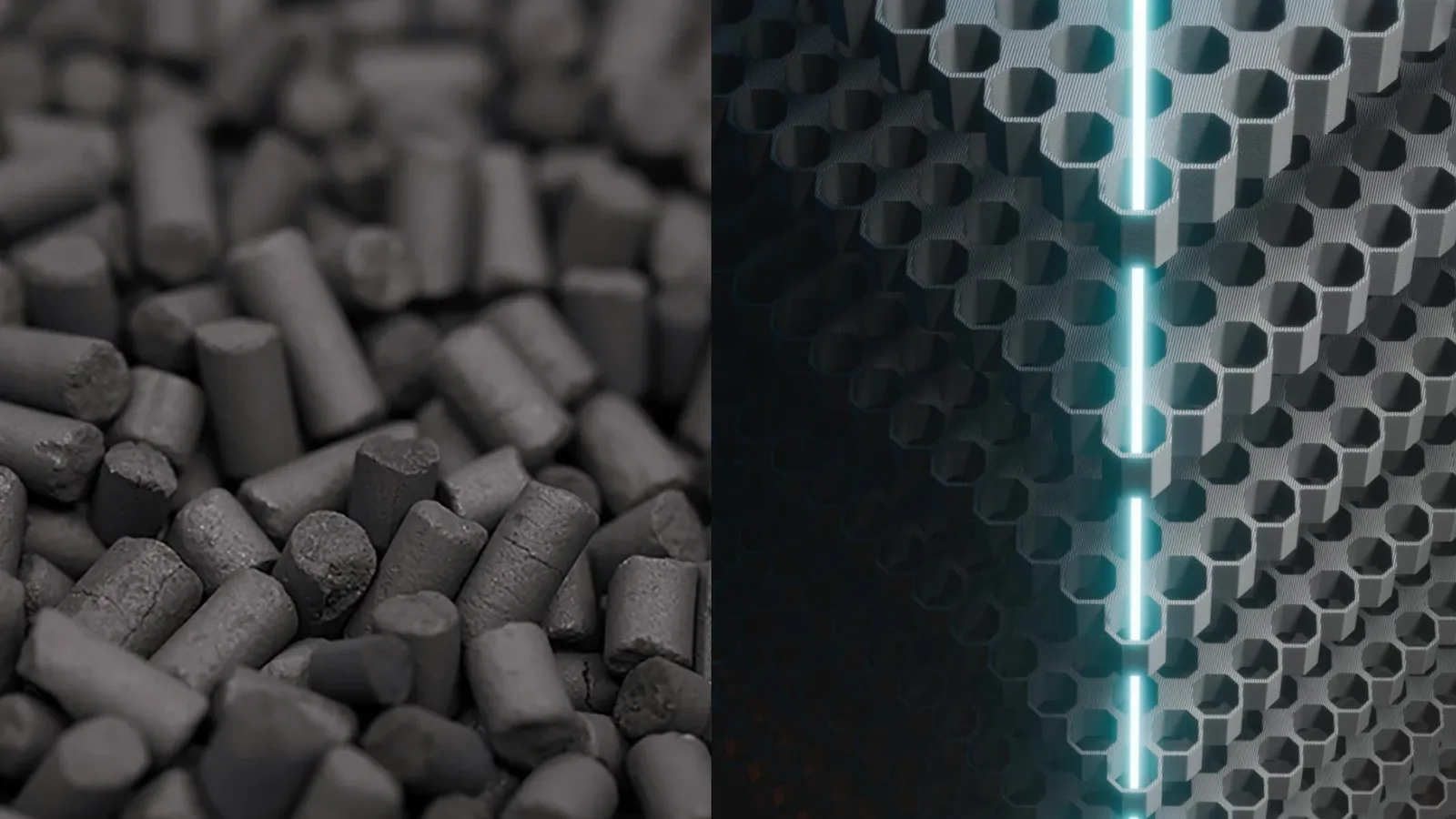
Think of it like the difference between:
- water flowing through a pile of rocks (GAC)
- water flowing through a dense sponge or fabric-like structure (ACF)
That analogy isn’t perfect, but it captures the idea: media structure influences how consistently water engages with carbon.
ACF is often chosen in designs where you want:
- strong taste/odor improvement
- fast adsorption response
- consistent performance at real-world flows
- premium performance in a compact cartridge footprint
The big concept most people miss: channeling
The biggest difference between carbon formats in real use is often how predictable the water’s path is through the media.
What is channeling?
Channeling happens when water finds the easiest route through a filter media bed and begins to travel through preferred pathways instead of distributing evenly.
In a loose bed of media (like GAC), water can create “channels” over time, paths of least resistance where flow moves faster and spends less time in contact with carbon.
When channeling increases, you can get:
- reduced effective contact time for part of the flow
- inconsistent adsorption
- “it was great at the start, now it’s not as good” experiences
Channeling is not a moral failure of GAC. It’s simply a design reality that needs to be managed through:
- proper tank/cartridge design
- good flow rates
- distribution plates/diffusers
- sufficient media depth
- sometimes back washing (in certain systems)
Why channeling matters for contaminant removal
Carbon relies on contact. If a portion of water “short-cuts,” you can still get some improvement in taste and odor, but the consistency of reduction (especially for more challenging organics) can drop.
This is why two carbon filters with the same material can behave very differently in real life.
ACF vs Traditional Carbon: What matters most
Here are the practical performance factors that actually change outcomes at the tap.
1) Flow-path consistency (quiet advantage for ACF)
Traditional carbon filters can be excellent, but they’re more dependent on how well the system forces water to take a uniform route through the media.
ACF filtration tends to emphasize structured contact, more of the water is encouraged to interact with the carbon media in a controlled way.
That often translates to:
- more predictable taste/odor performance
- less variation under changing household flows (someone flushes a toilet, a second tap opens, etc.)
2) Adsorption efficiency under real-world conditions
Carbon performance is often discussed like it’s a static lab result. In reality, people use water in bursts:
- quick glass fill
- intermittent faucet use
- showers starting/stopping
- changes in pressure during peak hours
ACF is frequently designed to deliver strong adsorption with efficient contact, which can make performance feel more immediate and stable in day-to-day use.
Traditional carbon can still achieve great contaminant removal, especially when there’s enough media volume and contact time, but it’s more sensitive to design and operating conditions.
3) Channeling risk (where format matters most)
- GAC: most susceptible to channeling if distribution and flow aren’t managed well
- Carbon block: reduced channeling risk due to compressed structure
- ACF: often designed to reduce the chance of “easy-path” flow by providing uniform interaction points
This doesn’t mean GAC is “bad.” It means it demands a bit more from the engineering to keep flow distribution consistent.
4) Performance stability over time
As carbon loads up with what it captures, performance can drift, especially if flow paths become less uniform or the media bed settles.
ACF’s structured format often aims for steadier performance across a cartridge’s life,because the media contact remains consistent rather than relying on a loose bed staying perfectly distributed.
Carbon block can also be very stable, particularly when protected by good pre-filtration. The common tradeoff is that some blocks will restrict flow more as they load.
5) Flow rate and “feel” (what you notice immediately)
Some carbon formats prioritize performance at the expense of flow; others prioritize flow at the expense of contact time.
- Whole-home GAC tanks often support strong flow because they use large media volumes.
- Compact point-of-use carbon blocks can be highly effective but may feel slower if very fine or as they load.
- ACF can be engineered to balance flow and performance, often providing a “premium feel” where water still comes out strong while taste/odor improvement remains consistent.
The right choice depends on whether you’re filtering one drinking faucet or an entire home.
6) Compact performance: power per inch
One of the reasons ACF gets attention is that it’s often used where designers want strong results in a smaller cartridge footprint
Traditional carbon can absolutely match or exceed performance when you increase media volume, bed depth, or optimize contact time. But ACF filtration is frequently selected when the goal is: high performance without a bulky setup
Contaminant removal: what to expect (without overcomplicating it)
If your priority is contaminant removal related to taste/odor and many organics, carbon is a core tool. Here’s the practical way to think about it:
Carbon is typically strong for:
- Chlorine reduction (taste/odor)
- Many odor-causing organic compounds
- Many VOCs (varies by compound and filter design)
- Overall “water palatability” improvements
Carbon performance depends on:
- contact time
- media quality
- flow rate
- how evenly water is forced through the media
- maintenance and replacement timing
Carbon is usually not the primary tool for:
- hardness / scale (that’s typically softening or anti-scale methods)
- high mineral removal (reverse osmosis is the typical approach)
- nitrates
- pathogen disinfection (UV/membranes/disinfection are used for that)
In other words: carbon is amazing at what carbon is meant to do—but the format matters because it determines how consistently carbon can do that job.
The real takeaway: “better” usually means “more consistent”
Traditional activated carbon filter formats have earned their place. They can deliver excellent results when designed and sized correctly.
What Activated Carbon Fiber tends to add,quietly, but meaningfully, is consistency:
- more controlled flow paths
- reduced risk of short-cutting
- efficient surface interaction
- stable performance in compact designs
So the question “what matters most?” comes down to this:
If your priority is simply “carbon filtration,” many formats will work.
If your priority is reliable performance under real-world conditions, media structure and flow behavior matter—and that’s where ACF filtration often earns its premium reputation.