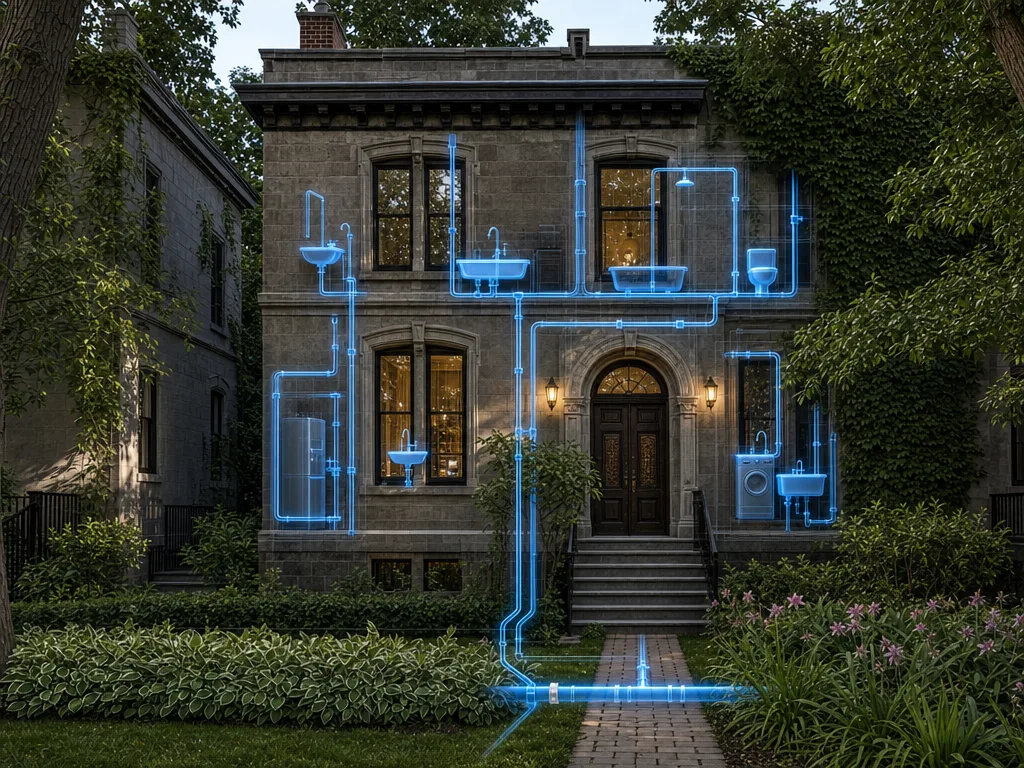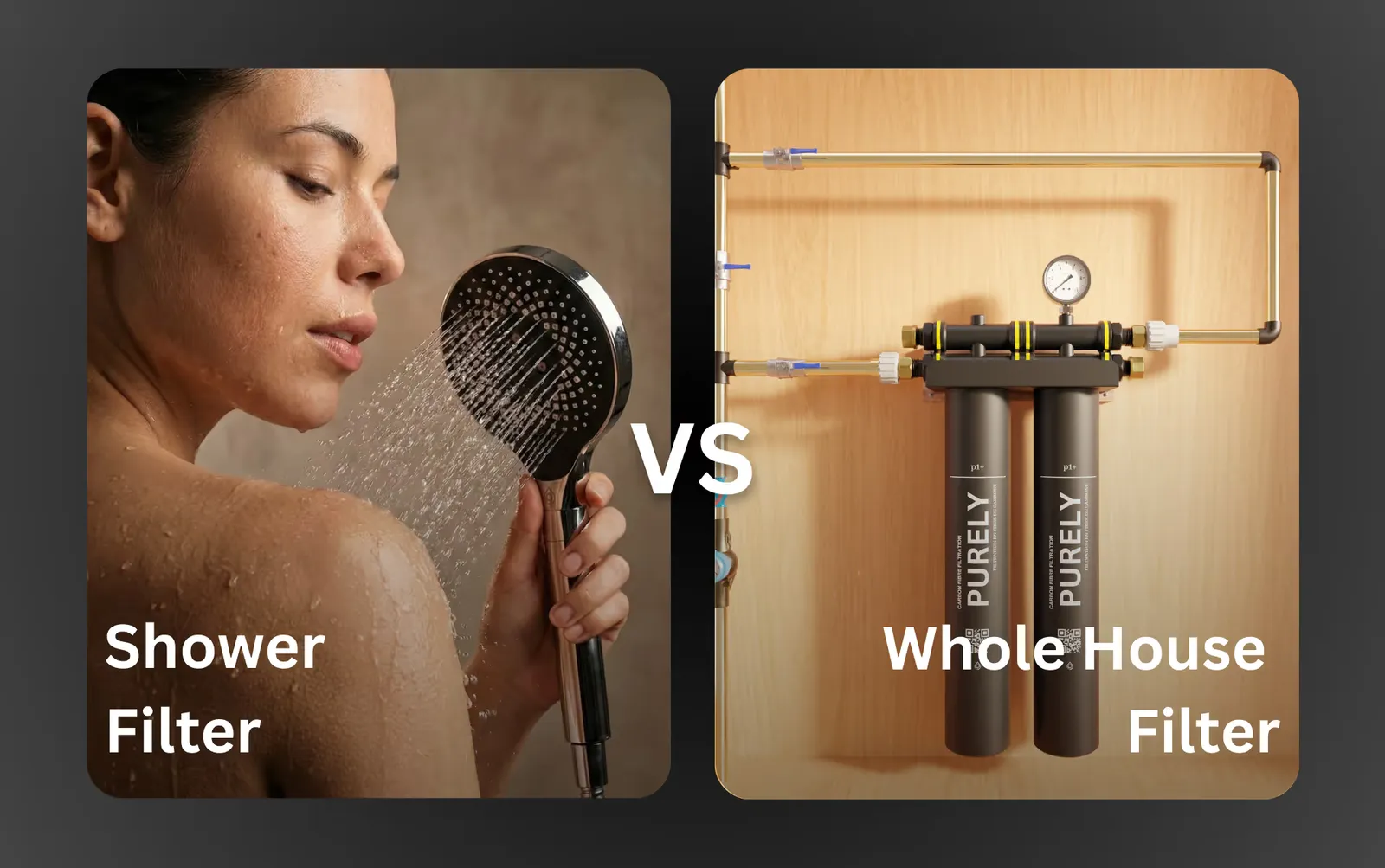

When choosing a water filter for home, the most important factor isn’t just the type of filter — it’s how much water your household actually uses and where you want that water treated.
There are three main categories of home water filtration systems:
- Under-sink (point-of-use) systems
- Shower filters
- Whole-house filtration systems
Each serves a different purpose, and the right choice depends on your household size, daily water consumption, and priorities.
A quick way to decide (before you shop)
Before picking a system, ask yourself these 3 questions:
- Do I mainly care about what I drink, or everything in the home?
- Do I want better water for skin/hair, or mainly taste and cooking?
- How many people are using the water daily (and do we host often)?
Most people overbuy or under buy because they don’t match the system to the use case. The best setup is usually the one that filters the right water, not necessarily all water.
1. Under-Sink Water Filters (Point-of-Use)
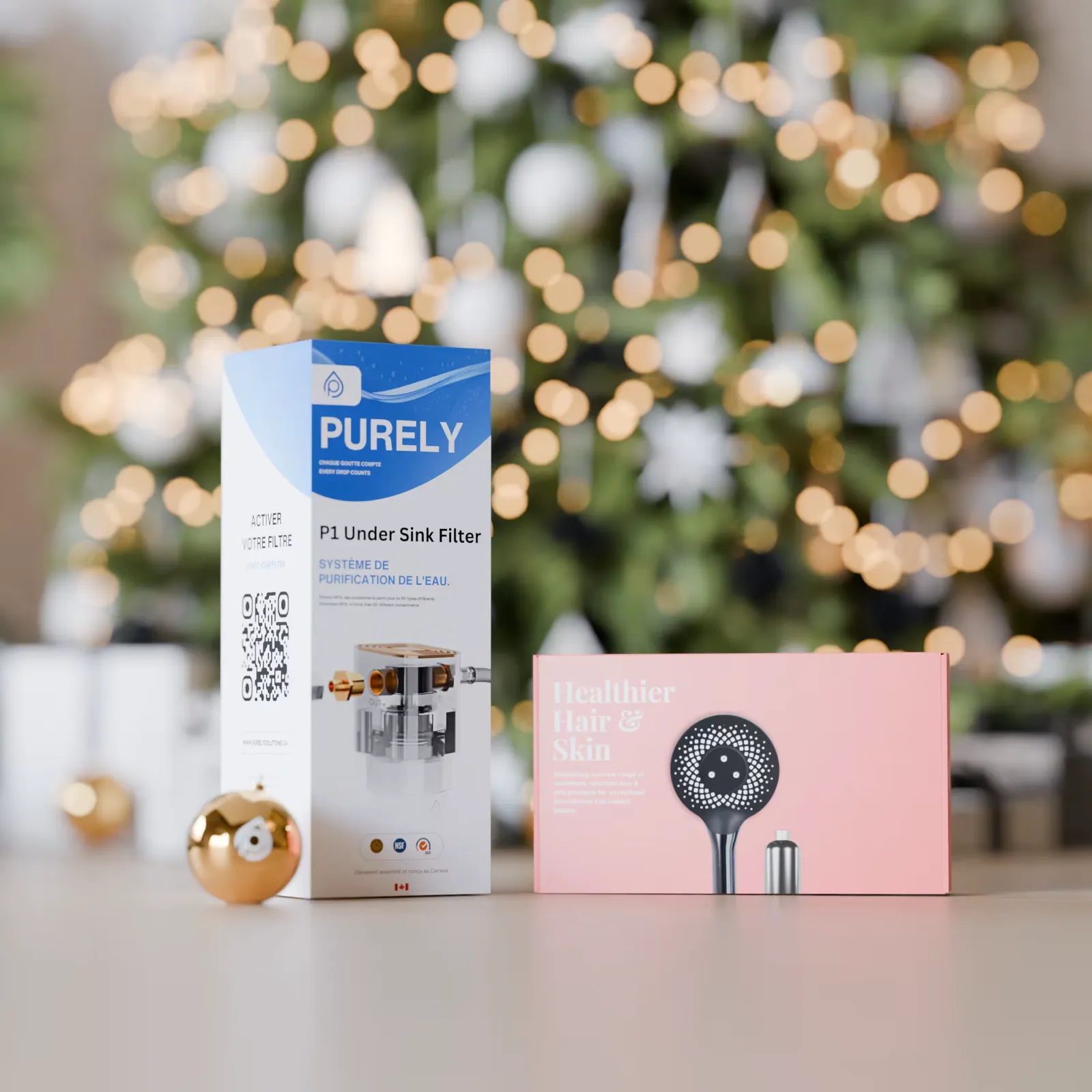
An under-sink system is designed to treat drinking and cooking water. It installs directly under your kitchen sink and delivers filtered water through the faucet.
This is often the most cost-effective option if your main concern is what you ingest, because you’re filtering a smaller volume of water, but at a very high impact point (your glass and your meals).
P1 Under-Sink life span: Up to 60,000 liters, or 2 years, whichever comes first.
Tip: Under-sink systems are ideal for people who want clean drinking water without changing the rest of the house.
2. Shower Filters
Shower filters focus on water quality where it directly affects your skin, hair, and respiratory system.
Different shower setups require different solutions:
- Handheld / telephone-style showers → standard shower filter (S1)
- Rainfall or waterfall showers → adapter-style inline shower filter (S2)
If you notice dry skin, brittle hair, chlorine odor, or irritation after showering, this is often the most immediate upgrade you can make — because you feel the difference quickly.
Tip: Shower filtration is also one of the simplest installs and a common “first step” for people who want to improve water quality without committing to a bigger system right away.
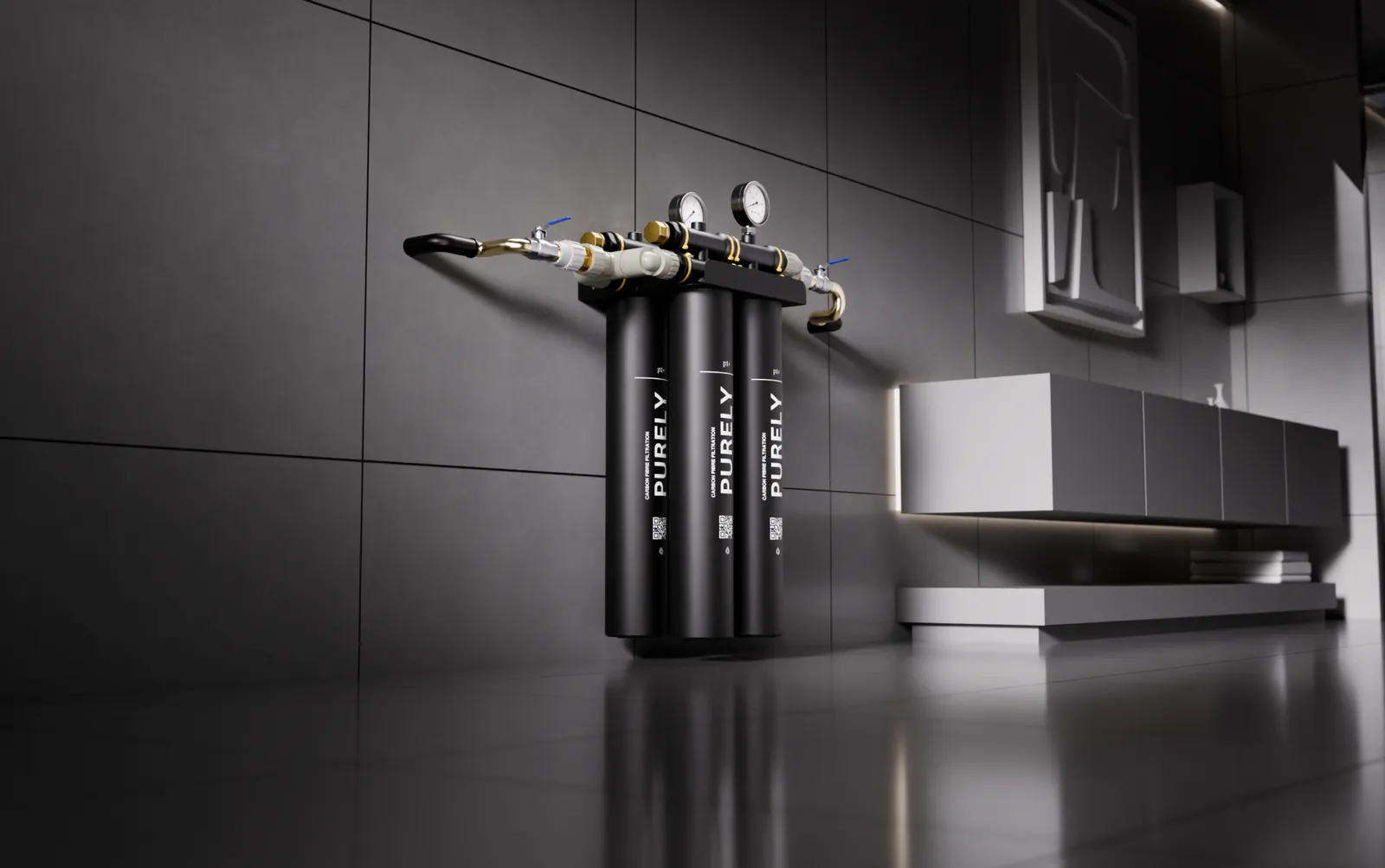
3. Whole-House Water Filtration Systems
A whole-house water filter treats all water entering your home, taps, showers, appliances, and laundry included.
How Purely’s whole-house systems are sized
Instead of guessing, whole-house systems should be sized using litres of water consumed over time.
A reliable baseline for residential use is:≈ 250 litres per person per day
So:
- 2 people → ~500 L/day
- 4 people → ~1,000 L/day
- 6 people → ~1,500 L/day
Cartridge capacity logic
Each whole-house cartridge is rated for: 240,000 liters
That means:
- 1-stage system → 240,000 L
- 2-stage system → 480,000 L
- 4-stage system → 960,000 L
Example: Lifespan calculation for a 4-person household:
- Daily use: ~1,000 L/day
- Annual use: ~365,000 L/year
Estimated lifespan:
- 1-stage → ~1.1 years
- 2-stage → ~2.2 years
- 4-stage → ~4.4 years
What about irrigation?
Outdoor irrigation typically uses 40,000–70,000 litres per year, which is relatively small compared to total household usage. Because of this, irrigation usually doesn’t need to be heavily factored into system sizing unless water usage is extreme.
Don’t forget flow rate and pressure
Whole-house systems need to match your home’s flow demands (showers running, laundry,dishwasher, etc.). Proper sizing isn’t just about liters, it’s also about avoiding pressure drop during peak usage. That’s why whole-home filtration is best when it’s sized both for capacity and real household flow.
Choosing the Right Setup for Your Home
Here’s how most households break it down:
- Drinking & cooking only → Under-sink system
- Skin & hair protection → Shower filter (S1 or S2 depending on setup)
- Full home coverage → Whole-house filtration system
Best overall coverage (for many homes): whole-house filtration + under-sink drinking water filtration.
This combo keeps filter life efficient while giving you the strongest “quality where it matters most” setup.
This layered approach ensures:
- Long filter life
- Proper flow rates
- Targeted filtration where it matters most
Final Thoughts
Choosing the right home water filter isn’t about buying the biggest system available — it’s about matching the system to your real water usage.
By understanding:
- Your household size
- Daily water consumption
- Where you want filtration applied
You can select a water filtration system that performs properly, lasts as intended, and avoids unnecessary replacement costs.