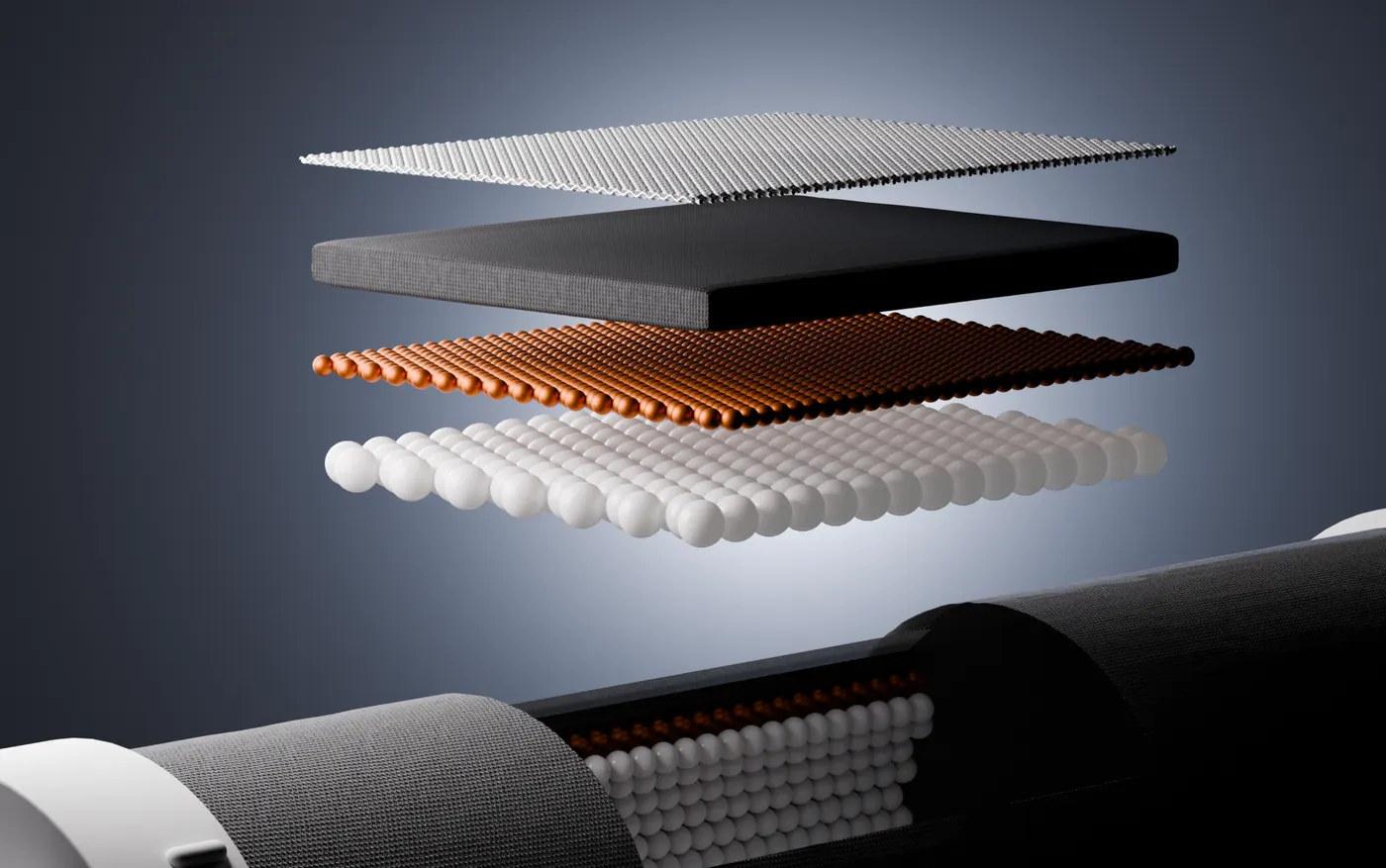
When people hear the term carbon water filter, they often assume all carbon filtration works the same way. In reality, “carbon” is not a single technology, it’s a broad category that includes multiple formats, structures, and performance profiles.
From granular activated carbon (GAC) to powdered activated carbon (PAC) and activated carbon fiber (ACF), each type behaves differently, filters differently, and is best suited for specific applications.
This article breaks down the main types of activated carbon used in water filtration, how they work, and the real-world advantages and limitations of each, so you can better understand what’s inside a modern carbon water filter and why carbon filtration technology varies so widely.
What Is Activated Carbon Filtration?
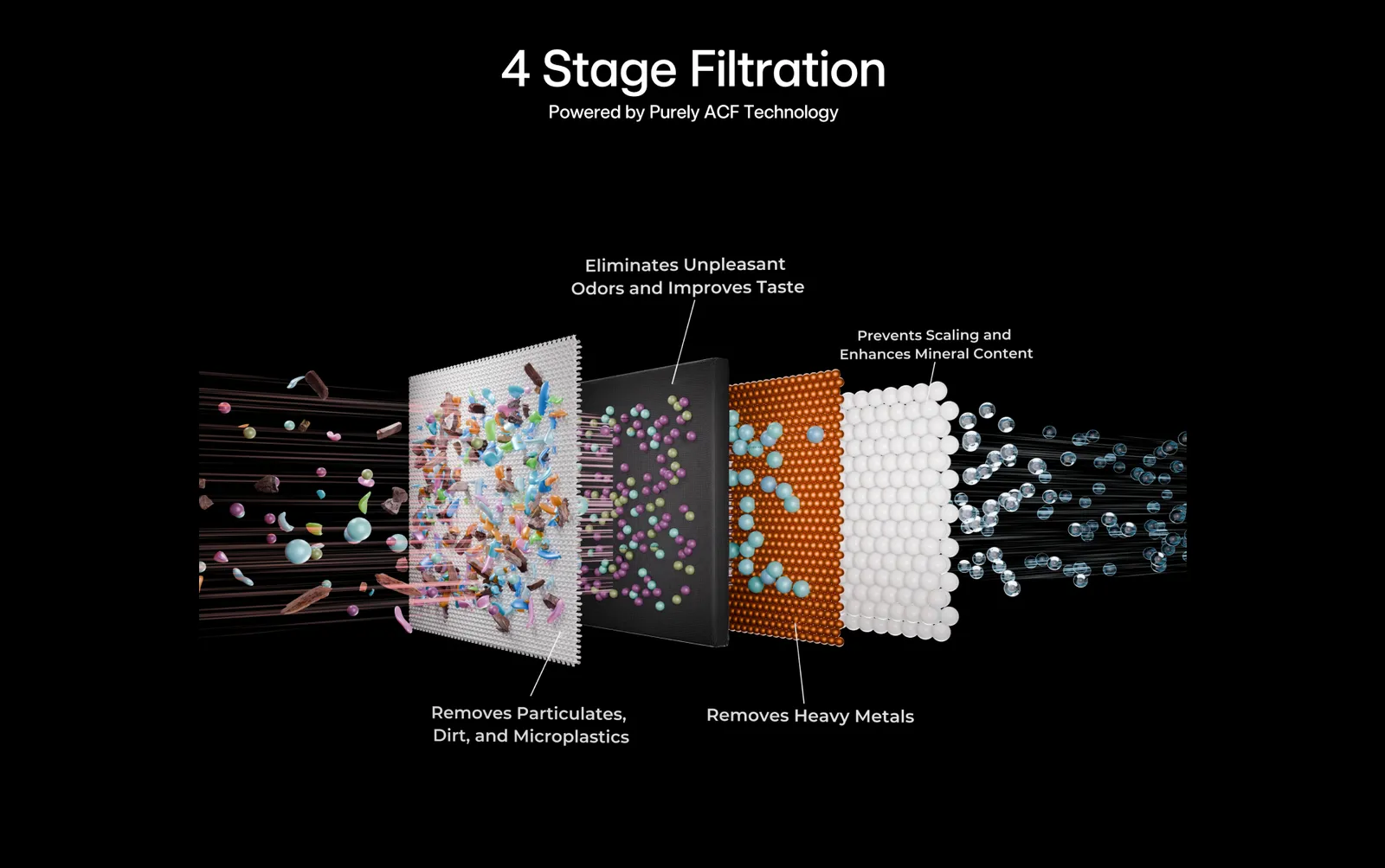
Activated carbon is a form of carbon that has been processed to create millions of microscopic pores, dramatically increasing its surface area. This structure allows carbon to adsorb (not absorb) contaminants, meaning unwanted compounds stick to the carbon’s surface rather than passing through.
Activated carbon filtration is widely used to reduce:
- Chlorine and chloramine
- Taste and odor compounds
- Volatile organic compounds (VOCs)
- Certain pesticides and herbicides
- Disinfection by-products (such as THMs)
However, how well carbon performs depends heavily on its physical form, not just the fact that it’s “carbon.”
The Three Main Types of Carbon in Water Filtration
1. Granular Activated Carbon (GAC)
Granular activated carbon (GAC) is the most common and widely used form of carbon filtration.
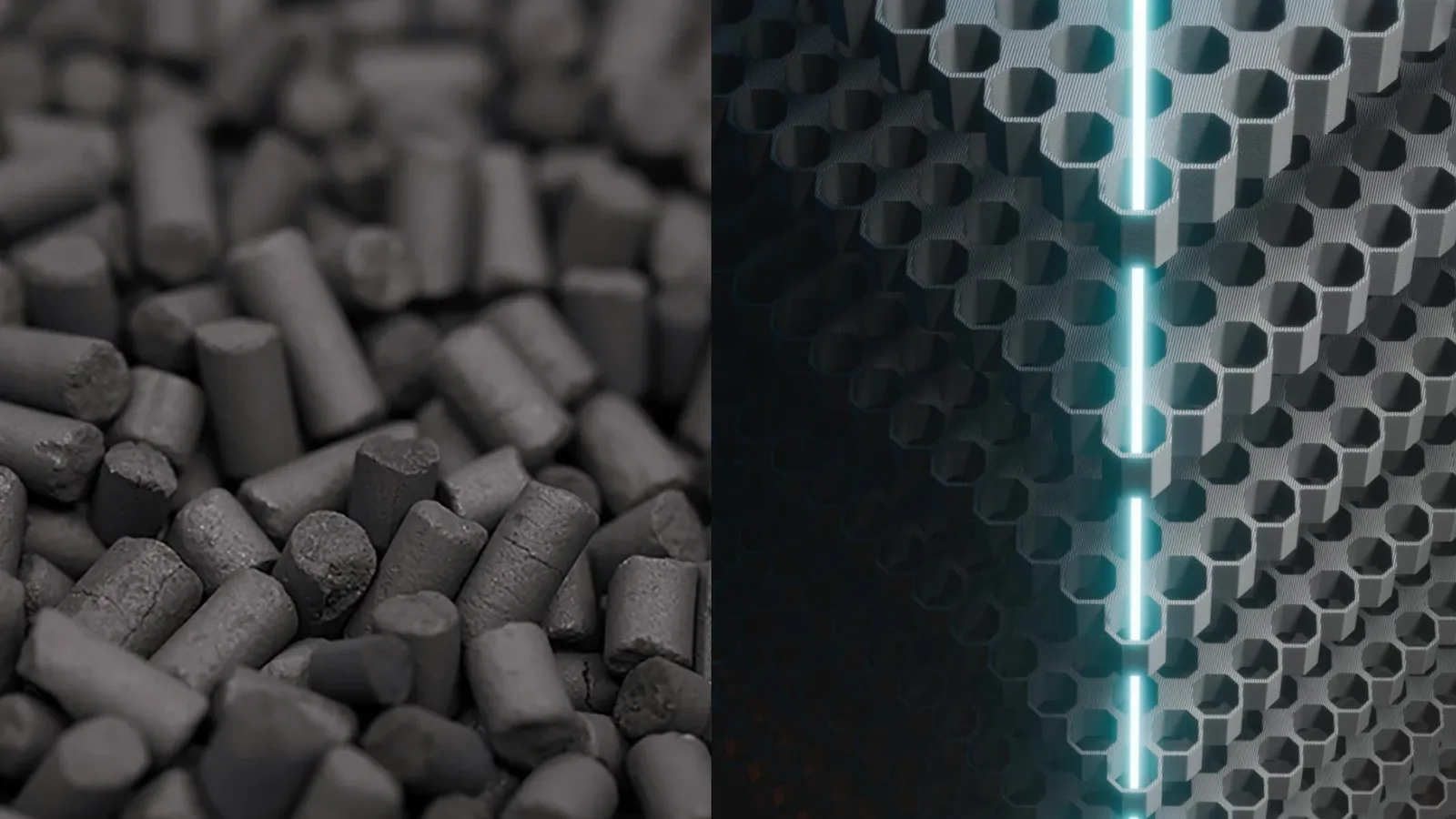
GAC consists of loose carbon granules, typically derived from coconut shells, coal, or wood.Water flows around and between these granules as it moves through the filter.
Advantages of GAC
- Cost-effective and widely available
- Effective at reducing chlorine and improving taste
- Commonly used in pitchers, refrigerator filters, and whole-house systems
- Relatively low pressure drop at higher flow rates
Limitations of GAC
- Channeling risk: water can carve preferential paths through the media, reducing contact time
- Performance depends heavily on flow rate and bed depth
- Less consistent adsorption compared to structured carbon formats
- Granules can shift or compact over time
Channeling occurs when water does not distribute evenly through loose carbon granules and instead follows the path of least resistance. Over time, this creates preferred flow pathways where water moves quickly with reduced contact time, while other areas of the carbon bed remain underutilized. Even though the filter may still contain unused carbon, channeling can reduce effective filtration and lead to less consistent performance, particularly in compact or higher-flow systems. GAC works well in many applications, but its loose structure inherently limits precision and consistency, especially in compact systems.
2. Powdered Activated Carbon (PAC)
Powdered activated carbon (PAC) is carbon that has been ground into a very fine powder. Rather than being used as a standalone filter block, PAC is often added directly to water during municipal treatment or embedded into composite filter media.
Advantages of PAC
- Extremely high surface area
- Fast adsorption kinetics
- Effective for short-term or batch treatment
- Common in industrial and municipal applications
Limitations of PAC
- Not structurally stable on its own
- Can migrate, compact, or release carbon fines if poorly contained
- Not ideal for long-term residential point-of-use filtration
- Typically requires downstream filtration
PAC is powerful, but it is not designed for consistent household filtration without additional engineering controls.
3. Activated Carbon Fiber (ACF)
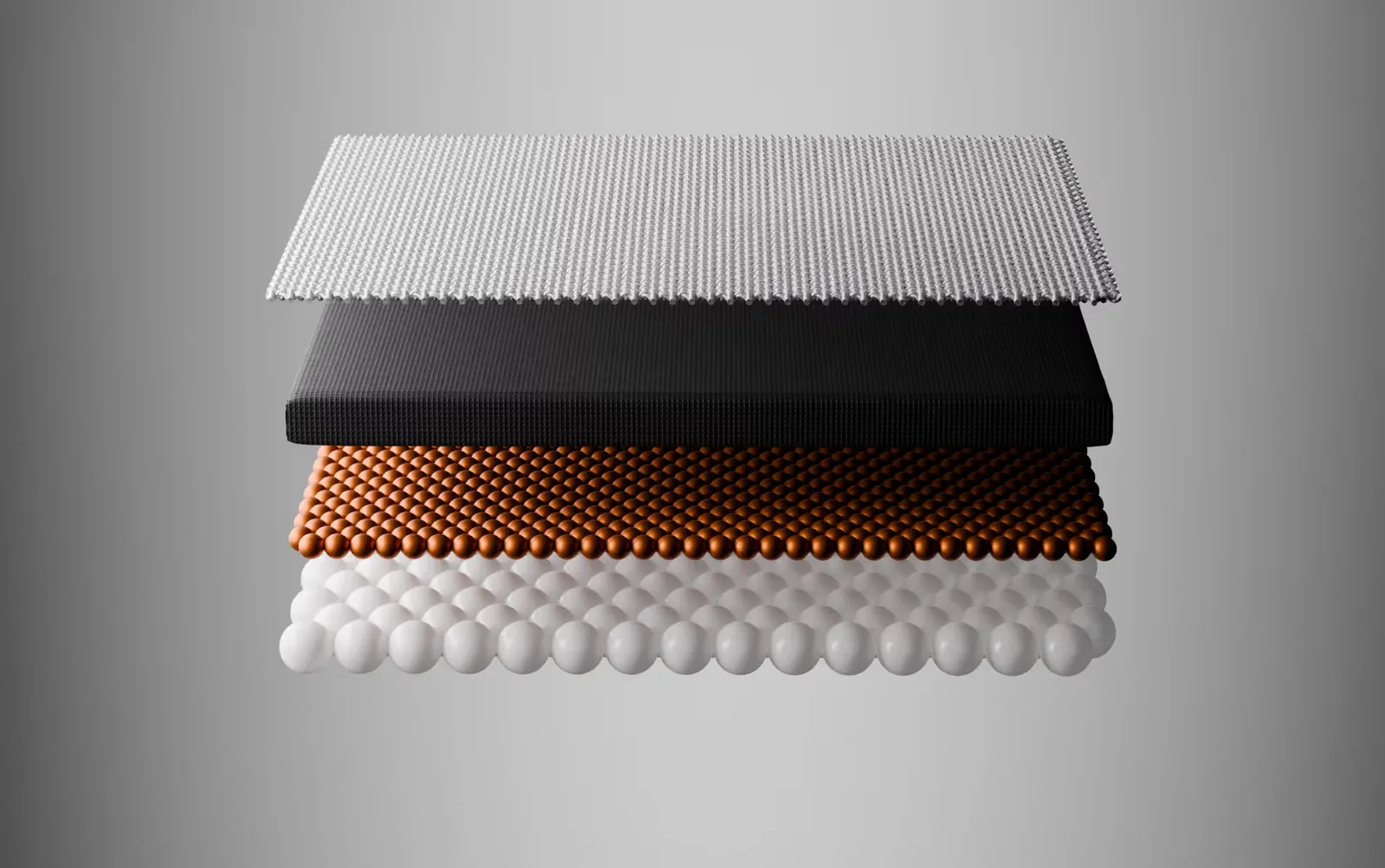
Activated carbon fiber (ACF) represents a more advanced approach to carbon filtration technology. Instead of loose particles, ACF is made from woven or non-woven carbon fibers, forming a uniform, highly accessible adsorption surface.
Unlike GAC, where adsorption occurs mainly on the outer surface of granules, ACF exposes adsorption sites directly to flowing water, improving efficiency and consistency
Advantages of ACF
- Extremely high usable surface area
- Uniform pore distribution
- Minimal channeling due to fixed structure
- Consistent performance over time
- Strong flow-to-contact-time efficiency
- Well-suited for compact, high-performance systems
Limitations of ACF
- Higher production cost
- More complex manufacturing process
- Less widely understood by consumers
From a filtration engineering standpoint, ACF is considered one of the most advanced filtration technologies available in carbon-based systems today.
GAC vs ACF: A Practical Comparison
The comparison between GAC vs ACF largely comes down to structure and efficiency, not just adsorption capacity
Feature GAC ACF
Physical form Loose granules Fixed fiber matrix
Channeling risk Moderate to high Minimal
Surface accessibility Partial Near-total
Flow consistency Flow-dependent Highly consistent
Compact system performance Limited Strong
Long-term consistency Variable High
This difference explains why many modern carbon water filters use structured carbon formats in point-of-use applications where space, flow control, and reliability matter.
Why Structure Matters More Than “Carbon Type”
Two filters can both advertise “activated carbon,” yet perform very differently
The key variable is not only what the carbon is made from, but how water interacts with it:
- Loose media allows variable contact
- Structured media enforces controlled contact
- More carbon does not always mean better performance if water bypasses the media
Modern carbon filtration technology focuses on effective adsorption, not just volume.
Choosing the Right Carbon Filtration Technology
There is no single “best” carbon, only the right carbon for the application. Activated carbon fiber (ACF) offers more efficient and consistent filtration in compact, point-of-use systems due to its fixed structure and accessible surface area. Granular activated carbon (GAC)remains widely used primarily because it can be deployed at large scale and lower cost, not because it offers the same level of precision or consistency. In practice, the optimal carbon technology depends on system size, flow demands, and performance requirements.
The Takeaway: Carbon Isn’t One Thing
Activated carbon filtration remains one of the most trusted water treatment technologies,but not all carbon is created equal.
From GAC to PAC to ACF, differences in structure, flow behaviour, and adsorption efficiency directly affect performance and consistency.
As filtration technology continues to evolve, advanced carbon filtration technology,particularly structured formats like ACF, is reshaping what’s possible in compact, high performance carbon water filters.
The more you understand what’s inside the filter, the better equipped you are to choose the right solution for your needs.