This guide gives you a clear answer, based on what the City and Quebec's public health experts actually say.
Is Montreal tap water safe? Yes
The City of Montréal describes its drinking water as excellent quality. Each year, it collects about 17,800 bacteria samples and 9,440 chemical samples from its plants and pipes.
By the legal standard, the water the City delivers is safe. In its 2025 report, every contaminant tested stayed within Quebec's limits except one: lead. That lead doesn't come from the treatment plants. It comes from old pipes that connect some buildings to the water main.
Health Canada agrees. Water from a city system that meets Canada's guidelines doesn't usually need extra treatment for health reasons.
But safe is a legal bar. It isn't the same as optimal.
Is Montreal tap water optimal? No
Safe means a contaminant stays under a legal limit, often judged as an average across many samples. Optimal means as little of it in your glass as possible. Any amount of lead is not optimal, and lead is where Montreal's water falls furthest short.
Lead: near zero at the main, over the limit in older homes
The City's 2025 annual report shows exactly where the problem is. In the middle of the distribution network, lead averaged about a tenth of the limit. In homes built before 1970, the City's tap samples told a different story:
- Montréal: the average was over the limit, and the highest reading was more than four times it.
- Montréal-Est: the average was over the limit too, and the highest reading was more than nine times it.
- Montréal-Ouest: the average passed, but the highest reading was more than two and a half times the limit.
- Mont-Royal: the only network where every result stayed under the limit.
So this isn't one unlucky tap. In two of the four networks, the average older home tested was over the limit. You don't drink the city average. You drink what comes out of your own tap.
No amount of lead is safe for a developing brain
Health Canada cut its lead limit in half in 2019. Even so, its lead guideline says science hasn't found a level of lead below which it stops being linked to harm to brain development. Its main concern is lower IQ in children, whose brains are still growing. So the goal isn't just to stay under the limit. It's to keep lead as low as you reasonably can.
The City acts below the limit too. After its 2025 testing, it told people in buildings with lead above 0.002 mg/L, less than half the legal limit, how to cut their exposure, for example with a filter.
Chlorine: safe, but not optimal either
Chlorine follows the same pattern. The City keeps it in the pipes to stop bacteria, and the byproducts it forms, called THMs, averaged 60 µg/L in 2025, under Quebec's limit of 80. But one sampling site reached 90 µg/L, and chlorine is why tap water can taste like a pool. The next section covers both.
What's in Montreal tap water
Montreal treats its water at six plants: Atwater, Charles-J.-Des Baillets, Dorval, Lachine, Pierrefonds and Pointe-Claire, according to the City. Here's what the 2025 report shows for the largest system, served by Atwater and Charles-J.-Des Baillets.
| What | What the City reports | Quebec limit | What it means for you |
|---|---|---|---|
| Bacteria | About 17,800 samples a year | Zero tolerance | Treated and watched closely |
| Lead | Near zero in the main network; over the limit in many older homes | 0.005 mg/L | Comes from building pipes, not the plant |
| THMs (chlorine byproducts) | Yearly average of 60 µg/L in 2025; one site hit 90 µg/L | 80 µg/L | Average under the limit, but not zero |
| Chlorine | Kept in the pipes to stop bacteria | No health limit at normal levels | The source of most "pool" taste and smell |
| Fluoride | Not added; natural traces only (about 0.1 mg/L) | 1.5 mg/L | Not a factor for most Montreal homes |
| Hardness | About 117 mg/L in 2025 | No health limit | Moderately hard; affects scale and soap, not safety |
Chlorine and its byproducts
Like almost every Canadian city, Montreal keeps a little chlorine in the pipes so bacteria can't grow back on the way to your home. That's a public health win. It's also why tap water can taste or smell like a pool, especially in the morning or in older buildings.
When chlorine meets natural material in river water, it forms trihalomethanes (THMs). Montreal's levels sit under Quebec's limit of 80 µg/L. They aren't zero, though, and they change with the seasons. Our shower filter guide explains why THMs matter in hot water too.
Fluoride
Montreal has never added fluoride to its own water, and the two West Island plants that did have stopped. Our fluoride guide covers the full story.
Lead
Lead gets into water from old lead service lines and plumbing, so it changes from building to building. That's how a city average can pass while some taps run well over the limit.
Want to see your area's numbers? Enter your postal code in Purely's free Water Report to see what's been found where you live.
Who should pay closer attention
Homes with lead pipes
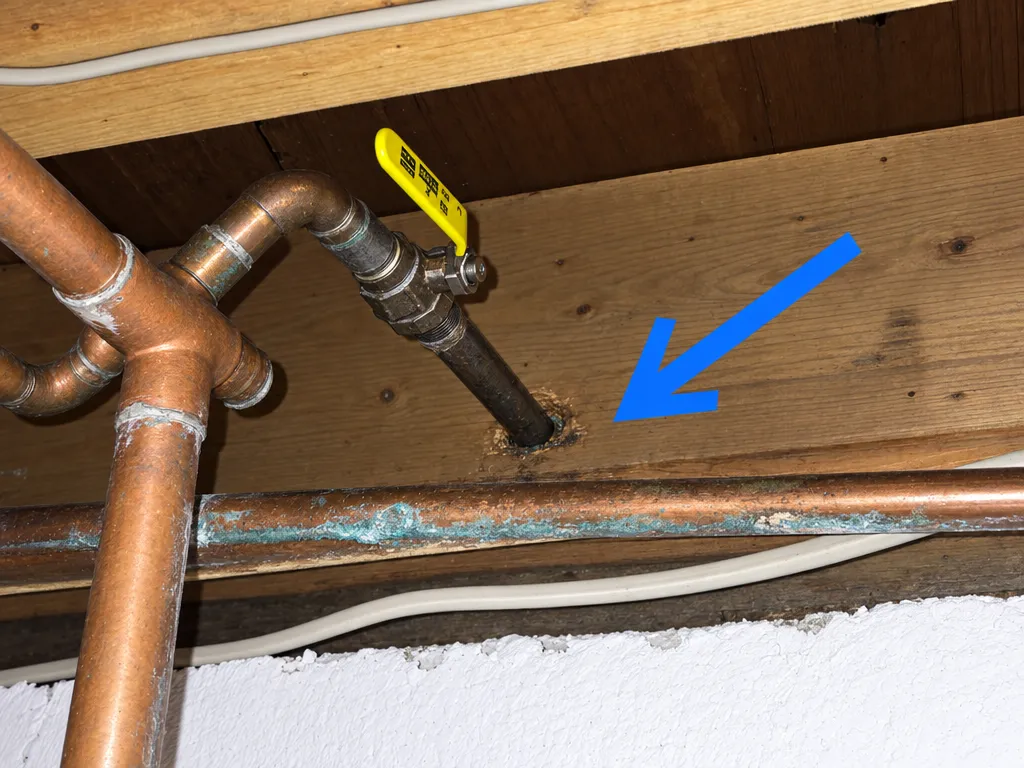
The City says buildings with eight homes or fewer built before 1970 are the most likely to have a lead service line. That's the pipe linking a building to the water main. The City believes these pipes exist in 16 of its 19 boroughs. They're unlikely in L'Île-Bizard-Sainte-Geneviève, Pierrefonds-Roxboro and Saint-Léonard.
The City is replacing these pipes, but the work takes years. Until yours is replaced, a few simple habits and the right filter make a real difference. Our step-by-step guide, How to Check for Lead Pipes in Your Montreal Home, shows you how to find out where you stand.
Older buildings in general
Even without a lead service line, old solder, faucets and fittings can add small amounts of lead and copper. Water that sits in the pipes overnight picks up more. Two habits help in any older home:
- Run the cold tap until the water feels colder before you drink it, especially first thing in the morning.
- Use cold water, never hot, for drinking and cooking. Hot water pulls more lead out of old pipes and fittings.
Parents of babies and young children
Young children and pregnant women are more sensitive to lead. That doesn't mean tap water is off limits. Quebec's public health institute, the INSPQ, lists city tap water as fine for babies, with a few precautions:
- Let the water run until it gets colder, then another minute or two.
- Never use hot tap water to make bottles or baby food.
- Boil the water for babies under 4 months.
- The INSPQ prefers that babies under 6 months not get water from home treatment devices.
People switching from bottled water
Bottled water isn't automatically safer. The INSPQ treats city tap water and bottled spring water as equally fine, even for babies. Most people in Montreal buy bottled water for the taste, not for safety. That's a problem a filter can solve.
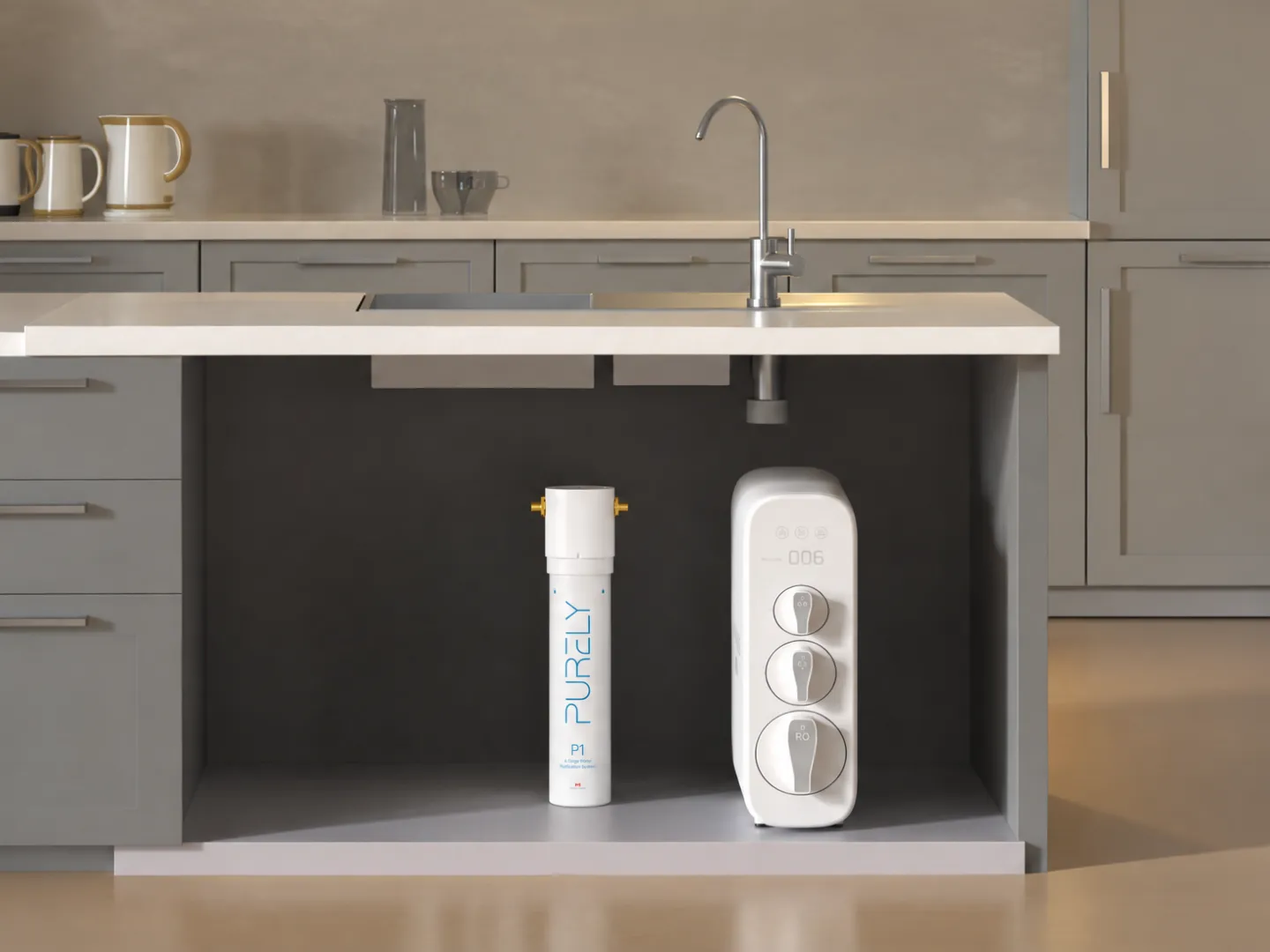
Ready to quit the jugs? The P1 Under-Sink reduces chlorine taste and lead right at your kitchen tap. See how it works →
What a water filter can fix
Montreal's water is already safe. A filter is how you close the gap between safe and optimal: less lead, less chlorine and better taste. Here's where it helps, and where it doesn't.
Chlorine taste and smell
Chlorine is the most common complaint about Montreal tap water, and it's the easiest to fix. Activated carbon is the standard way to remove chlorine taste and smell, and it also reduces chlorine byproducts like THMs. If you buy bottled water because tap water tastes "off," a carbon filter at the kitchen sink usually solves it. No plastic, no jugs, no trips to the store.
Purely's P1 Under-Sink is built for this job. It's designed to reduce up to 99% of contaminants, including chlorine, chlorine byproducts, lead and other heavy metals. It installs in about 10 minutes with no tools, keeps natural minerals in, and lasts up to 2 years or about 22,000 L per cartridge.
Lead: reduce it at the tap
If your home has, or may have, a lead service line, the City recommends using a water filter until the whole line is replaced. Pick one made to reduce lead, not just chlorine taste. Ordinary granular carbon holds very little dissolved lead.
The P1's Nanofiber™ media is acid-treated activated carbon fibre. The acid treatment adds negatively charged spots to the carbon, and those spots grab positively charged lead. Our guide to carbon vs reverse osmosis explains the science.
What a filter won't fix
- Boil-water advisories. If the City issues one, follow its instructions. A home filter doesn't make water safe during an advisory.
- Hard water. Carbon filters don't remove calcium and magnesium. Montreal's water is moderately hard, which affects scale and soap, not safety.
Frequently asked questions
Can you drink Montreal tap water?
Yes. It's safe and meets Quebec's standards. It isn't optimal, though. Lead from old pipes has gone well over the limit at some taps, and Health Canada hasn't found any level of lead that's free of health effects.
What's the difference between safe and optimal water?
Safe water stays under the legal limits, often as an average. Optimal water has as little of each contaminant as possible. Montreal's water is safe. With lead in the picture, it isn't optimal.
Is Montreal tap water safe for babies?
Yes, with a few precautions. The INSPQ lists city tap water as fine for babies. Run the cold tap until it's colder, then another minute or two. Never use hot tap water for bottles, and boil water for babies under 4 months.
Why does Montreal tap water taste like chlorine?
The City keeps a little chlorine in the pipes to stop bacteria from growing back. It's safe at these levels, but many people notice the taste and smell. A carbon filter removes it.
Does Montreal add fluoride to its water?
No. Montreal has never added fluoride to its own water, and the two West Island plants that did have stopped.
Is there lead in Montreal tap water?
Not from the treatment plants. Lead gets into water through old lead pipes in some buildings, mostly those with eight homes or fewer built before 1970. Check the City's online lead lookup tool to see where your building stands.
Is bottled water safer than Montreal tap water?
Not necessarily. Quebec's public health guidance treats city tap water as fine, even for babies. Most people choose bottled water for taste, which a filter can fix at the tap.
Know what's in your glass
Montreal's water is safe. It isn't optimal. Standards are set for a whole city. What's optimal for your glass depends on your building's pipes and your family, and it's worth a few minutes to find out where you stand.
Purely's Water Report brings local water quality data into one place. Enter your postal code to see how your area ranks, its Optimal Score, and how each contaminant found compares with Quebec's limit.
Check your water quality now →
Ready to go from safe to optimal?
Sources
- City of Montréal: Lead in your water
- City of Montréal: 2025 annual drinking water report, Montréal, Montréal-Ouest, Montréal-Est and Mont-Royal networks
- City of Montréal: Drinking water topic page
- City of Montréal: How to recognize a lead water service line
- City of Montréal: Lead service lines, health recommendations
- Health Canada: Lead guideline technical document
- Health Canada: New guideline for lead in drinking water (2019)
- Health Canada: Drinking water and health, Treatment
- INSPQ: Quelle eau choisir?