This guide covers what the science actually says about fluoride, why the bigger risks sit elsewhere, and how to find out what's in the water you drink every day.
What the science says about fluoride in water
Fluoride is a mineral that some cities add to their water to help prevent tooth decay. Health Canada continues to back community water fluoridation as safe and effective, and both Montreal and Quebec public health authorities have said the same.
Most of the recent concern traces back to a 2024 review by the US National Toxicology Program (NTP). It found, with moderate confidence, that higher fluoride exposure, such as drinking water above 1.5 mg/L, is linked to lower IQ in children. That threshold is more than double the 0.7 mg/L that fluoridation programs aim for. The NTP also stated that its review looked at total fluoride from all sources and was not designed to judge fluoridated drinking water on its own.
That doesn't mean the question is fully closed. Researchers still debate whether lower exposure matters, especially during pregnancy, and the NTP has called for more study. But the clearest signal of harm sits at levels that typical Canadian municipal water does not reach.
Fluoride in Quebec tap water is close to zero
For Quebec households, the debate is mostly academic. Montreal has never fluoridated its own water. The only two plants on the island that did, in Pointe-Claire and Dorval, supplied roughly 5% of Montreal's water, and the agglomeration council voted to stop fluoridating there too. Elsewhere in the province, Saint-Georges in the Beauce is reported to be the only other municipality that still adds it. Quebec has the lowest fluoridation rate in the country.
So if fluoride is the main reason you're thinking about filtration, you may be solving for something that isn't in your glass.
Lead: the contaminant with no safe level
Lead is a different story. In 2019, Health Canada cut its maximum acceptable concentration (MAC) for lead in half, to 0.005 mg/L. It also states plainly that science has not found any level below which lead stops being linked to health effects, so levels should be kept as low as possible. The critical effect Health Canada identifies is reduced IQ in children. In other words, the outcome people fear from fluoride at high doses is tied to lead at everyday exposure levels.
Lead rarely comes from the treatment plant. It dissolves into water from old service lines and plumbing on the way to your tap. In Montreal, buildings with eight or fewer units built before 1970 are the most likely to have lead service lines. The city's goal is to remove them all by 2032. Since 2021, owners have been required to replace the private portion of a lead line, and the city estimates that work at $1,200 to $1,400 per linear metre.
Even a new service line doesn't solve everything. The city itself notes that older plumbing and solder inside a building can still contain lead. Health Canada considers home treatment devices an effective way to lower lead exposure at the household level while longer-term fixes happen.
Simple steps if you're in an older home:
- Check the year your building was built.
- Look up your address on the City of Montreal's lead service line map.
- If water has sat in the pipes for hours, run the cold tap before drinking.
- Use cold water, not hot, for drinking and cooking.
- Choose a filter with published, independent test data for lead reduction.
Purely's P1 under-sink system is designed to reduce lead along with chlorine, PFAS, microplastics and 100+ other common tap water contaminants, right at the tap you drink from.
PFAS: the forever chemicals regulators are racing to catch
PFAS (per- and polyfluoroalkyl substances) are a class of thousands of human-made chemicals used in non-stick coatings, water-repellent fabrics, food packaging and firefighting foam. They are extremely persistent, which is why they're called "forever chemicals."
In March 2025, the federal government concluded that the class of PFAS, excluding fluoropolymers, is harmful to human health and the environment, and proposed listing it as toxic under the Canadian Environmental Protection Act.
For drinking water, Health Canada set an objective in August 2024: no more than 30 ng/L for the combined total of 25 specific PFAS. That's stricter than the European Union's limit of 100 ng/L for 20 PFAS. Two caveats matter, though:
- The objective isn't legally binding. It's a national benchmark, not an enforceable standard.
- PFAS haven't been routinely monitored at Canadian treatment plants, so many households have no idea what their levels are.
One more thing worth knowing: boiling water does not remove PFAS. If you want to reduce them, it has to happen through treatment, such as activated carbon or reverse osmosis.
Microplastics: early science, everyday exposure
Microplastics are the newest concern and the least settled. Canada has no drinking water guideline for them yet. Back in 2019, the World Health Organization concluded that the evidence on microplastics in drinking water was too limited to properly assess health risk.
The research is moving fast, though. In April 2026, the US Environmental Protection Agency added microplastics to its list of drinking water contaminants under consideration for future regulation. In October 2026, a Columbia University team reported in Nature that microplastics generate reactive oxygen species when they come into contact with water, a possible pathway to cell damage. Other studies have linked micro and nanoplastic exposure to heart attack, stroke and dementia. These are associations, not proven causes, but the direction of the evidence is hard to ignore.
Bottled water isn't the escape
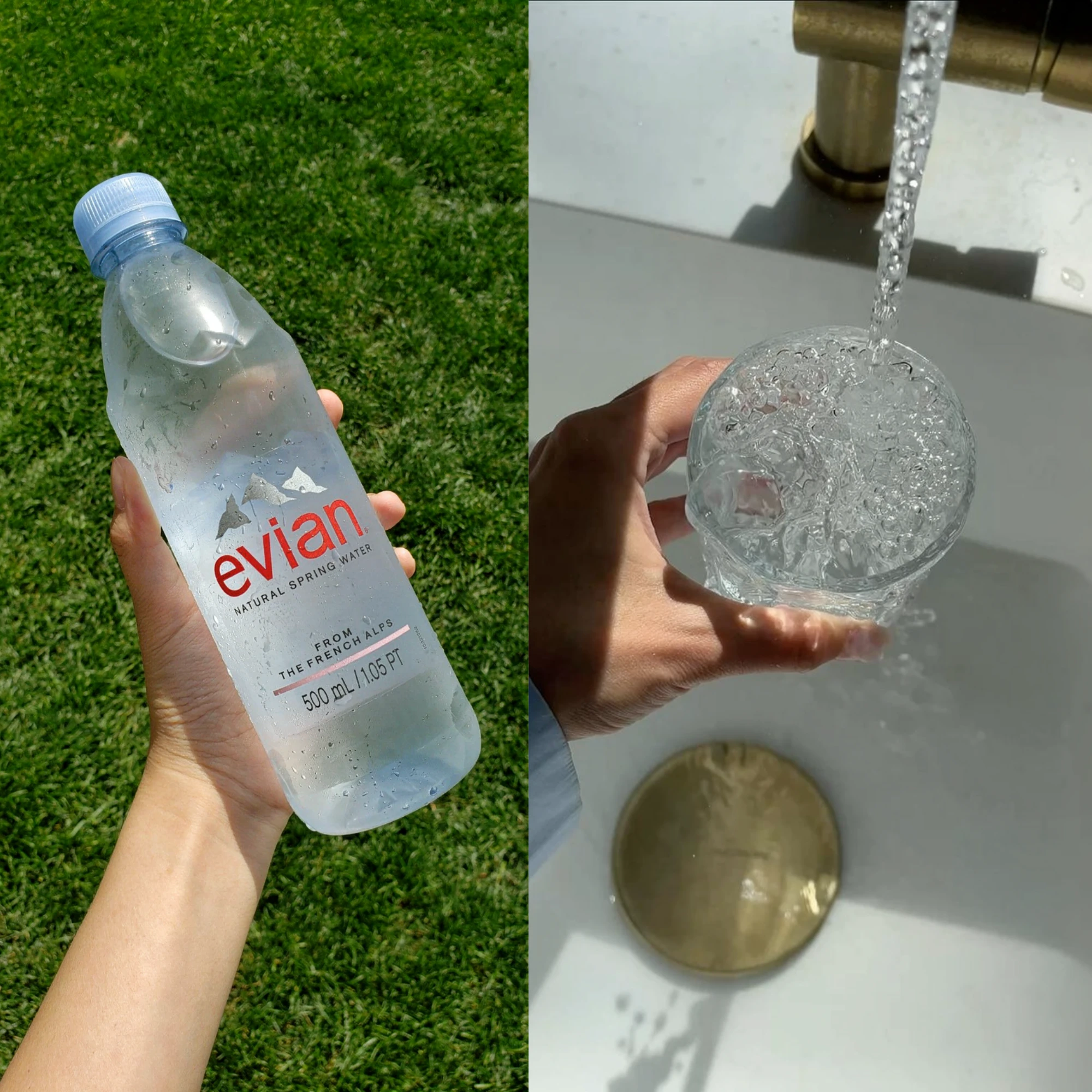
Here's the finding that surprises most people. A review of more than 140 studies estimated that people who drink bottled water take in about 90,000 more microplastic particles a year than people who drink tap water. An Ohio State study published in January 2026 also found higher levels of the smallest micro and nanoplastics in bottled water than in treated tap water.
If you buy premium bottled water to play it safe, filtering what comes out of your own tap may do more for you, and create less plastic waste along the way.
Fluoride vs lead, PFAS and microplastics at a glance
| Contaminant | Main source | Canadian limit | Why it matters |
|---|---|---|---|
| Fluoride | Added at a few plants; natural in some groundwater | 1.5 mg/L (MAC) | Harm linked mainly to levels above 1.5 mg/L; barely used in Quebec |
| Lead | Old service lines, plumbing and solder | 0.005 mg/L (MAC) | No known safe level; affects children's development |
| PFAS | Industrial and consumer products | 30 ng/L for 25 PFAS (objective, not binding) | Persistent; listed as harmful by Ottawa; rarely monitored |
| Microplastics | Plastic breakdown, bottles, packaging | None | Emerging research; higher levels in bottled water |
The pattern is clear. Fluoride is measured, regulated and largely absent from Quebec taps. The other three are either tied to your building's pipes, not routinely tested, or not regulated at all. Those are exactly the gaps a standard "meets all standards" message from your city can't close.
Frequently asked questions
Is fluoride in tap water safe?
At the levels used in Canadian fluoridation programs, about 0.7 mg/L, Health Canada considers it safe. The strongest evidence of harm involves levels above 1.5 mg/L.
Does Montreal add fluoride to its water?
No. Montreal has never fluoridated its own supply, and the city voted to end fluoridation at the two West Island plants that did.
Does boiling water remove lead or PFAS?
No. Boiling removes neither, so reducing them takes the right filtration or, for lead, replacing old pipes.
Is bottled water safer than tap water?
Not when it comes to microplastics. Research suggests bottled water drinkers ingest far more plastic particles than tap water drinkers.
Know what's actually in your water
Fluoride will keep making headlines. What matters for your household is what actually flows from your tap, and whether "acceptable" is the standard you want to live by. You don't exercise only because inactivity is illegal. Your water deserves the same standard: optimal, not just compliant.
Purely's Tap Water Database brings municipal water quality reports from across Quebec and Ontario into one place. Enter your postal code to see how your area ranks, its Optimal Score, and how each detected contaminant compares with the provincial limit. Then make your next decision with real data, not headlines.