For decades, detergent and fabric softener makers have quietly formulated around two problems in ordinary tap water: chlorine that fades dyes, and hard water minerals that leave fabric stiff and dull. This guide covers what each one does to your clothes, where the evidence is strong, where it's thin, and what actually changes when the water going into your machine is cleaner.
Your washing machine uses the same water you drink
In most Canadian cities, the water filling your washer is the same treated municipal water that comes out of your kitchen tap. It carries two things that matter for fabric.
The first is chlorine. Cities keep a small amount in the pipes so bacteria can't regrow on the way to your home. According to Health Canada, free chlorine in most Canadian distribution systems sits between 0.04 and 2.0 mg/L.
The second is hardness, the calcium and magnesium the water picks up naturally. Montreal's water averaged about 123 mg/L of hardness in the city's 2022 report. On the standard classification, 121 to 180 mg/L counts as hard, so Montreal sits right at the line.
Neither is a safety issue for drinking. Both have well documented effects on fabric.
Chlorine's slow bleaching effect
Chlorine bleach works by oxidation. It breaks apart the part of a dye molecule that gives it colour. The chlorine in tap water is the same chemistry at a tiny fraction of the dose. On its own, one wash does nothing you'd notice. The question is what happens across hundreds of washes.
The laundry industry has been answering that question for a long time. Patent filings for fabric softeners note that cities typically leave about 1 to 2 ppm of chlorine in the water, and that this small amount can fade some fabric dyes. That's why many detergents and softeners contain ingredients called chlorine scavengers, whose only job is to neutralize the chlorine in your wash water before it reaches your colours.
The fabric side tells the same story. Reactive dyes became the most common dyes for cotton because they're vivid and hold up well to washing. Their known weak spot is chlorine. Dye chemistry patents describe cotton dyed with reactive dyes fading or changing shade from trace amounts of chlorine in city water and pool water.
The rinse is where the damage happens
Here's the detail most people never hear. During the wash cycle, the dirt on your clothes and the scavengers in your detergent soak up most of the chlorine. Then the machine drains and refills for the rinse.
That rinse water is fresh, fully chlorinated tap water, and by then the detergent's protection is gone. The same softener patent explains that fading from tap water over time comes more from chlorine in the rinse than from the wash itself. It's also the last water your clothes sit in before they come out of the machine.
What the evidence doesn't say
Chlorine isn't the main reason every shirt fades. When Cotton Incorporated tested how laundering conditions affect colour, black cotton dyed with well chosen reactive dyes lost no more colour in chlorinated city water than in chlorine-free water. Most of the colour loss came from friction between garments when the machine used too little water. Front-loading machines also preserved colour better.
So the fair takeaway is this. How much chlorine fades a garment depends on how that garment was dyed, and the care label won't tell you. Well made, chlorine-resistant dyes shrug it off. Chlorine-sensitive dyes don't. Removing chlorine takes one known fading factor off the table for every piece you own, whichever kind it is.
Wool, silk and cashmere: the same chemistry as your hair
If you've read our guide on shower filter benefits, this part will sound familiar. Wool and cashmere are made of keratin, the same protein as human hair. Chlorine targets the sulphur bonds that hold keratin together, according to a review of how chlorine reacts with keratin fibres.
The textile industry uses this on purpose. The most common way to make wool machine washable is a chlorine treatment that etches the tiny scales on each fibre so they can't lock together and felt. That's a deliberate, concentrated dose, far stronger than tap water. But it shows how readily chlorine changes these fibres.
There's also direct evidence at tap water levels, on hair rather than sweaters. A 2025 study from Japan washed dyed hair repeatedly with either normal tap water or water with the residual chlorine removed. Colour faded more with chlorinated water in every shade tested. Hair isn't knitwear, but it's the same protein holding dye, so it's a reasonable signal for your wool and cashmere too.
Silk is a protein fibre as well, which is why every silk care label warns against chlorine bleach. Spandex is another fibre that chlorine breaks down over time, which is why swimwear brands sell chlorine-resistant fabrics for pool use.
Hard water: why towels turn stiff and whites go grey
Chlorine attacks colour. Hard water works differently. It leaves something behind.
Most detergents rely on cleaning agents called anionic surfactants. When they meet calcium and magnesium, part of them reacts to form an insoluble residue instead of cleaning. A 2016 study in the Journal of Oleo Science tested this on cotton and towelling. As water hardness went up, less dirt came out and more of it settled back onto the fabric. Under the microscope, the calcium and detergent residue clung to the fibres and stayed there after washing. The researchers also measured significant changes in the cotton's mechanical properties and how well it absorbed water.
At home, that shows up as:
- Stiff, scratchy towels that absorb less the older they get
- Whites that drift grey as dirt and mineral film build up
- Colours that look flat, as if a dull film sits over them
- Fabric that feels rough instead of soft, even with softener
Detergent makers treat this as a real wear mechanism, not a cosmetic one. Their wash tests measure the mineral buildup left in fabric, called inorganic incrustation, after as many as 25 repeated wash cycles, and note that cleaning performance drops as that buildup grows.
Softer water cleans better with less
The best known research here comes from a 2011 laundry study funded by the Water Quality Research Foundation. It found that softened water removed stains as well or better with half the detergent and cold water (about 15°C) instead of warm (about 38°C). Softened water with the least detergent and the coldest wash even produced whiter results than hard water with more detergent and more heat. One caveat: the foundation is the research arm of the water treatment industry, so treat the exact percentages with some caution. The direction of the finding matches the chemistry.
This matters for lifespan because colder washes and less detergent are themselves gentler on clothes. In the Cotton Incorporated testing, powder detergent reduced colour strength more than washing with no detergent at all.
Filtration, scale prevention and softening are different jobs
This is the part most filter companies skip, so we'll be direct about it.
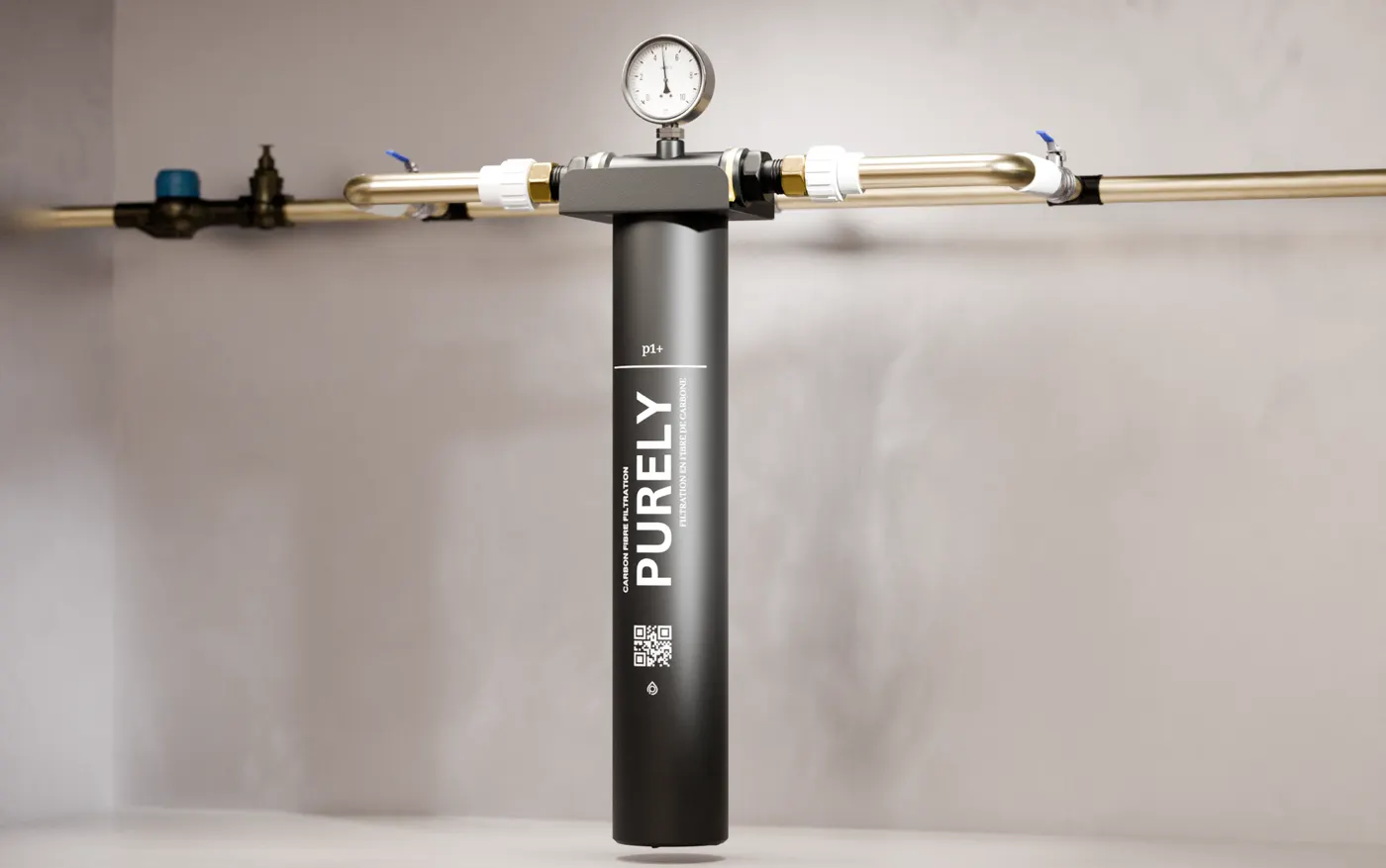
A carbon-based whole-home filter removes chlorine, chlorine byproducts and other chemical contaminants. It does not remove calcium and magnesium. Purely's P1+ 2-Stage Defender is designed to keep those naturally occurring minerals in your water on purpose.
What the P1+ adds is scale prevention. Its FOF media releases a small amount of phosphate into the water. Phosphates bind to calcium and magnesium so they're less likely to crystallize into scale on hot surfaces like your water heater and washing machine. It's the same family of ingredients detergent makers have long used to tie up hardness minerals during a wash.
That's different from softening. A softener removes the minerals. Scale prevention keeps them in the water but makes them less likely to build up. So the P1+ fully handles the chlorine side of laundry and helps on the mineral side, but if your water is very hard, it isn't a replacement for a softener.
Whatever system you use, a few habits make the biggest difference with hard water:
- Dose detergent for your water. Most labels give a higher dose for hard water. Too little leaves residue behind; too much is wasteful and harder to rinse out.
- Choose detergents built for hard water. Many include ingredients that bind calcium before it reaches the fabric.
- Consider a softener if your water is very hard. Above 180 mg/L, a dedicated softener is the most effective fix. At Montreal's level, the right detergent and dose go a long way.
You can see your area's hardness and chlorine-related readings in Purely's Water Report.
Will your clothes actually last longer?
Here's an honest read of the evidence.
Well supported: Tap water chlorine fades chlorine-sensitive dyes, and the laundry industry has spent decades formulating around it. Hard water reduces cleaning power and leaves mineral and detergent residue in fabric that changes how it feels and absorbs.
Reasonably supported: Softer water lets you wash colder with less detergent and get the same clean, and colder, gentler washes are easier on fabric.
Not yet studied: We couldn't find a controlled study that tracked the same garments for years in filtered versus tap water and measured how long they lasted. You may see a claim online that hard water wears clothes out 15% faster. We couldn't trace it to a published study, so we've left it out.
Put simply, filtered water doesn't make clothes indestructible. It removes one of the few things that works against your wardrobe every single wash, and that adds up over hundreds of cycles.
What tends to change with filtered water for laundry
These are the results people are most likely to notice when chlorine is gone. Results depend on your water, your machine and what's in your closet.
Darks and brights hold their depth
Black jeans, navy knits and saturated colours keep their richness longer, especially pieces dyed with chlorine-sensitive dyes. The difference shows over months, not after one wash.
Wool, silk and cashmere stay softer
Protein fibres meet less oxidation in every wash and rinse, so they tend to keep their soft feel and natural shine longer.
Rinses that finish the job
The rinse is the last water your clothes sit in. With filtered water, it rinses away detergent without adding chlorine back in at the very end of the cycle.
Better value from what you invest in
If you buy quality clothing, premium bedding or good towels, the water you wash them in is part of how you protect that investment.
Laundry habits that protect fabric in any water
Water is one factor. These habits matter too, and most of them come straight out of the research above:
- Wash cold when you can. Lower temperatures are easier on dyes and fibres.
- Don't overload the drum. Too little water per garment increases friction, which drove most of the colour loss in one Cotton Incorporated study.
- Use a front loader if you have the choice. It preserved colour better in testing.
- Turn darks and prints inside out. It moves the friction to the inside of the garment.
- Measure detergent. More isn't cleaner, especially in hard water.
- Air dry delicates. Heat adds its own wear.
Laundry water at a glance
| Factor | What it does to clothes | Fixed by chlorine filtration? | Fixed by softening? |
|---|---|---|---|
| Chlorine (0.04 to 2.0 mg/L) | Oxidizes chlorine-sensitive dyes, mostly during the rinse | Yes | No |
| Chlorine on protein fibres | Reacts with keratin in wool and cashmere and with silk | Yes | No |
| Hardness (Montreal about 123 mg/L) | Leaves mineral and detergent residue; stiffens fabric, greys whites | Partly, with scale-prevention media | Yes |
| Detergent overuse | Residue, colour loss, harder rinsing | No | Lets you use less |
| Friction and heat | Fading, pilling, shrinking | No | No (habits help) |
Frequently asked questions
Does chlorine in tap water fade clothes?
It can. Laundry product patents note that the 1 to 2 ppm of chlorine typical in city water can fade some fabric dyes, which is why many detergents include chlorine scavengers. How much it affects a garment depends on the dye used to colour it.
Will clothes still get clean without chlorine in the water?
Yes. The small amount of chlorine in tap water isn't what cleans laundry. Most of it gets used up by the dirt in the wash. Cleaning comes from detergent, water and the machine's agitation.
Does a water filter fix hard water laundry problems?
Not on its own. Carbon filtration removes chlorine and chemical contaminants, not calcium and magnesium. Systems with scale-prevention media, like the P1+, help keep those minerals from building up as scale, but they don't soften water. For very hard water, pair the right detergent dose with a softener.
Do I need a filter on my washing machine or for my whole home?
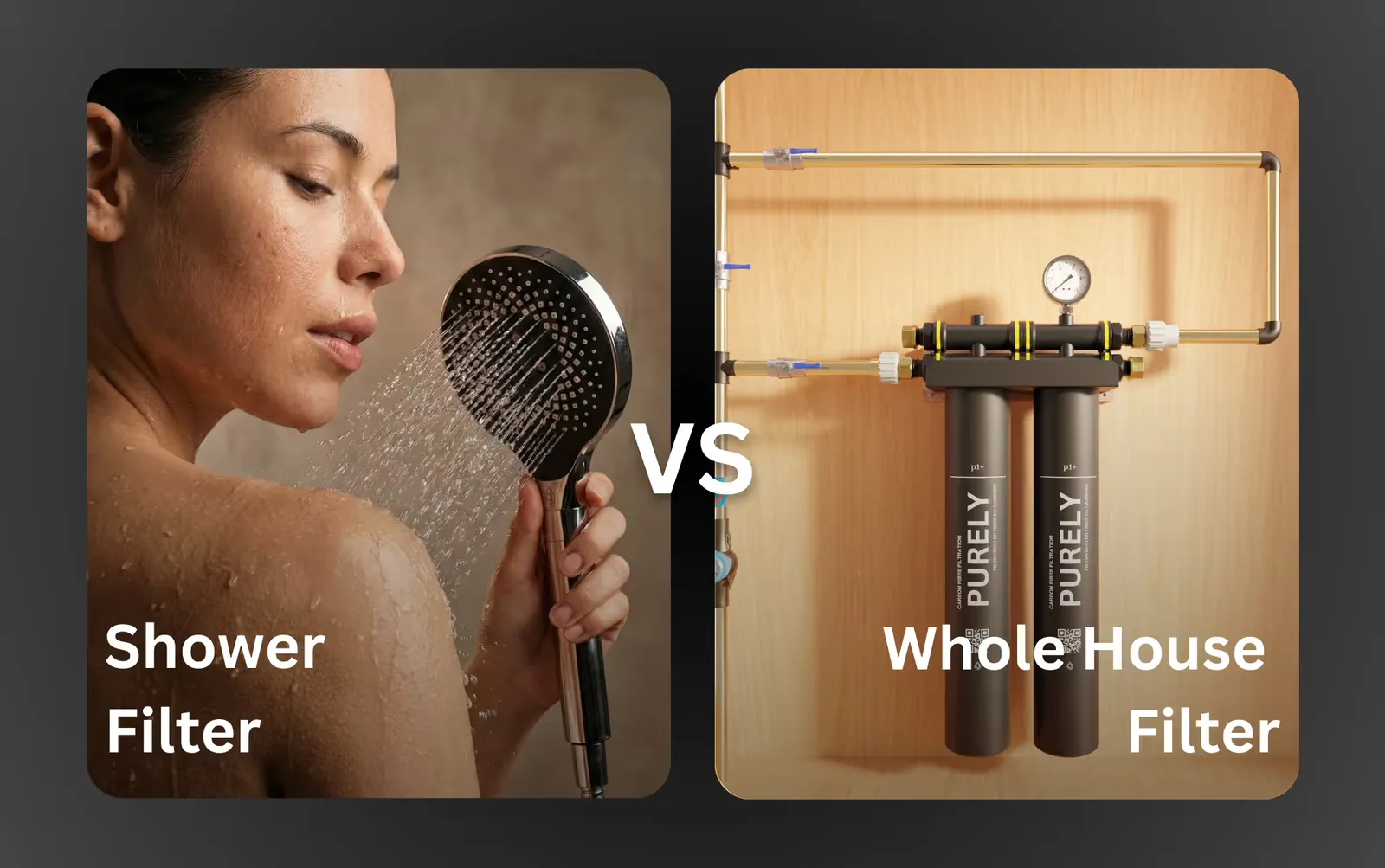
Inline washing machine filters exist, but a whole-home system filters the washer along with every shower, bath, sink and tap. If you're also thinking about your skin, hair or drinking water, one system covers all of it.
Does Montreal tap water contain chlorine?
Yes. Like most Canadian cities, Montreal keeps a chlorine residual in its pipes to protect water on its way to your tap. Its water is also at the threshold of being classed as hard.
Protect what you wear, not just what you drink
You choose fabrics carefully, wash them carefully and expect them to last. The water they're washed in deserves the same standard: not just acceptable, but optimal.
The P1+ 2-Stage Defender is installed at your main water line, so your washing machine gets filtered water along with every shower, bath, sink and tap in your home. It's sized for homes of 3 to 4 people, keeps naturally occurring minerals in your water while its FOF media helps prevent scale, goes up to 2 years between cartridge replacements and comes with a 5-year warranty.
Explore the P1+ 2-Stage Defender whole-home system →
Not sure what's in your water?
Check your water quality now →