If you’ve ever searched water filter replacement schedules online, you’ve probably notice done thing fast: there isn’t a single universal answer. The right replacement timing depends on filter technology, water quality, household size, and how much water you actually run through the system.
In this guide, we’ll break down typical industry ranges (including why some cartridges need replacing every few months), explain why higher-performance media can last longer, and share a simple “capacity-first” philosophy you can use to plan your water filtration system maintenance with confidence whether you’re using an under sink water filter, a shower filter,or a full home water filter system.
The quick answer: replacement depends on the media and the load
Most water filters don’t “fail” on a fixed calendar date. They reach a performance limit based on:
- Total water used (volume)
- Contaminant load (chlorine level, sediment, organics, etc.)
- Flow rate and contact time
- Media type and design (granular vs structured formats)
That’s why two homes can use the same cartridge and get totally different results: a family of five on heavily chlorinated municipal water is putting a very different load on a cartridge than a single-person household with low-demand usage.
Typical industry ranges by filter type
1) Granular activated carbon (GAC): often 3–6 months
In the broader market, many consumer filters (pitchers, faucet filters, basic inline units) use granular activated carbon (GAC). GAC can work well, but it often reaches its effective limit sooner because the granules can allow channeling over time, and the cartridge size in many products is small.
Common GAC replacement guidance in the industry:
- 3 months on smaller cartridges / high-use situations
- 6 months on larger formats / moderate usage
This is why you’ll frequently see “3-month filter changes” in big-box retail products and many entry-level systems.
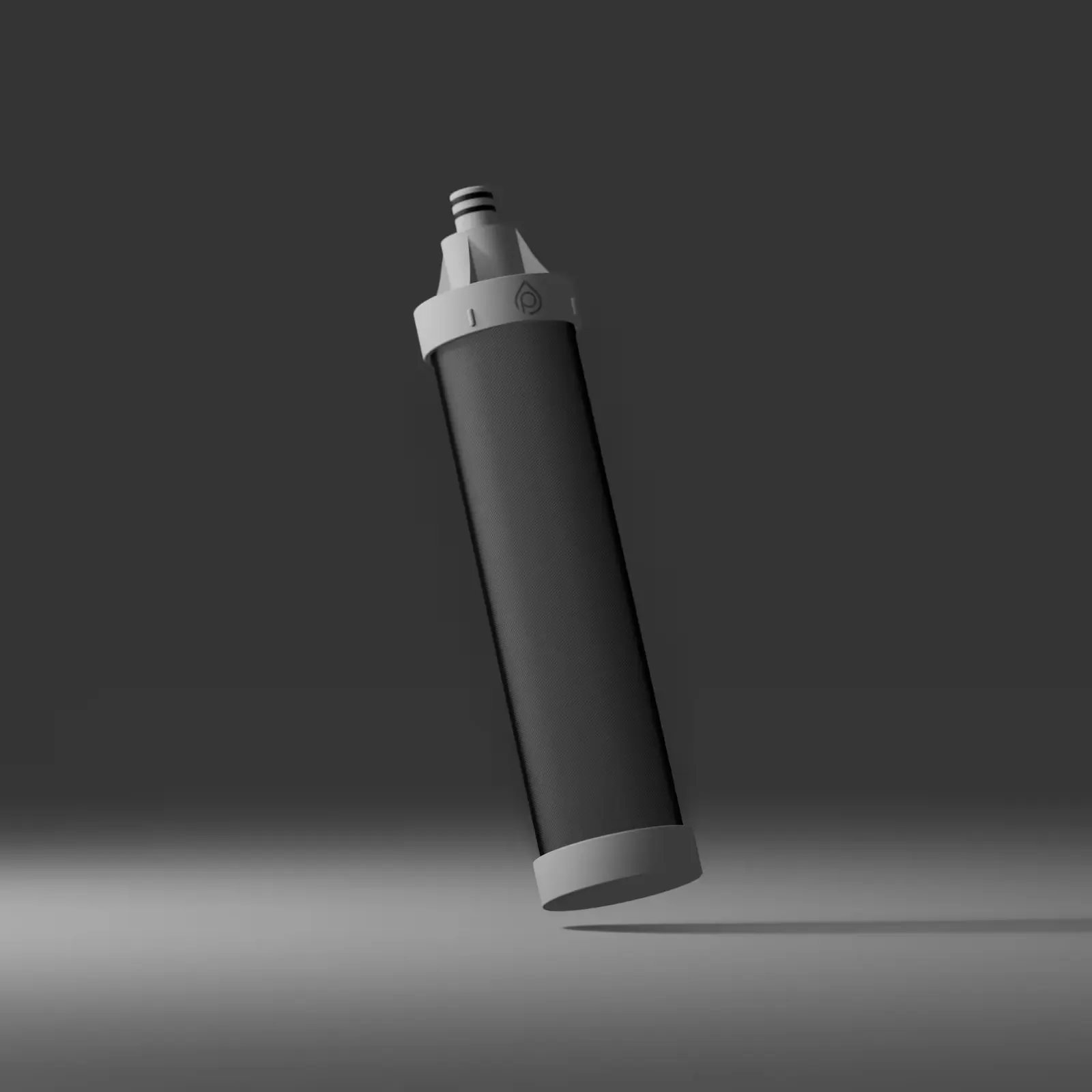
2) ACF (Activated Carbon Fiber): commonly closer to 2 years (by design)
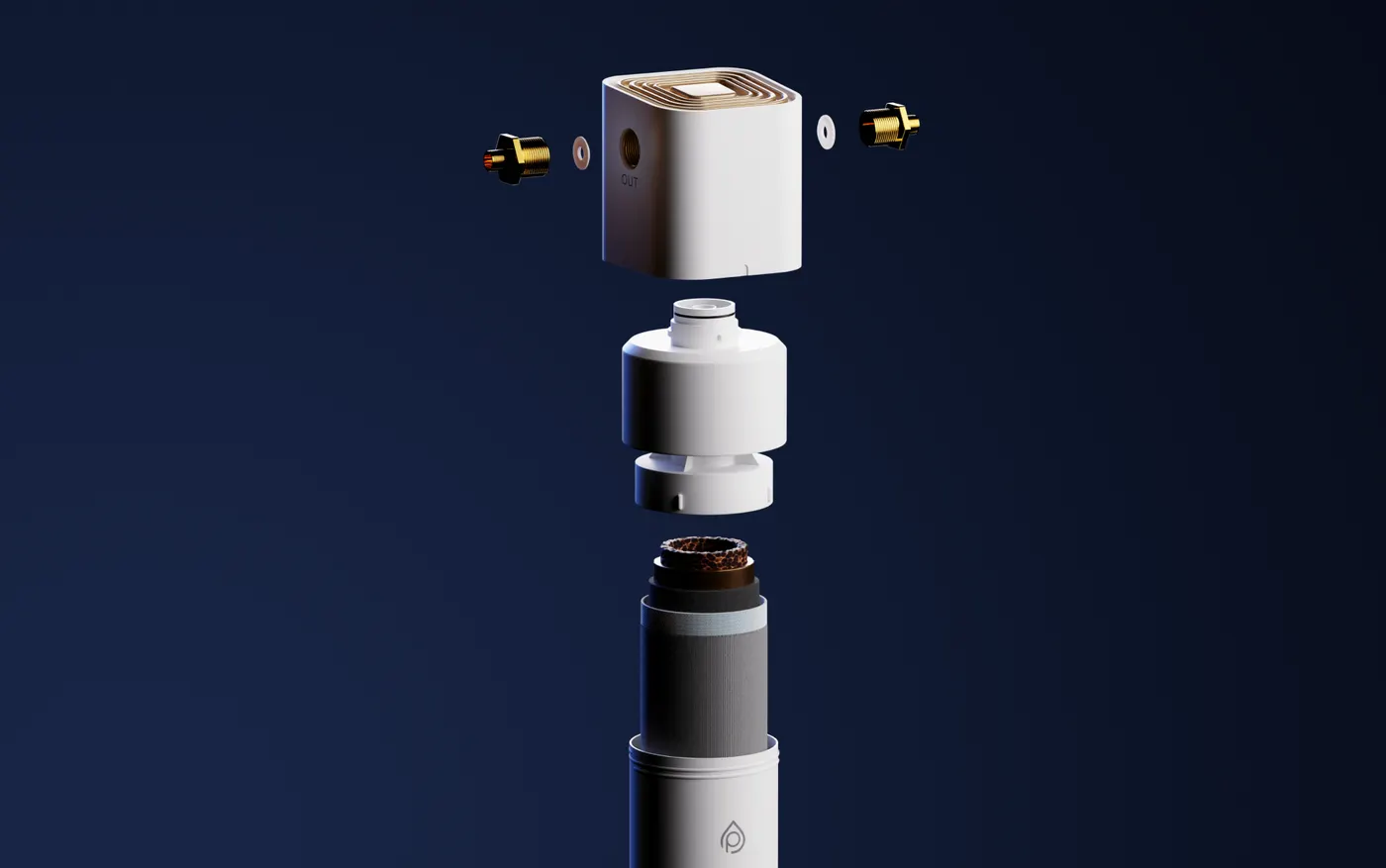
With ACF, the structure of the carbon media and how it’s presented in a cartridge can support longer service life—especially when the cartridge is appropriately sized for the application(drinking, shower, or whole-home).
A practical way to think about it:
- Drinking-water cartridges and whole-home solutions (larger media volume, steady use)can often be engineered for ~2-year service intervals.
- Shower cartridges (smaller media, higher flow, shorter contact time) are more commonly engineered around a ~1-year cadence.
So when people ask, “Why do some filters last 3 months and others last 2 years?” the answer is usually a mix of media design + cartridge size + how hard you’re working it.
The best way to plan water filter replacement: use capacity +household use
A calendar reminder is convenient, but the most accurate approach is capacity-based:replace the cartridge when you hit its rated capacity or when you reach a sensible maximum time window whichever comes first.
This is especially important for water filtration system maintenance because it keeps your media operating in its best performance range rather than running it indefinitely just because the water “still tastes fine.”
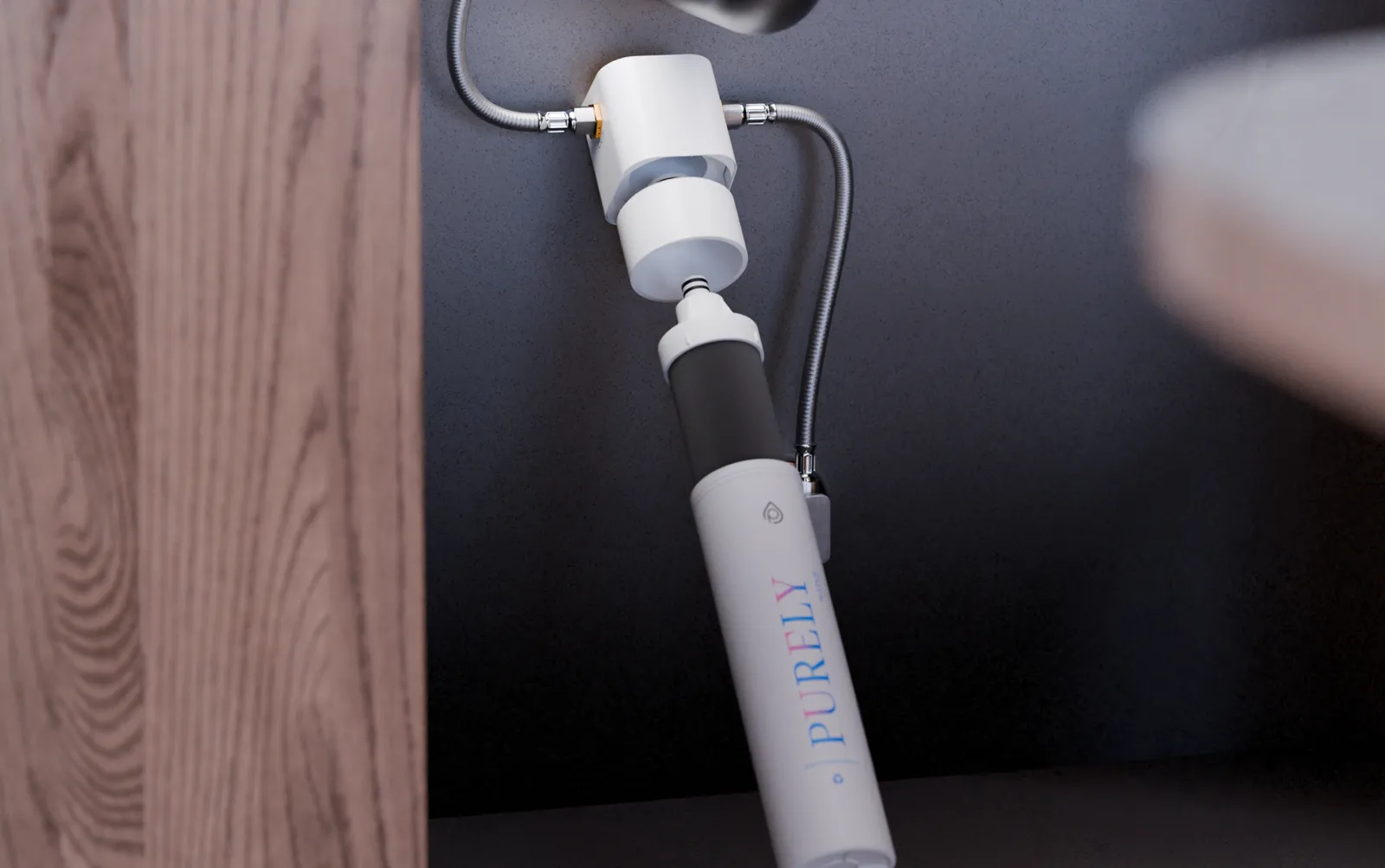
Under sink water filter replacement: Purely P1 Under-Sink (2 years or 60,000 L)
For Purely’s P1 Under-Sink, the recommended water filter replacement cadence is:
Replace every ~2 years or 60,000 liters — whichever comes first.
Purely uses this guideline because it matches real household behavior. For a typical home of 3–4 people, 60,000 liters usually works out to roughly two years of use when the filtered faucet is being used for drinking water, cooking, coffee, tea, and food prep.
If your home has:
- A larger family, or
- Heavy filtered-water usage (constant refills, frequent cooking, daily kettle use, etc.)
…you may reach the 60,000-liter capacity sooner, and an earlier replacement is the smarter move to keep performance consistent.
Practical signs you’re approaching replacement time
Capacity is the most accurate benchmark, but common “nudges” include:
- A noticeable drop in flow at the filtered faucet (depending on setup)
- Taste/odor changes compared to your normal baseline
- Usage that clearly exceeds the “typical household” range
Shower filter replacement: Purely S1 Shower Handle / S2 Shower Filter (typically 1 year, adjusted by users)
For Purely’s shower filtration systems (S1 and S2), the recommended replacement cadence is typically:
Replace about once per year for 1–2 regular users, and sooner as user count increases.
Purely uses this approach because shower filtration runs in a different environment than drinking water filtration:
- Higher flow
- Hot water
- Smaller cartridge footprint
- A usage pattern that scales directly with how many people shower daily
A helpful rule of thumb:
- 1–2 people: ~12 months
- 3–4 people: ~8–10 months (depending on frequency)
- 5+ people: ~6–8 months
If multiple people are using the same shower every day, you’re simply pushing more total water volume through the cartridge—which shortens the filter lifespan.
Whole-home filter replacement: Purely P1+ Defender (sized to target a ~2-year cadence)
For Purely’s P1+ Defender whole-home system, the goal is to size the system so cartridge replacement typically lands around a ~2-year cadence, based on household usage.
Purely’s sizing philosophy is capacity-first:
- Daily liters per person × number of people in the home × time
- A simple planning assumption used for whole-home sizing is:
- ~250 liters per day per person × household size
Then Purely matches that expected household demand to Defender stage capacities, such as:
- Defender 1-stage: ~240,000 liters
- Defender 2-stage: ~480,000 liters
- Defender 4-stage: ~960,000 liters
The goal is to select the Defender configuration that aligns your home’s projected usage with a ~2-year replacement window—not because “two years is magic,” but because it’s a smart target for keeping filtration performance consistently high and predictable for the household.
What shortens a filter lifespan?
Even with high-quality systems, a few factors can reduce the expected replacement interval:
- Higher-than-average water usage Large families, frequent cooking, heavy shower use, lots of guests.
- Higher contaminant load More chlorine, more sediment, more organics—your filter is working harder per liter.
- High flow demands If a cartridge is undersized for the flow rate, performance can decline sooner.
- Multiple endpoints on one cartridge If one drinking cartridge is feeding multiple fixtures, you’ll reach capacity faster.
The takeaway: replacement intervals are best treated as ranges, and the “right answer” is the one that matches your home’s real usage.
How Purely approaches replacement
One of the biggest reasons people miss water filter replacement is simple: life gets busy, and most brands leave maintenance entirely on the customer
Purely takes a different approach. Instead of giving a generic schedule, Purely sizes and recommends systems around household usage, how many people are in the home, how much water you’re likely to run, and which application you’re filtering (drinking, shower, or whole-home). That’s also why Purely’s whole-home Defender line uses staged capacities (ex:~240,000 L / 480,000 L / 960,000 L): it helps match the system to the home so replacement timing stays predictable.
And once a customer is set up, Purely helps keep maintenance simple by tracking replacement timing and sending reminders when it’s time to swap cartridges so performance stays consistent without you needing to babysit dates or do guesswork.
A simple, no-stress water filtration system maintenance plan
Here’s a clean maintenance approach you can use across products:
- Under-sink drinking filter: plan around 2 years or the rated liters (ex: 60,000 L)
- Shower filter: plan around 12 months (adjust sooner as user count rises)
- Whole-home: choose the stage level so your household volume targets ~2 years per set of cartridges
And then build one habit:
- Record install date (sharpie on cartridge box, or a note on your phone)
- Set reminders (calendar alerts at 10–12 months for shower, 20–24 months for drinking/whole-home)
- Adjust earlier if usage is higher than the “typical household” assumption
That’s it. You don’t need to over complicate it, just match your system’s rated capacity to your household’s real demand.
Final takeaway: water filter replacement should be capacity first, time-backed
If you want the most reliable approach to water filter replacement, don’t rely only on a generic “replace every X months” rule. Instead:
- Use technology + cartridge size to understand the expected range
- Anchor your decision in rated capacity (liters)
- Keep a sensible time window so performance stays consistent and predictable
When you do it this way, your water filtration system maintenance becomes straight forward: you’re replacing cartridges on schedule based on how your home actually uses water, whether it’s an under sink water filter, a shower system, or a whole-home setup.