When people start looking into home water filtration, they usually begin with one simple question: where do I actually want cleaner water? For some households, the answer is “right where I want it most” at the shower. For others, it’s “everywhere” every faucet, every bath,every load of laundry, every glass of water.
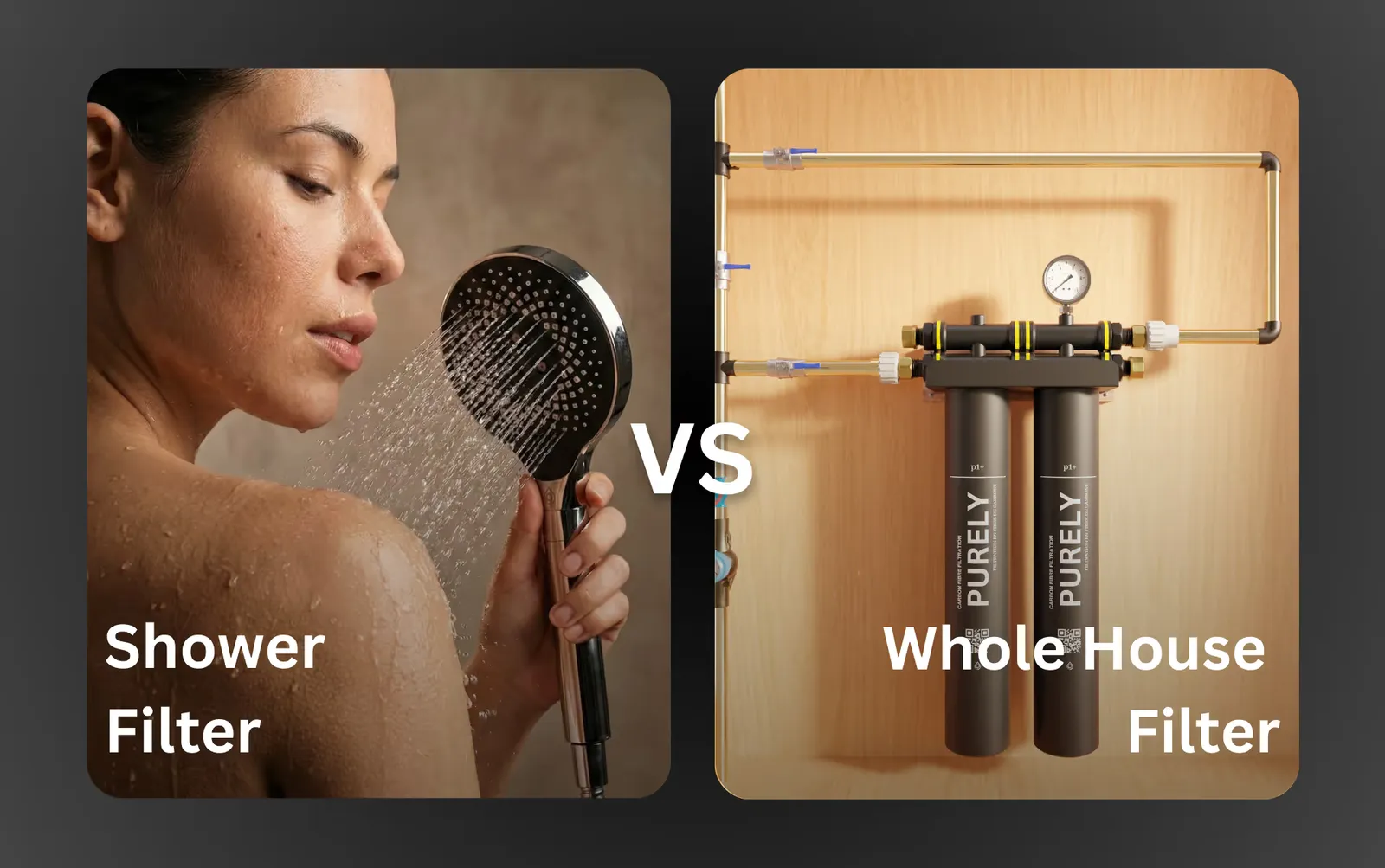
That’s the big difference between a shower filter (point-of-use) and a whole house water filter (point-of-entry). They can target similar issues at the water level like chlorine and sediment but they do it in different ways, for different scopes, and for different goals.
What a shower filter does (point-of-use filtration)
A shower water filter installs directly on one shower hose/head (either between the pipe and the shower head, or built into a filtered shower head/handle). Its job is straightforward: treat the water right before it hits you.
Most people choose a shower filter because they want to reduce common “quality of life”irritants tied to municipal water—especially chlorine. A chlorine removal filter at the shower can help address that “pool smell,” and it can be a practical upgrade if your main concern is the shower experience rather than the entire home
Shower filters are also popular because they’re:
- Fast to install (often minutes, no plumber)
- Lower upfront cost
- Easy to test (you’ll notice the change in smell/feel right away)
- Targeted (ideal if you only care about one bathroom or one shower)
In other words, a shower filter is the “quick win” for improving water quality where you’re most exposed to warm, high-flow water.
What a whole house water filter does (point-of-entry filtration)
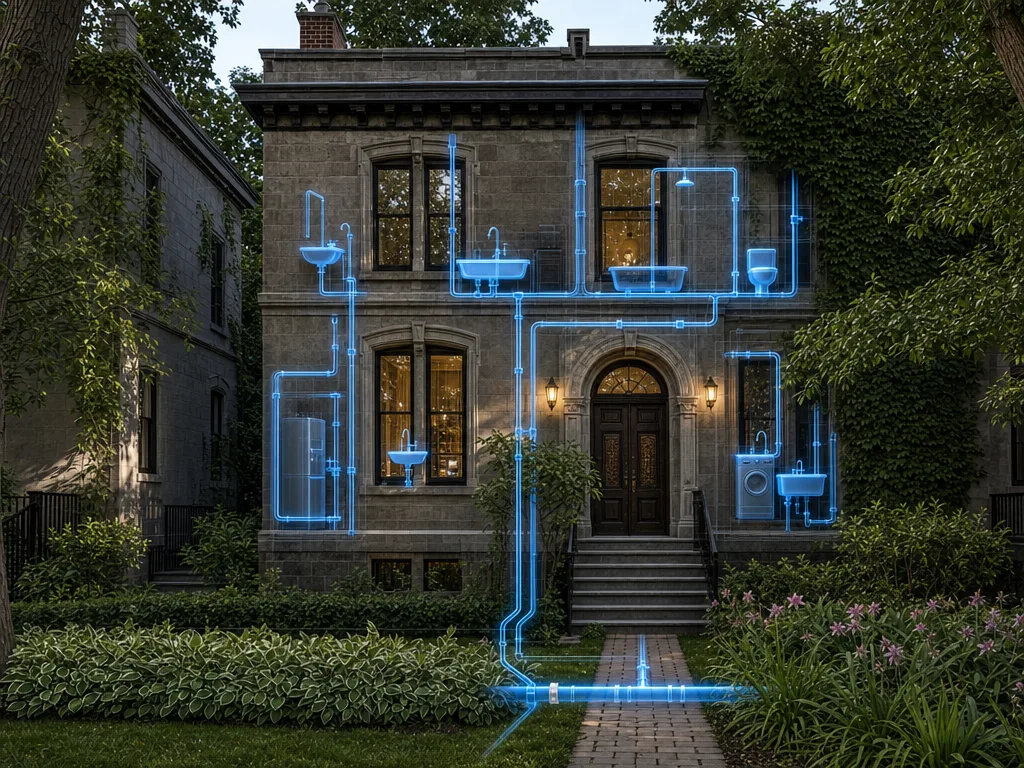
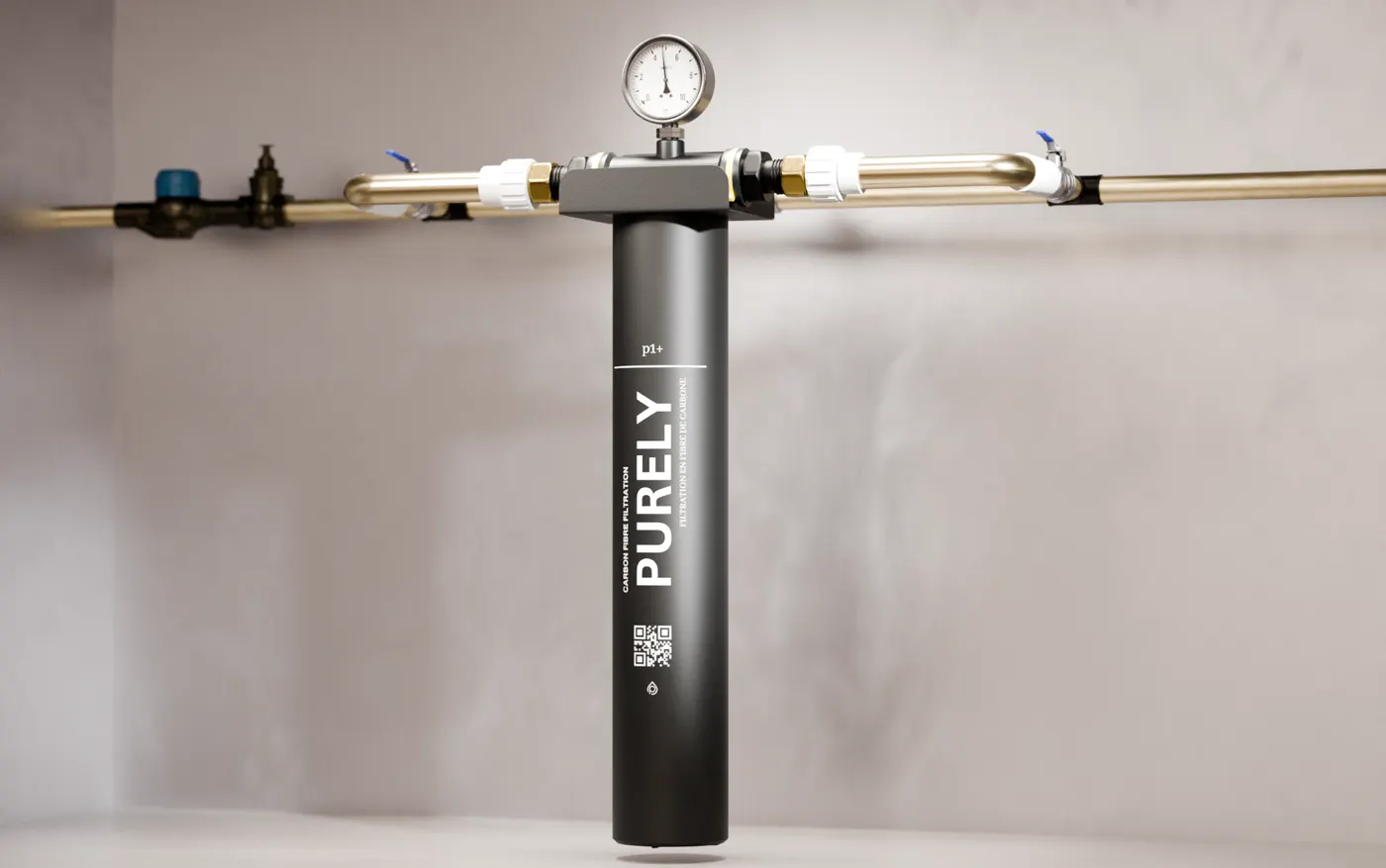
A whole house water filter is installed where water enters the home—before it branches off to showers, tubs, sinks, laundry, and appliances. This is why it’s often called a home water filtration system or point-of-entry system: it treats water for the entire property, not just one endpoint.
At a basic level, a whole house system is doing the same type of job as a shower filter—improving the quality of water that’s delivered to you. The difference is scale and consistency.
A whole home system is designed for:
- High flow rates across the home (multiple faucets running, showers, laundry, etc.)
- Continuous filtration throughout daily use
- Broad coverage for all water outputs
And it comes with a major advantage: you’re not improving one shower you’re improving every shower, plus all the other water contact points you might not think about.
The biggest benefit: full-home coverage
- Every shower and bathtub
- Bathroom and kitchen sinks
- Laundry (which impacts clothes, towels, and bedding)
- Water-fed appliances (dishwasher, humidifier, etc.)
- And, depending on the system design, it can also serve as the foundation for better drinking water
So if your goal is home-wide water quality, especially for families, point-of-entry filtration tends to be the more complete solution.
How they do similar things “at the level of the water”
Here’s the key: both systems work by reducing or capturing unwanted substances as water passes through filter media.
Even though the housing and placement are different, the concept is the same:
- Water flows through a filtering material.
- That material traps particles (like sediment) and/or reduces chemicals (like chlorine) through adsorption or chemical reaction.
- Cleaner water comes out the other side
A shower filter usually focuses on a narrower mission—often emphasizing chlorine reduction at shower temperatures and flow rates. A whole house filter is engineered to do that at scale for the entire home, which means larger filter media, higher capacity, and systems built to maintain performance across varying demand.
Which one should you choose?
The best choice depends on what you’re trying to solve.
Choose a shower filter if:
- You want a simple upgrade for one bathroom
- Your main goal is reducing chlorine exposure in the shower
- You rent, move often, or want minimal installation
- You want the fastest improvement with the lowest upfront commitment
Choose a whole house water filter if:
- You want all showers, tubs, and faucets filtered—not just one
- You’re thinking long-term about overall home water quality
- You have a family (more water use, more touch points)
- You want a system that improves water for bathing, washing, and daily household use
Ultimately, both options improve your water at the source they just solve the problem at different scales. A shower filter is the simplest way to upgrade one bathroom quickly, while a whole house water filter is the long-term move if you want consistent water quality across every shower, tub, faucet, and appliance in the home. If you’re unsure, start by deciding what matters most right now: a targeted improvement in one space, or a full-home upgrade that covers everything. Either way, the goal is the same cleaner-feeling, better-quality water you can rely on every day.