Reverse Osmosis Water Filtration is one of the most thorough forms of home water filtration. It can produce clean-tasting purified water by pushing water through a fine membrane. It can help homes with specific water quality concerns, but it is not the best choice for every tap, every family, or every municipal supply.
Understanding both the benefits and the tradeoffs helps you choose a water purification setup that fits your real needs instead of paying for more filtration than your water requires.
What reverse osmosis does
Reverse osmosis is a water purification process that uses pressure to push water through a very fine membrane. The membrane lets water molecules pass while reducing many dissolved substances that basic filters are not built to catch.
In a typical reverse osmosis water filtration system, water often moves through several stages. These may include sediment filtration, carbon filtration, the RO membrane, and a final polishing filter before the water reaches a dedicated faucet. If you want to see how a staged approach works without the tank and the drain line, our guide to multi-stage filtration walks through the same idea in a simpler format.
The result is not magic. It is a practical form of water treatment that works well for certain problems and less well for others.
The main benefits of Reverse Osmosis Water Filtration
The biggest benefit of Reverse Osmosis Water Filtration is broad reduction. A simple pitcher or fridge filter may focus mostly on taste, chlorine, and a few common impurities. RO systems are built to reduce many dissolved substances that pass through less advanced filters.
That can matter when source water has high total dissolved solids, a salty or mineral-heavy taste, or a specific contaminant that the selected system is certified to address.
Another practical benefit is consistency. Once installed and maintained correctly, a reverse osmosis water filtration system can provide purified water from a dedicated faucet. That convenience can reduce bottled water use, cut plastic waste, and make it easier to drink more water during the day.
Reverse osmosis can also help when water has a flat, metallic, bitter, or overly mineral flavor. These taste issues do not always mean the water is unsafe, but they can make people avoid drinking it.
When water tastes cleaner and more neutral, it is easier to use for:
- drinking
- cooking
- coffee and tea
- ice cubes
- soups and broths
- infant formula prep when a professional advises it
- aquariums
- misters or other appliances that benefit from lower dissolved solids
These benefits are real, but they matter most when they match a real water problem. Without that match, reverse osmosis may add complexity without enough extra value.
Reverse osmosis is not the right fit for every home
The biggest myth about reverse osmosis is that more filtration always means better water. In reality, water purification is about matching the treatment method to the water.
A system that removes almost everything may sound ideal, but it can be unnecessary, inefficient, and expensive if your water quality is already good.
Many homes on municipal water receive water that has already been treated, monitored, and tested to meet public drinking water standards. That does not mean municipal water is perfect everywhere. Local issues can still happen.
But typical municipal supplies often have low levels of many contaminants people worry about, especially when compared with untreated or poorly protected sources. If your water report and any home testing show no real issue with the contaminants reverse osmosis is designed to reduce, the downsides may not be worth it. You can check what is in your local water before committing to any system.
This point matters because every filtration choice has tradeoffs. A basic carbon filter may be enough for taste and chlorine concerns. A sediment filter may be enough for visible particles. A water softener may be more useful for hardness problems.
Reverse osmosis is best for removing dissolved substances, not for improving mild taste, odor, or uncertainty.
The size of the system can be a real downside
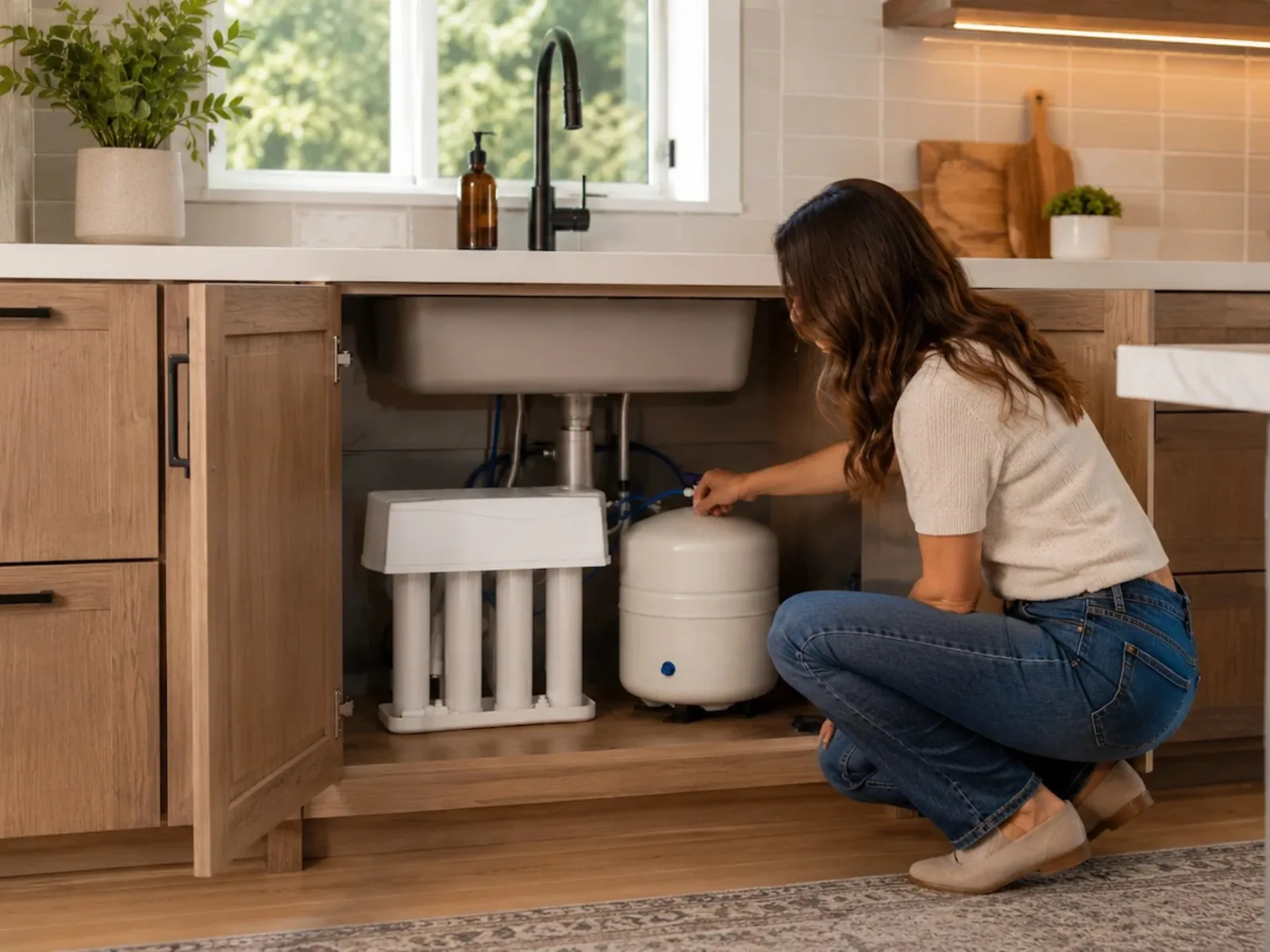
A reverse osmosis water filtration system is usually larger than many people expect. Unlike a simple faucet filter or pitcher, most under-sink RO systems need several filter cartridges, a membrane housing, tubing, a dedicated faucet, and a storage tank.
That footprint can take up valuable cabinet space. This is especially true in smaller kitchens, apartments, utility rooms, or homes where the space under the sink is already crowded with cleaning supplies, garbage disposal parts, or plumbing.
The storage tank is one major reason for the size. Because reverse osmosis works slowly, the system stores purified water so it is ready when you open the faucet. Without that tank, you might wait too long for a useful flow.
The tank solves one problem but creates another: it needs space and can limit how you organize the cabinet.
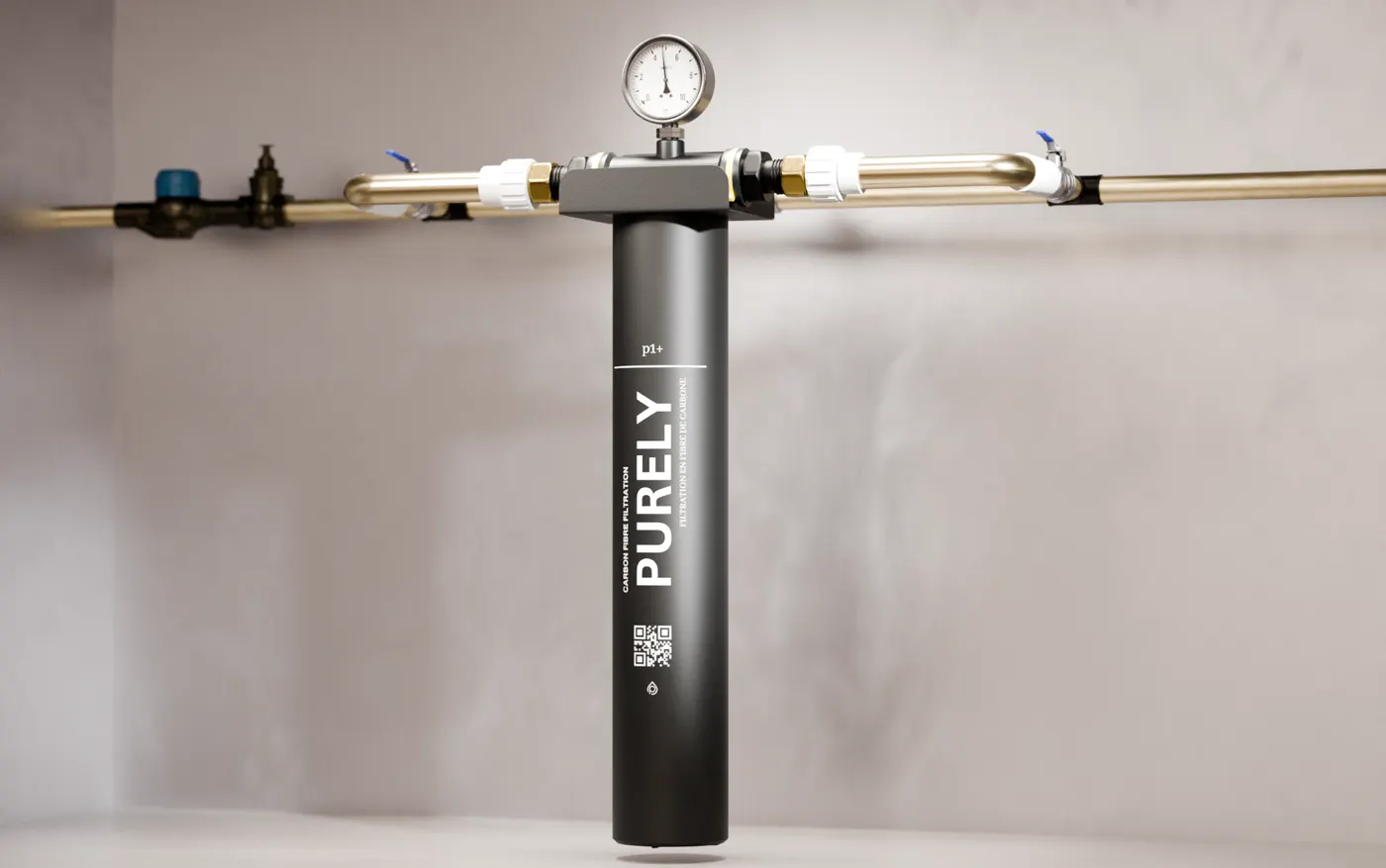
Installation complexity also follows from the size. More parts mean more connections, more tubing, and more things to check over time. Some homeowners are comfortable with that. Others want a simpler water filtration setup with fewer parts and easier access — the P1 under-sink system is a single cartridge with no tank, which is why it fits where an RO system often cannot.
Before choosing RO, it helps to look under the sink and ask a few practical questions:
- Is there enough room for a tank and several cartridges?
- Will the system block access to shutoff valves or plumbing?
- Is there space for maintenance, or will every filter change be frustrating?
- Can you install a dedicated faucet on the sink or countertop?
- Would a countertop, refrigerator, or whole-house option make more sense?
A system that technically fits may still be inconvenient if it makes daily use and maintenance harder. Size is not just an install detail; it affects how livable the system is.
Slow filtration is part of the tradeoff
Reverse osmosis works because it uses a dense membrane, but that same membrane slows the process down. Water cannot rush through it the way it moves through a basic carbon filter. Instead, the system gradually produces purified water and stores it in a tank for later use.
For normal drinking water needs, the tank may be enough. You can fill a glass, make coffee, rinse produce, or top off a kettle without thinking about production speed.
The limit shows up when demand is higher. Filling large pots, preparing for guests, making multiple pitchers, or using purified water for several tasks in a short time can empty the tank. Once that happens, the system needs time to refill.
This slow rate can be frustrating if you expect RO water to flow like a regular tap. It is also one reason reverse osmosis is usually used as a point-of-use system rather than a whole-home solution.
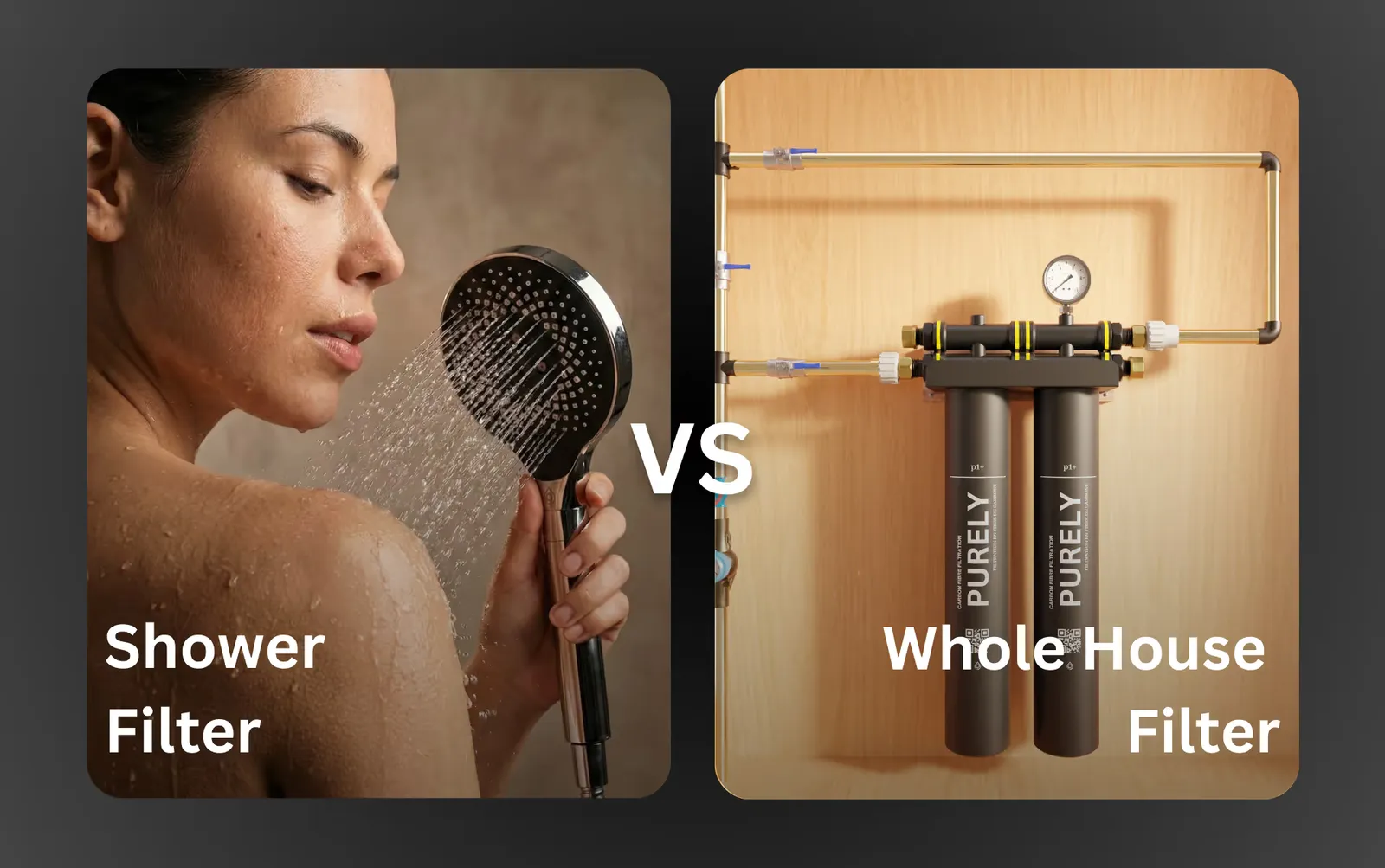
Filtering all water for various household uses is usually unnecessary and impractical for most systems. If whole-home coverage is what you are after, a whole-home system treats every tap at full flow instead.
The slow speed is not a defect. It is part of how reverse osmosis works. Still, it is a downside when convenience matters. If your main goal is fast access to better-tasting water, a simpler filtration option may feel better to use.
Why mineral removal matters
Reverse osmosis removes many dissolved substances, and that includes minerals that occur naturally in water. This can be helpful when minerals are causing bad taste, scale, or high dissolved solids.
But stripping minerals is not always ideal. It can leave water tasting flat, reduce naturally occurring mineral content, and create a level of purification that may be more aggressive than necessary for ordinary municipal water.
Minerals such as calcium and magnesium contribute to water’s taste and mouthfeel. They are also why some people prefer spring water or lightly mineral-rich water over highly purified water. When reverse osmosis removes those minerals, the result may taste clean to some people and dull to others.
Mineral reduction can also affect how water behaves in cooking and drinks. Coffee and tea extraction, for example, can change with mineral content.
Some people like the neutral base that RO water provides. Others feel that fully purified water lacks balance.
Many RO systems address this with a mineral add-back stage. This type of post-filter puts some minerals back into the water after purification.
That can improve taste, but it also adds another part to maintain and another factor to compare when shopping for a system.
The practical takeaway is simple: mineral removal is not automatically good or bad. It depends on your starting water quality and your preferences.
If your water is already good, removing and adding minerals might be unnecessary.
Maintenance and cost should not be ignored
Reverse osmosis systems need more ongoing care than many simpler water filtration options. They usually have multiple filters that need replacement on different schedules, plus an RO membrane that wears out over time.
Depending on the system, there may also be a storage tank, faucet, tubing, fittings, a flow restrictor, a drain connection, and an optional mineral add-back cartridge to monitor.
That maintenance adds cost over time. Replacement filters, membranes, sanitation, professional service, and repairs can make RO more expensive than expected.
The purchase price is only the start. The real cost is the lifetime cost of keeping the system working well.
Maintenance also affects performance. If filters are not changed on time, flow may drop, taste may suffer, and the membrane may be exposed to conditions that shorten its life.
A neglected RO system can become less effective and less pleasant to use, which defeats the reason for installing it in the first place.
High maintenance cost is a downside because it changes the value equation. If your water has a serious issue that reverse osmosis solves, the cost may be worth it. If your municipal water is already good and you only want a small taste boost, the same cost may be hard to justify.
A realistic maintenance checklist
- Check filter replacement needs before buying. Look at how many cartridges the system uses and how often you must change each one.
- Budget for membranes, not just filters. The RO membrane is central to performance and is usually more expensive than basic cartridges.
- Plan for sanitation. Tanks and lines may need periodic cleaning to keep the system fresh.
- Monitor flow and taste. Slower-than-normal output or flavor changes can signal clogged filters or service needs.
- Keep installation accessible. A cramped under-sink setup increases the likelihood of delaying routine maintenance.
The best system is not just the one that filters well on day one. Choose the one you can afford and maintain consistently.
Municipal water often does not need aggressive filtration
Tap water is treated before reaching homes. Many communities offer safe water for daily use without extra purification.
Water quality varies by location, and plumbing can affect what comes out of an individual tap. Even so, typical municipal supplies usually do not have high levels of many contaminants people connect with emergency-level filtration.
That makes it important to avoid choosing reverse osmosis out of fear alone.
This does not mean you should ignore concerns. Older plumbing, local advisories, odd taste, nearby industrial activity, private service lines, or vulnerable household members may justify testing and extra treatment.
But without evidence of a specific problem, using reverse osmosis to remove contaminants that are already present at low levels can mean accepting size, slow filtration, mineral stripping, and maintenance costs for limited practical gain.
A better first step is to identify what you are trying to solve.
If your concern is chlorine taste, a carbon filter may be enough. If your issue is hardness scale, a softening solution may be more useful. If you have documented dissolved contaminants that RO is designed to reduce, then reverse osmosis becomes a stronger choice.
This measured approach helps prevent over-filtering. It also helps you spend money where it improves daily life instead of investing in a system that looks impressive but does not match your real water quality.
When reverse osmosis makes sense
Reverse osmosis is most useful when the water concern is specific and measurable. A home with high dissolved solids, bad taste, well water problems, or contaminants can benefit from using RO.
It can also be a good choice for people who strongly prefer the taste of purified water and are comfortable with the install and maintenance needs.
RO may be a smart fit when someone wants one dedicated source of highly filtered water rather than treating the entire home. This point-of-use approach keeps the system focused on drinking and cooking water, where purification matters most.
It avoids the unnecessary burden of filtering water used for bathing, laundry, or irrigation.
Good use cases include:
- Homes with test results showing contaminants that the selected RO system is certified to reduce.
- Private wells that need targeted treatment after professional testing.
- Households that dislike the taste of high-mineral or high-dissolved-solid water.
In these situations, the benefits can outweigh the downsides. The key is choosing based on evidence, not assumption.
When another filtration option may be better
Not every water quality issue requires reverse osmosis. In many homes, a simpler system can solve the actual problem with less cost, less space, and less maintenance.
A good water filtration plan starts with the complaint, then matches the treatment method to that complaint. Our guide to choosing a home water filtration system works through that process step by step.
For example, if the water tastes like chlorine, a quality activated carbon filter may be enough. While standard carbon filters perform well, Nanofiber™ is a powerful alternative because of its ability to filter chlorine, heavy metals, microplastics, and PFAS, while retaining essential minerals.
For overall confidence, check local water info and use a certified filter for specific worries.
A simple comparison can help:
| Water concern | Better starting point | Why it may be better |
|---|---|---|
| Chlorine taste or odor | Carbon filtration | Often simpler, faster, and less expensive than RO |
| Visible particles | Sediment filter | Targets particles without stripping dissolved minerals |
| Hard water scale | Water softener or scale-control system | Addresses hardness more directly |
| General municipal water taste | Faucet, refrigerator, or pitcher filter | Easier to install and maintain |
| Documented dissolved contaminants | Reverse osmosis | Broad reduction may justify the tradeoffs |
| Chemical contaminants, heavy metals, PFAS, or microplastics | Nanofiber™ | Broad contaminant reduction that retains essential minerals, without the bulk, slow flow, or water waste of RO. |
This does not make reverse osmosis a poor technology. It simply means it should not be the default answer to every water issue.
The most efficient solution is the one that solves the specific problem with the fewest unnecessary downsides.
How to decide if a reverse osmosis water filtration system is right for you
Choosing a reverse osmosis water filtration system should begin with your water, not with the product.
If you are on municipal water, review the water quality information for your area and consider testing at the tap if you have concerns about your home’s plumbing. If you use a private well, testing is even more important because water quality is usually the homeowner’s responsibility.
Once you know what is in your water, look for systems designed and certified for those concerns. Not every RO system is the same. Performance depends on design, membrane quality, filters, installation, water pressure, and maintenance.
A low-quality or poorly maintained system may not deliver the results you expect.
Use this decision checklist before buying
- Name the problem clearly. Are you trying to improve taste, reduce dissolved solids, address a test result, or avoid bottled water?
- Confirm that RO is the right technology. Do not use reverse osmosis simply because it sounds more advanced.
- Measure your available space. Make sure the tank, filters, and tubing will fit without making the cabinet unusable.
- Consider daily water demand. If your household uses a lot of purified water at once, tank size and refill rate matter.
- Think about minerals. Decide whether you prefer fully purified water or a system with a mineral add-back stage.
- Calculate maintenance costs. Include cartridges, membrane replacement, possible service, and your time.
- Check certification and specifications. Match the system’s verified reduction claims to your actual concerns.
This process may lead you to reverse osmosis, or it may lead you to a simpler filter. If the choice is based on real water quality needs, either outcome is a win. You can compare our filtration systems once you know which problem you are solving.
A balanced view of purified water
Purified water can be pleasant, useful, and convenient. For many people, the clean taste of RO water makes hydration easier and improves everyday drinks.
Having a water filter in the kitchen can cut down on buying bottled water, saving space and reducing waste.
But purified water is not automatically healthier or better in every case. Water that has been aggressively filtered may lack minerals that add to taste. It may also require a larger system, slower production, more upkeep, and more cost than a household truly needs.
Those tradeoffs matter most when the starting water is ordinary municipal water with generally low levels of many contaminants.
The best approach is balanced. Reverse Osmosis Water Filtration is a powerful tool, but we should use powerful tools thoughtfully.
When it solves a real problem, it can be an excellent choice. When it is used to treat water that does not need that level of purification, the downsides can outweigh the benefits.
Final takeaway
Reverse osmosis provides clean-tasting water and reduces contaminants, making it useful for water quality issues.
However, it is not ideal for every home because the systems are bulky, filtration is slow, minerals are stripped out, and maintenance can be costly over time.
Since many municipal water supplies generally have low levels of certain contaminants, it is often unreasonable to accept those downsides without evidence that your water actually needs aggressive treatment.
The best decision starts with understanding your water. Test when appropriate, identify the real issue, and choose the simplest reliable water filtration method that solves it.
If that method is reverse osmosis, you will know why it is worth the space, cost, and upkeep. If it is not, you can enjoy better water quality without making your home life harder.
Q&A
Is reverse osmosis always better than a basic carbon filter?
No. Reverse osmosis offers broader reduction, especially for many dissolved substances, but that does not automatically make it the best choice for every home. If you’re worried about chlorine taste or smell, a good carbon filter might be a better option. RO is most useful when there is a specific problem it is built to address, such as high dissolved solids or documented contaminants.
Should I install a reverse osmosis system if I have municipal water?
Not always. Water treatment plants treat and monitor many municipal water supplies, making them suitable for everyday use without aggressive point-of-use purification. If your water report and any tap testing do not show a meaningful issue that RO is designed to reduce, the downsides may outweigh the benefits. Those downsides can include a bulky under-sink setup, slow filtration, mineral removal, and ongoing maintenance costs.
Why do many reverse osmosis systems need a storage tank?
RO filtration is slow because water must be pushed through a dense semi-permeable membrane. The storage tank holds purified water so it is ready when you open the dedicated faucet. This improves convenience, but it also consumes cabinet space and may still run low during high-demand moments, such as filling large pots or preparing several pitchers at once.
Is mineral removal a benefit or a downside?
It depends on your water and your preferences. Removing minerals can help when water has high dissolved solids, scale issues, or an unpleasant mineral-heavy taste. However, minerals such as calcium and magnesium also affect taste and mouthfeel, so some people find RO water flat. A mineral add-back stage can restore some minerals, but it also adds another component to maintain.
What should I check before buying a reverse osmosis water filtration system?
Start by identifying the actual water problem through local water information or testing when appropriate. Then confirm that the system has certification or is designed to reduce the substances you care about. Also, check if you have enough under-sink space, if you can install the faucet and tank conveniently, how much purified water your household uses, and what the long-term filter, membrane, sanitation, and service costs will be.