
Buying a home is one of the biggest investments most of us will ever make.
That’s why buyers spend so much time checking the roof, foundation, furnace, electrical panel, windows, appliances, and every other system that could affect the home’s value or future upkeep.
Water deserves the same attention.
You’ll drink it, cook with it, shower in it, wash your clothes with it, and run it through your plumbing and appliances for years. Understanding the water flowing through a home can help you make proactive decisions about treatment, protect important parts of the property, and identify potential problems before they turn into unexpected expenses. A quick first step is to look up what’s in your local water.
Clear Water & Good Pressure Can Only Tell You So Much
During a showing, most buyers give the water a quick visual check. The pressure seems good. The water looks clear. There’s no unusual smell. Everything appears fine.
Those observations are useful, but many characteristics of water aren’t immediately noticeable through colour, taste, smell, or pressure alone.
Lead is one example. Health Canada notes that lead can enter drinking water through components in the distribution and plumbing system, particularly lead service lines, older solder, and certain plumbing fittings. It’s also more likely to be a consideration in older homes and neighbourhoods. [1]
Another is hard water—water containing elevated levels of dissolved minerals, primarily calcium and magnesium. Health Canada notes that elevated hardness can contribute to scale formation on pipe walls, plumbing fixtures, hot-water tanks, and other heating equipment. Over time, that buildup can restrict flow, reduce heating efficiency, and contribute to premature equipment failure. [2]
And unlike the white residue you might notice around a faucet or shower door, some of that buildup can be happening where you can’t see it—inside pipes, tanks, valves, and appliances.
That can become expensive. Significant scale, corrosion, or aging plumbing can eventually mean repairing or replacing pipes, fixtures, valves, water heaters, or other water-using equipment. Depending on where the affected plumbing is located, accessing it can also mean opening walls, ceilings, or floors.
When you’ve just invested hundreds of thousands of dollars into a property, the water running through it every day is worth understanding. Knowing which contaminants are common in tap water makes it easier to know what to look for.
The Treatment Plant Isn’t the Finish Line
Municipal treatment plants do the important work of producing potable water. But the treatment plant isn’t the final stop before your glass.
Water still has to move through a distribution system before reaching your home. During that journey, water remains in contact with pipes, storage infrastructure, disinfectants, minerals, and other materials.
The U.S. Environmental Protection Agency refers to the time water spends within a distribution system as “water age.” As that time increases, chemical, physical, and biological reactions can continue to occur within the water and along pipe surfaces. [3]
Municipal testing reflects this complexity. Toronto’s 2025 drinking-water analysis, for example, monitors a wide range of microbiological, operational, physical, chemical, inorganic, organic, and disinfection by-product parameters across its plants and distribution system. [4]
Then comes the final stretch: the service line leading to the property and the plumbing inside the home.
That matters because the water leaving a treatment plant is not necessarily identical to the water eventually coming out of your faucet. Health Canada specifically notes that lead can be introduced after treatment through distribution and household plumbing components, which is why lead is measured at the tap. [1] It’s a reminder that even clean city water can deserve a final polish.
Older Homes Can Carry Decades of Plumbing History
This becomes especially important when you’re buying an older property.
Many older homes were originally built with materials that are rarely installed today, including galvanized steel plumbing and lead service lines. Even if the kitchen or bathrooms look recently renovated, older sections of plumbing may still remain behind walls, beneath floors, or underground between the home and the municipal water main.
Galvanized steel pipes can corrode internally over time, narrowing the interior of the pipe and restricting water flow. [5] Older lead service lines, solder, and certain fixtures can also contribute lead to drinking water as it moves through or sits within the plumbing. [1]
In other words, you may be buying a beautifully renovated home while parts of the water infrastructure behind the walls are several decades older.
That’s why understanding what’s actually reaching the tap can reveal useful information that may never come up during a normal visual inspection.
Start With Data, Then Invest in the Right Solution
Purely’s Canadian Water Quality Database can give you an early look at available water-quality information for the area you’re considering. It’s a useful starting point for understanding the local water picture and identifying questions worth investigating further.
Property-specific testing takes that a step further by showing what’s actually reaching the home.
From there, treatment should match both the water and what you want to accomplish.
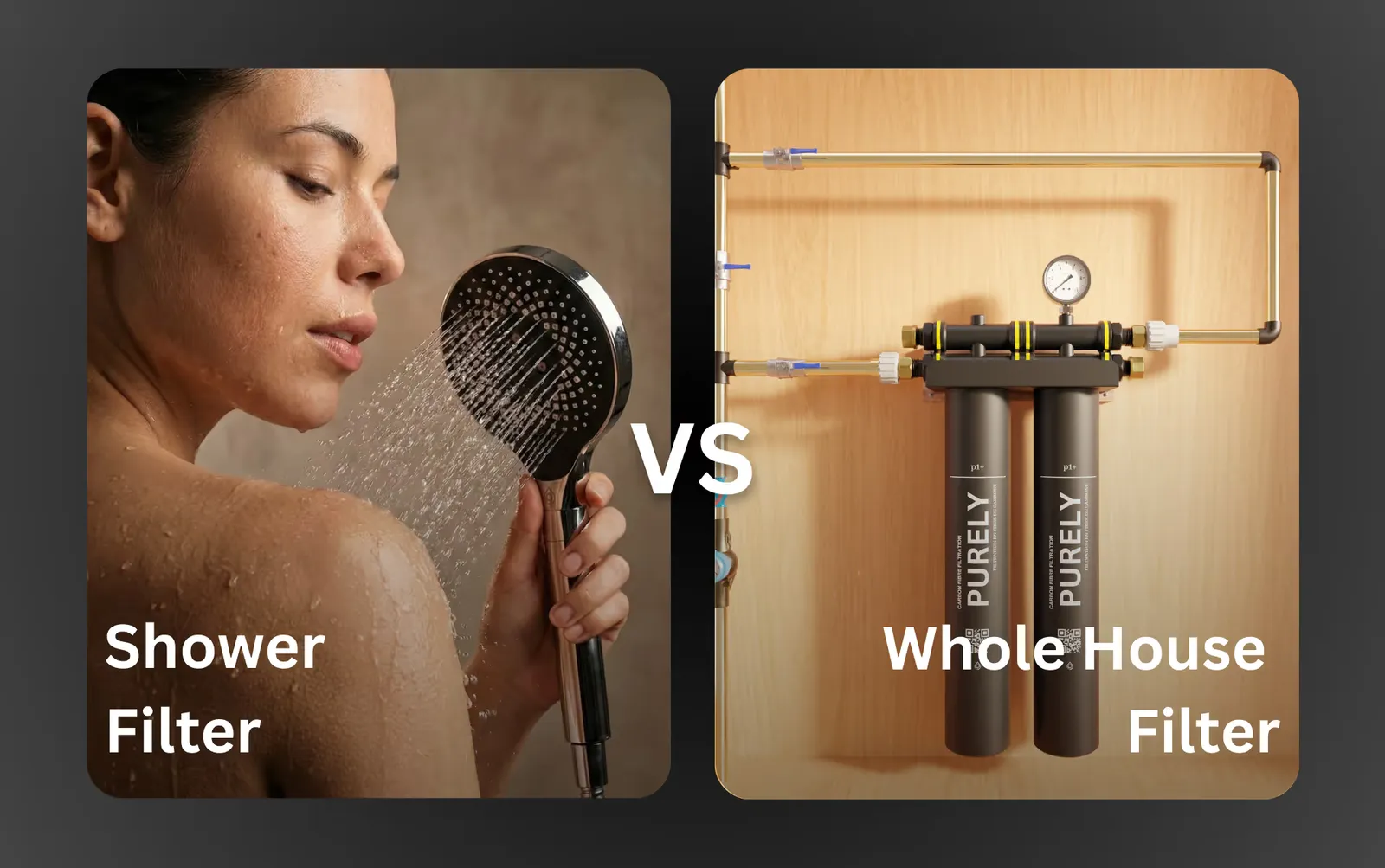
A whole-home system can make sense when the concern applies throughout the property, while point-of-use treatment can provide more focused refinement for drinking and cooking water. Hardness, sediment, chlorine, metals, nitrates, and other concerns may each require different approaches.
The best water plan comes back to three things: your water, your goals, and your budget.
Make Water Part of the Home Investment
Buying a home already gives you enough to think about. Between repairs, furniture, appliances, renovations, landscaping, and moving costs, the last thing you need is another complicated decision competing for your attention.
Purely’s goal is to make understanding your water one of the easier ones.
Our water specialists can help you review the available data for your new home, understand what may be worth testing, and make sense of the results. From there, we can help determine what solution actually makes sense for the property, so you’re not spending money on treatment you don’t need or choosing a system that doesn’t address the real issue.
And if one of our systems isn’t the right fit for your water, we’ll still point you in the right direction.
Because when you’re already making one of the biggest investments of your life, understanding the water flowing through it should give you clarity, not one more thing to worry about.
Sources
1. Health Canada. Guidelines for Canadian Drinking Water Quality: Guideline Technical Document – Lead.
2. Health Canada. Guidelines for Canadian Drinking Water Quality: Operational Parameters.
3. U.S. Environmental Protection Agency. Distribution System Water Quality: Protecting Water Quality Through Water Age Management.
4. City of Toronto. Drinking Water Analysis Summary 2025.
5. Saint Paul Regional Water Services. Plumbing Information for Homeowners: Galvanized Pipes and Corrosion.