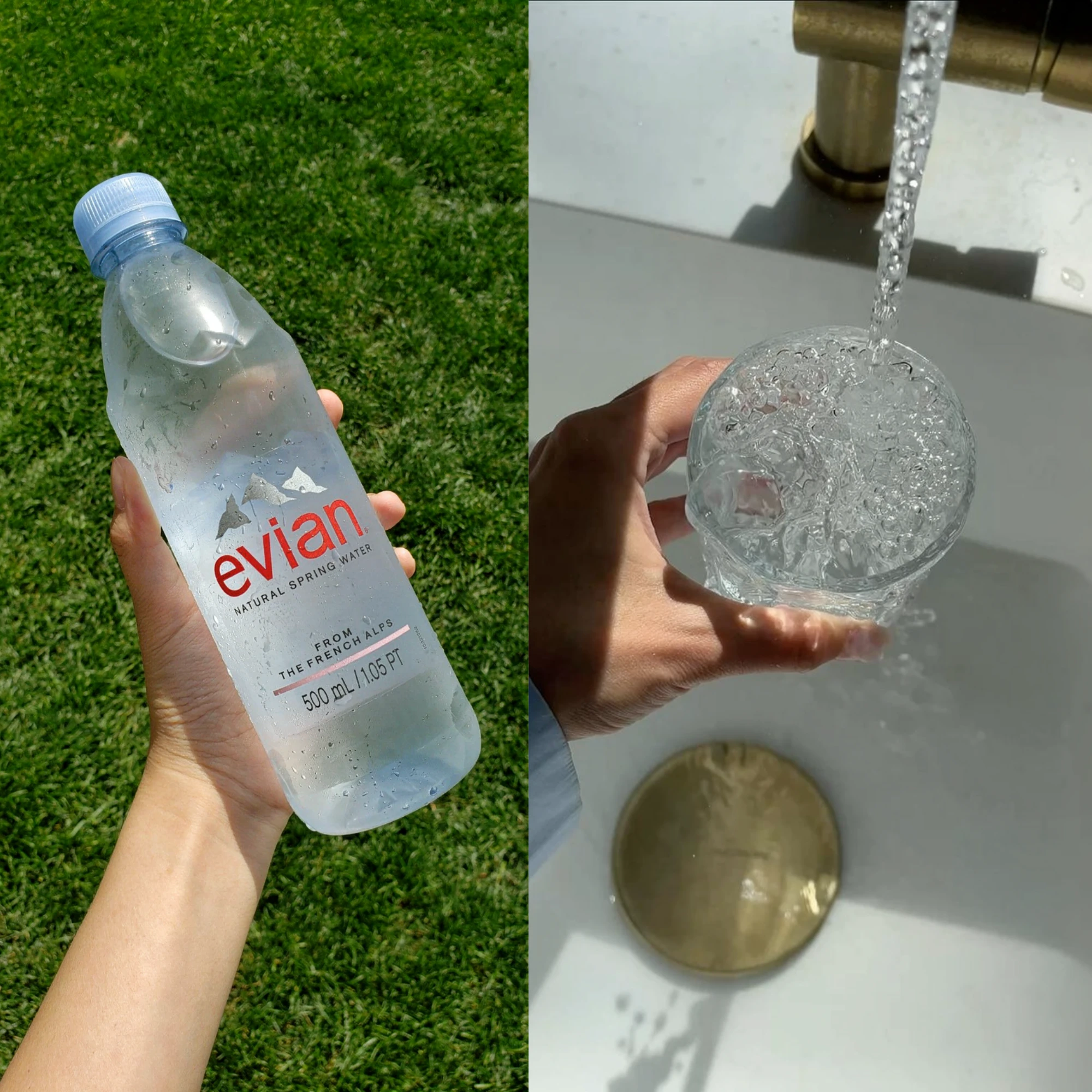
But think about what your body just went through overnight. You've gone 7 or 8 hours without a sip of anything, and you've been losing water the whole time. So when you feel groggy, the problem may not be a lack of caffeine. It may be a lack of water.
That's why drinking water in the morning can do something coffee can't. Coffee covers up tiredness for a few hours. Water helps fix one of the reasons you're tired in the first place. And as you'll see, reaching for water instead of that afternoon coffee may help you feel better the next morning, too.
Why you wake up tired and a little dehydrated
Your body keeps losing water while you sleep. It leaves every time you breathe out, and through your skin. A Cleveland Clinic doctor notes that you can sweat quite a bit overnight. That's why she tells her patients to drink at least a cup of water when they get up.
The tricky part is that you probably won't feel thirsty. Researchers at the University of Connecticut found that thirst doesn't kick in until you're already 1 to 2% dehydrated. By the time you notice it, it's already affecting how you feel.
How water helps your cells release energy
Every cell in your body runs on a molecule called ATP (adenosine triphosphate). Think of ATP as a tiny charged battery. Your mitochondria, the power plants inside your cells, charge it up using the food you eat.
A battery only helps once you use it, and that's where water comes in. To release the energy stored in ATP, a cell splits off one piece of the molecule. The tool it uses to do that is a water molecule. Biologists write it as ATP + water → ADP + phosphate + energy. This is called hydrolysis, which means "splitting with water."
So ATP is the lock that holds your energy, and water is the key that opens it. Every time a muscle moves or a brain cell fires, water is part of that reaction.
To be clear, one glass of water won't recharge your cells like plugging in a phone. Your body always keeps some water on hand for this job. But it shows how closely water and energy are linked, right down to the chemistry inside each cell.
Does coffee actually give you energy?
Not exactly. It mostly hides how tired you are.
As your cells use ATP through the day, it breaks down step by step. One of the leftovers is a molecule called adenosine. The more adenosine builds up in your brain, the sleepier you feel. While you sleep, your brain turns that adenosine back into ATP, which is why a good night's sleep leaves you feeling recharged.
Caffeine works by blocking the receptors that adenosine attaches to. It's like putting tape over a warning light on your dashboard. The light goes dark, but the problem is still there. Once the caffeine wears off, the adenosine can reach those receptors again, and the tiredness you were holding off catches up with you.
That doesn't make coffee bad. It just means coffee can't fix tiredness that comes from being low on water.
Dehydration and fatigue: how low water drains your energy
You don't have to be badly dehydrated to feel it. Two University of Connecticut studies looked at a loss of only about 1.5% of the body's normal water. In young women, it was enough to cause headaches, fatigue and trouble concentrating. In young men, the same small loss raised fatigue and tension and made memory and alertness worse.
Does dehydration shrink your brain?
Yes, a little, and only for a while. In one MRI study, 12 hours without water led to measurable drops in brain volume. About an hour of drinking reversed them. Twelve hours is roughly a night's sleep plus a busy morning without a drink.
The small change in size isn't the real concern. What matters is how hard a dehydrated brain has to work. In a study of teenagers, brain scans showed that dehydrated brains needed more effort to get the same results on a thinking task. If your brain feels like it's running in slow motion before lunch, that extra effort may be part of the reason.
Why you should drink water before coffee
In one study, 34 adults went without food or drinks overnight and took a set of tests the next morning. On the day they drank about 500 mL of water first, their reaction times were up to 14% faster. The biggest gains were in people who felt thirsty.
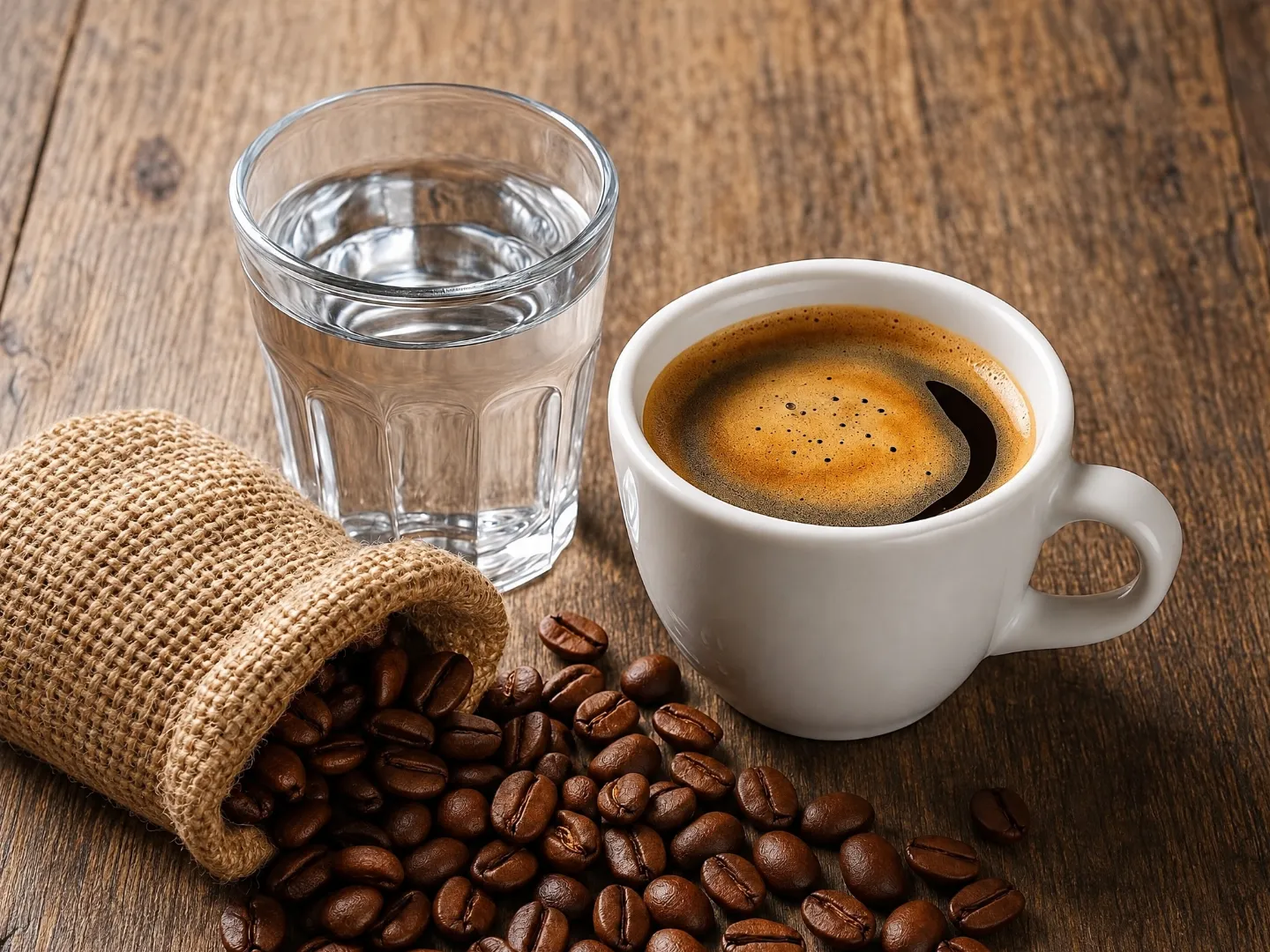
You don't have to give up your morning coffee to get that benefit. A study of 50 men who drink coffee every day found that moderate coffee hydrates about as well as water. So the goal isn't to swap one for the other. It's to give your body water first, then enjoy your coffee.
One small tip: coffee on an empty stomach is fine for most people, but it can make heartburn worse if you're prone to it. If that's you, have your coffee with breakfast.
Why water beats a mid-day coffee
The afternoon cup is where coffee really works against you. Sleep researchers at Henry Ford Hospital gave people the caffeine in about 2 to 3 cups of coffee, six hours before bed. They slept more than an hour less, and they didn't even notice.
Six hours is a 4 p.m. coffee with a 10 p.m. bedtime. And remember, sleep is when your brain clears out the adenosine that makes you tired. Cut that sleep short and you start the next day already behind, which sends you back to the coffee pot. It's a cycle.
Water doesn't have that problem. Mild dehydration can build up again during an ordinary afternoon, and researchers say it can drag down how you feel even before you're thirsty. So when the 3 p.m. slump hits, a big glass of water deals with a real cause of tiredness without stealing from tonight's sleep.
The best daily routine: water, coffee, then water
Put it together and the routine is simple:
- When you wake up: drink a big glass of water, about 500 mL, before anything else.
- With breakfast: enjoy your coffee.
- Through the afternoon: reach for water instead of a second or third coffee, especially within six hours of bedtime.
- All day: keep a full glass where you can see it, and sip before you feel thirsty. Pale yellow urine means you're drinking enough.
Why it's hard to drink enough water at home
Most people know they should drink more water. The real problem is that it's often a hassle. Bottled water means hauling heavy cases home and paying for them every week. Pitchers need refilling, so they always seem to be empty when you want a glass. And plain tap water can taste like a swimming pool, which makes it the last thing you want first thing in the morning.
When water is easy to get and tastes good, it's a lot easier to make drinking it a habit all day long. That's the whole idea behind an under sink water filter.
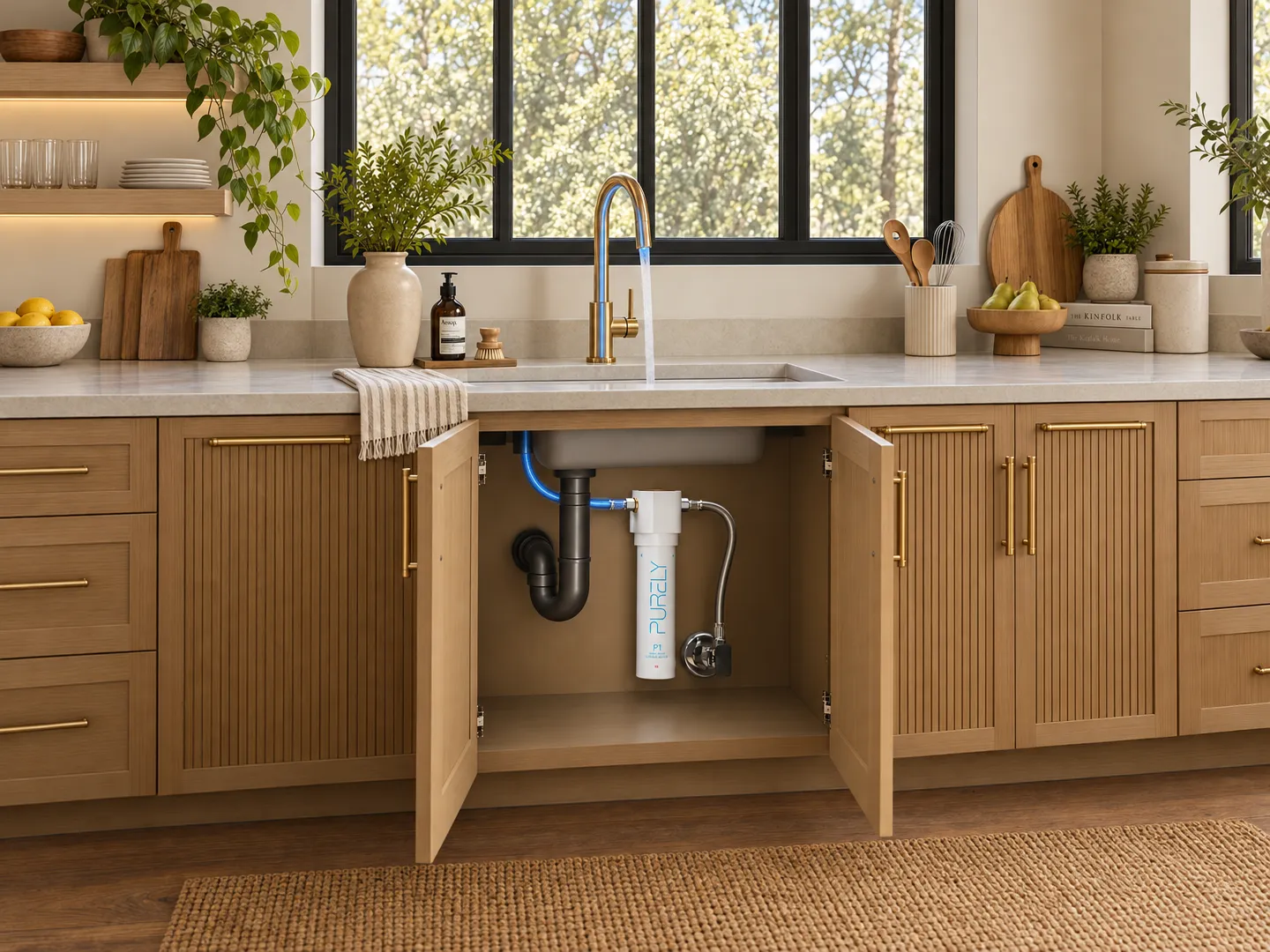
Filtered water at your kitchen tap with the Purely P1
The Purely P1 sits under your kitchen sink and sends filtered water straight to the tap you already use. There's nothing to pour, refill or carry home. You turn on the tap and fill a glass, whether it's 7 a.m. or 3 p.m.
It also makes your water taste better. In independent testing by SGS, the P1 reduced chlorine, the cause of that pool taste, by 98.1% at 10,000 litres. It also reduced lead by 98.9%. You can see every result in the P1 performance data sheet.
Your water pressure stays the same, too. Many under-sink filters pack carbon into a dense block that slows the flow. The P1 uses Nanofiber+™, a web of fine carbon fibres that water moves through easily. It's designed to have no impact on your water pressure, so your glass fills as fast as it always has. Our guide to water filter stages explains how each layer works.
Filtered water vs bottled water: the real cost
Then there's the price. Store-brand bottled water at Walmart sells for $2.87 for 24 bottles of 500 mL. That works out to about 24 cents a litre, and premium brands cost much more.
A P1 cartridge lasts up to 2 years or 21,346 litres. Even if you count the $260 cost of the whole system, that's about 1.2 cents a litre. Once you're on replacement cartridges, it drops below 1 cent.
That makes filtered water from the P1 about 20 times cheaper than the cheapest bottled water. You also skip the plastic bottles, which can shed microplastics and nanoplastics into the water you drink.
Setup takes about 10 minutes and doesn't need a plumber. The Purely app tracks your filter life and lets you know when it's time for a new cartridge. The P1 is $260, with a 30-day money-back guarantee and a 5-year warranty.
Make water the easiest drink in your house, morning to night. Explore the P1 Under-Sink →
Not sure what's in your tap? Look up your area in our water report →
Frequently asked questions
How much water should I drink in the morning?
A big glass is a good start. The study that found faster reaction times used about 500 mL.
Can drinking water give you energy?
If you're even mildly dehydrated, yes. Mild dehydration is linked to fatigue, headaches and poor focus. Water fixes the cause instead of hiding it.
What time should I stop drinking coffee?
Caffeine taken six hours before bed cut sleep by more than an hour in one study. For a 10 p.m. bedtime, that means no coffee after about 4 p.m.
Does coffee dehydrate you?
Not in moderate amounts for regular drinkers. A study of men who drank 3 to 6 cups a day found coffee hydrated about as well as water.
Why does my tap water taste like chlorine?
Cities keep a small amount of chlorine in the water so it stays safe on its way to you. A carbon filter removes the taste. Our guide to the best water filter for tap water in Montreal explains more.
Sources
- Cleveland Clinic, Why you should drink water after you wake up
- Cleveland Clinic, Is it OK to drink coffee on an empty stomach?
- UConn Today, Even Mild Dehydration Can Alter Mood
- NutraIngredients, 'Mild' dehydration may modify mood, say scientists
- Ganio et al., Mild dehydration impairs cognitive performance and mood of men, British Journal of Nutrition
- OpenStax Biology, ATP: Adenosine Triphosphate
- Sleep Foundation, Adenosine and Sleep
- Drake et al., Caffeine Effects on Sleep Taken 0, 3, or 6 Hours before Going to Bed, Journal of Clinical Sleep Medicine
- Biller et al., Responses of the Human Brain to Mild Dehydration and Rehydration, American Journal of Neuroradiology
- Kempton et al., Dehydration affects brain structure and function in healthy adolescents, Human Brain Mapping
- Frontiers, Drinking water can boost cognitive performance (Edmonds et al., 2013)
- Killer et al., No Evidence of Dehydration with Moderate Daily Coffee Intake, PLOS One
- Walmart Canada, Great Value Spring Water, 24 x 500 mL
- Purely, P1 Under-Sink product page
- Purely, P1 Performance Data Sheet