This guide sorts it out. It covers what these particles are, where they come from, how tap water compares with bottled water, and what makes a nanoplastic different from a microplastic. It also covers what the health research shows, what it doesn't, and which high-profile studies other scientists have challenged. Then it walks through the most effective ways to reduce your family's exposure through the water you drink and the air you breathe.
What are microplastics and nanoplastics?
Microplastics are pieces of plastic smaller than 5 millimetres, roughly the size of a sesame seed and down. Nanoplastics are the smallest of them: particles under 1 micrometre (one thousandth of a millimetre), the cutoff used by the International Organization for Standardization. Some agencies, such as the European Food Safety Authority, draw the nano line even lower, at 100 nanometres. Scientists are still debating the exact boundaries, but the general picture is consistent.
For scale:
- A human hair is about 70 micrometres wide.
- A 1 micrometre nanoplastic is about the size of a single bacterium, roughly one seventieth the width of that hair.
- A 100 nanometre nanoplastic is about the width of a virus.
Microplastics come in two broad types. Primary microplastics are made small on purpose or shed as tiny particles, like the microbeads Canada banned from toiletries in 2018 and the dust that wears off tires. Secondary microplastics form when larger plastic items like bottles, bags and packaging break down over time from sunlight, heat and friction. Nanoplastics mostly form as microplastics keep breaking apart.
Where do microplastics come from?
Almost everywhere plastic is used, worn or heated.
The big sources outdoors
A widely cited 2017 report by the International Union for Conservation of Nature (IUCN) looked at plastic that reaches the ocean already in particle form. It estimated that about 35% comes from washing synthetic clothing and about 28% from tires wearing down on roads. In the Americas, tires were the single largest source. In other words, two of the biggest sources are things nearly every household does every week: doing laundry and driving.
Canada isn't exempt. According to Health Canada and Environment and Climate Change Canada's science assessment of plastic pollution, about 29,000 tonnes of plastic, roughly 1% of the country's plastic waste, entered the environment in 2016 alone. Because plastic breaks down so slowly, the amount in the environment keeps building.
The sources inside your home
Indoors, the main sources are the things we live with:
- Synthetic textiles. Carpets, upholstery, curtains, bedding and clothing made of polyester, nylon and acrylic shed fibres into the air and dust.
- Food and drink packaging. Bottles, caps, wraps and containers release particles, especially with heat, wear or repeated use.
- Heated plastics. Kettles, baby bottles and food containers made of polypropylene release far more particles when they're hot (more on this below).
- Tea bags. In a 2019 study, McGill University researchers tested premium "silken" plastic tea bags bought in Montreal stores. A single bag steeped at 95°C released about 11.6 billion microplastics and 3.1 billion nanoplastics into the cup. The Tea and Herbal Association of Canada says most tea bags sold here are paper, but it's a striking example of how heat and plastic combine.
How many microplastics are in tap water vs bottled water?
This is where the numbers vary the most, and understanding why matters. Here are the three most important studies comparing the two.
| Study | What it measured | Key finding |
|---|---|---|
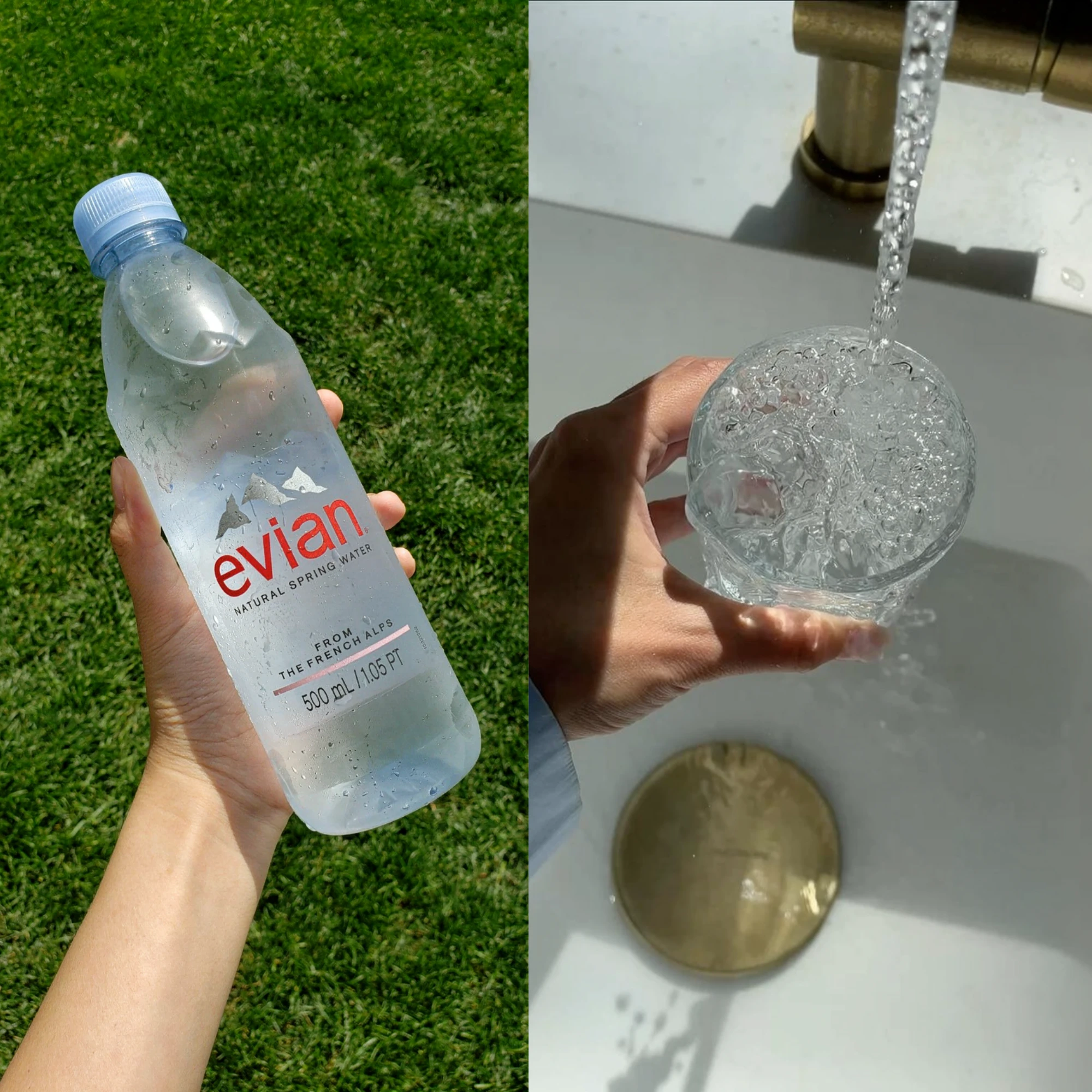
| University of Victoria, 2019 | A review of 26 earlier studies on microplastics in food, water and air | People who drink only bottled water may take in about 90,000 extra microplastic particles a year, compared with about 4,000 for people who drink only tap water |
| Columbia and Rutgers, 2024 | Three bottled water brands, using a laser imaging method that detects particles down to about 100 nanometres | About 240,000 plastic particles per litre on average, about 90% of them nanoplastics |
| Ohio State, 2026 | Treated water from four plants on Lake Erie and six bottled water brands, including nanoplastics | Bottled water had about three times as many nanoplastics as treated tap water; in both, more than half of all particles were nanoplastics |
Why the numbers don't agree
The answer is mostly about what each study could see. Older methods couldn't detect the smallest particles, so they counted only part of what was there. The Ohio State team concluded that earlier studies had underestimated particle counts in both tap and bottled water because they left nanoplastics out. Canada's federal assessment and the World Health Organization have both pointed to the lack of standardized testing methods as a major gap.
The 240,000 figure also deserves a caveat. After it was published, other researchers argued in the same journal that the lab's control samples of ultra-pure water showed plastic levels similar to the bottled water. They said that made the exact counts unreliable. The original authors also reported that only about 10% of the particles they imaged matched the seven plastics in their reference library. So the exact number is uncertain.
What the evidence agrees on
Strip away the disputed numbers and a consistent picture remains:
- Bottled water is not the cleaner choice. Every major comparison has found as many or more plastic particles in bottled water than in treated tap water. The Ohio State team traced most of the plastic in bottled water to its packaging.
- Tap water isn't plastic-free either. Treatment plants are expected to remove a large share of microplastics, but Canada's assessment notes that some tap water studies have still found them. The source of the particles that reach the tap is still being studied.
- Nanoplastics make up most of the count. Wherever researchers have been able to look for them, the smallest particles turn out to be the most numerous.
Microplastics vs nanoplastics: why size changes everything
A nanoplastic isn't just a smaller microplastic. Shrinking a particle changes how it behaves, where it can go and how hard it is to study.
They're much harder to detect. Many standard lab methods can't reliably identify particles smaller than about 10 micrometres. Only in the last few years have techniques become sensitive enough to count nanoplastics in water at all, which is why the evidence on them is so new.
They may travel further in the body. According to the WHO, microplastics larger than 150 micrometres are unlikely to be absorbed by the body, and uptake of smaller ones is expected to be limited. Nanoplastics may be absorbed and spread more easily, but the data is still very limited.
They have far more surface area. Break one particle into a thousand smaller ones and the total surface exposed to water and tissue multiplies. That matters because of a study published in Nature in October 2026. Researchers at Columbia University and UC Berkeley found that microplastic surfaces spontaneously generate reactive oxygen species in water, unstable molecules known to damage cells. In lab tests, those reactions damaged red blood cells. It's laboratory work, not proof of harm in people, but it suggests a mechanism: plastic may not be as chemically inert as long assumed.
They stay suspended. Larger particles eventually settle out of water or air. Nanoplastics behave more like a colloid, staying dispersed rather than sinking, which makes them harder to remove.
| Microplastics | Nanoplastics | |
|---|---|---|
| Size | 1 micrometre to 5 millimetres | Under 1 micrometre (some definitions: under 100 nanometres) |
| Comparable to | A sesame seed down to a bacterium | Smaller than a bacterium, down to a virus and below |
| Can you see them? | The largest, barely | No, not even with a standard microscope |
| How well studied | Studied for about 20 years | Reliable counts only in recent years |
| Movement in the body | Larger ones mostly pass through the gut | May be absorbed more easily; data is limited |
| Share of particles in drinking water | Minority | Majority, in studies able to detect them |
Should homeowners be concerned about microplastics?
Honest answer: you should take them seriously, but not panic. Here's how the evidence breaks down.
What's well established
- Exposure is universal. Health Canada says people in Canada may be exposed to microplastics through food, bottled water, tap water and indoor and outdoor air.
- Regulators are moving. In 2021, Ottawa listed "plastic manufactured items" as toxic under the Canadian Environmental Protection Act. That listing was based mainly on harm to the environment, not a finding about human health. It was struck down in 2023, then restored by the Federal Court of Appeal in January 2026. As of spring 2026, the industry group behind the challenge had asked the Supreme Court of Canada to hear an appeal. In April 2026, the US Environmental Protection Agency added microplastics to its draft list of drinking water contaminants that may warrant future regulation, the first time it has done so. Listing doesn't create a legal limit, but it signals the issue has moved beyond the fringe.
- There's no Canadian drinking water limit. Canada has no guideline for microplastics in drinking water, so they aren't part of the routine testing behind your city's water quality report.
What the strongest health studies suggest
Two human studies drew the most attention:
- Heart health. In a 2024 study in the New England Journal of Medicine, Italian researchers examined plaque removed from the neck arteries of 257 patients. Those whose plaque contained micro or nanoplastics were about 4.5 times more likely to have a heart attack or stroke, or to die from any cause, over the next three years or so, than those whose plaque didn't.
- Brain health. A 2025 study in Nature Medicine found concentrations in brain tissue 7 to 30 times higher than in liver or kidney. Samples from 2024 had about 50% more than samples from 2016, and levels were higher in people who'd had dementia.
Neither study proves plastic caused the harm. Both found associations. The brain researchers themselves noted that dementia damages the brain's protective barriers and clearance systems, which could let more particles build up, rather than the other way around.
Where the science is genuinely contested
This part is often left out, and it matters if you want an accurate picture.
In January 2026, The Guardian reported that several scientists believe some of the most publicized findings of plastic in human tissue may reflect contamination and false positives. The core issue is technical. A common test identifies plastic by heating a sample and analyzing what comes off, and some fats produce a signal that looks very much like polyethylene. The brain is about 60% fat. A group of researchers published a formal critique of the brain study in Nature Medicine, citing limited contamination controls and missing validation steps. The artery study was also criticized for not testing blank samples from the operating room.
The study authors defended their work, and many other researchers said the criticism was overstated. What no one disputes is that people are exposed to micro and nanoplastics and that these particles enter the body. The open questions are how much accumulates, where, and what it does.
The credit card myth
You may have seen the claim that we each eat a credit card's worth of plastic every week, about 5 grams. Later peer-reviewed work found that estimate was off by several orders of magnitude. One more careful estimate put the typical adult's intake at about 4 micrograms a week, more than a million times less. At that rate, it would take thousands of years to eat a credit card's worth. The real concern isn't the weight of plastic we swallow. It's the number of particles, especially the smallest ones, and what they might do once inside.
The bottom line: precaution, not panic
The WHO's 2022 review concluded that the limited data showed little evidence of harm in humans, but still recommended taking steps to reduce exposure. We agree with that framing, for four reasons:
- Exposure happens every day, for life. Even small effects can add up over decades.
- The warning signs come from several directions. Human studies, animal research and new lab work on how plastic surfaces react are each imperfect, but they point the same way.
- Children may be more exposed. Trinity College Dublin researchers found that polypropylene baby bottles released as many as 16.2 million microplastics per litre during formula preparation, with hot water and sterilization driving the highest releases.
- Reducing exposure is easy and has no downside. Many of the most effective steps cost little or nothing.
Regulators tend to set limits only after the science is settled, and that can take decades. You don't have to wait for a limit to decide that less plastic in your family's water and air is better.
How to reduce microplastics in your drinking water
1. Stop relying on bottled water
This is the single simplest change. Every major comparison has found bottled water to be as bad or worse than treated tap water for plastic particles, and the bottle itself appears to be a major source. Filtering your own tap water can do more for you, with far less plastic waste.
2. Filter at the tap, and choose the filter carefully
Not all filters are equal, and some make things worse. Look for these three things:
- Published data for microplastic reduction. Many common filters make no microplastic claim at all. In one round of testing, a popular pitcher filter actually increased microplastics in the water by more than 1,200%. Our guide to fridge water filters covers similar gaps.
- Media that doesn't shed. Filters are often made of plastic themselves. The Columbia bottled water researchers suspected that some of the plastic they found came from the reverse osmosis membranes used to purify the water. One co-author pointed out that filters themselves can introduce plastic.
- On-time replacement. A filter is only as good as its last cartridge change. An overloaded filter catches less, and its flow slows until people give up and use the tap.
3. Know the boiling trick, and its limits
In a 2024 study, researchers in China found that boiling tap water for five minutes and then filtering it removed a large share of micro and nanoplastics. As hard water boils, its minerals form the chalky scale you see in a kettle, and that scale traps plastic particles. The harder the water, the better it works: about 34% removal at a hardness of 80 mg/L, 84% at 180 mg/L and up to 90% at 300 mg/L. In soft water, it was closer to 25%.
Montreal's water averaged about 123 mg/L of hardness in the city's 2022 report, so boiling would likely remove somewhere between those first two figures. You'd then pour the water through a fine mesh or coffee filter to catch the scale. It's a useful trick for tea and cooking, but it's not a whole-home solution, and it does nothing for lead or PFAS. Boiling doesn't remove either one, as we explain in our guide to fluoride, lead and PFAS.
4. Take the heat away from plastic
Heat is the common thread in the highest exposures researchers have found. A few easy swaps:
- Use a glass or stainless steel kettle. The Trinity College team found polypropylene kettles release microplastics at levels similar to baby bottles.
- Mix formula in a glass container and let it cool before it goes into a plastic bottle, or use glass bottles.
- Don't microwave food in plastic containers. Heat it in glass or ceramic instead.
- Choose loose leaf tea or paper tea bags over "silken" plastic ones.
How to reduce microplastics in your indoor air
Water gets the attention, but air may be the bigger exposure. In a 2025 study, researchers at the University of Toulouse measured an average of 528 microplastic particles per cubic metre of air in apartments and 2,238 inside cars. More than 90% were smaller than 10 micrometres, small enough to reach deep into the lungs. Combined with earlier data, they estimated adults may inhale about 68,000 of these fine particles a day, roughly 100 times previous estimates. It was a small study of 16 air samples, but it points to indoor air as an exposure route that had been badly underestimated.
1. Run a true HEPA air purifier where you sleep
True HEPA filters are built to capture at least 99.97% of particles at 0.3 micrometres, the size that's hardest to trap, and they're even more efficient at larger and smaller sizes. That puts most airborne microplastics well within their range. In a small 2024 office study in Malaysia, running air purifiers cut microplastic counts by about 35% on average. For the best results, size the purifier to the room and run it continuously, especially in bedrooms.
2. Clean so particles don't get kicked back up
Microplastics settle into household dust, and everyday activity stirs them back into the air. Vacuum with a HEPA-filtered vacuum and dust with a damp cloth instead of a dry one.
3. Upgrade your furnace filter
If you have forced air heating or cooling, a higher-efficiency furnace filter captures more fine particles every time the system runs. Check what your system can handle before upgrading, since very dense filters can restrict airflow.
4. Choose natural fibres where you can
Synthetic textiles are one of the largest sources of indoor microplastics. When you replace bedding, rugs, throws or curtains, cotton, linen and wool shed no plastic.
5. Don't forget the car
Car cabins had the highest concentrations in the Toulouse study. Replace your cabin air filter on schedule and let fresh air in when outdoor air quality is good.
Microplastic exposure at a glance
| Source | How it reaches you | Simplest fix | Strength of evidence |
|---|---|---|---|
| Bottled water | Drinking | Switch to filtered tap water | Strong and consistent |
| Heated plastics (kettles, bottles, containers) | Drinking and eating | Heat in glass, ceramic or steel | Strong in lab testing |
| Plastic tea bags | Drinking | Loose leaf or paper bags | Strong in lab testing |
| Tap water | Drinking and cooking | A filter with published microplastic data | Moderate; counts vary by method |
| Indoor air and dust | Breathing | HEPA purifier, HEPA vacuum, damp dusting | Moderate; newer research |
| Car cabin air | Breathing | Cabin filter, ventilation | Early; one key study |
Where Purely fits: filtered water at your kitchen tap
Your kitchen tap is where most of your drinking and cooking water comes from. It's where filtration makes the biggest daily difference.
Purely's P1 Under-Sink System is built around NanoFiber™ Media. Instead of the loose granules or compressed block found in most filters, it uses activated carbon fibres enhanced through oxygen infusion. Water moves through four stages:
- Sediment pre-filter catches rust, sand and larger particles first.
- NanoFiber™ Media reduces microplastics along with chlorine, chlorination byproducts, VOCs, heavy metals including lead, PFAS and pharmaceuticals.
- Silver-Core™ is designed to prevent bacterial growth inside the filter.
- Activated Alumina targets fluoride and arsenic.
Altogether, the P1 is designed to reduce up to 99% of 100+ common tap water contaminants while keeping naturally occurring minerals in your water. The Purely app tracks usage in real time and tells you when a cartridge is due, so you're never relying on a saturated filter without knowing it. It installs in under 10 minutes with no plumber and is backed by a 30-day money-back guarantee and a 5-year warranty.
Coming next: Nanofiber+™ and your daily microplastic exposure
Nanoplastics are the hardest part of this problem, and they deserve their own deep dive. In our next guide, we'll explain how Nanofiber+™ technology works at the fibre level, why fibre-based media behaves differently from the granular carbon in most filters, and what that means for reducing your microplastic exposure every single day at your kitchen tap.
Frequently asked questions
What is the difference between microplastics and nanoplastics?
Size. Microplastics are plastic particles smaller than 5 millimetres. Nanoplastics are smaller than 1 micrometre, too small to see even with a standard microscope. Their tiny size means they may move through the body more easily, they have far more surface area, and they're much harder to measure.
Is tap water or bottled water better for avoiding microplastics?
Tap water. Every major comparison has found as many or more plastic particles in bottled water than in treated tap water, and much of the plastic in bottled water appears to come from the packaging. Filtering your tap water reduces exposure further.
Are microplastics harmful to humans?
It hasn't been proven. Studies have linked micro and nanoplastics in human tissue to heart attacks, strokes and dementia, but those are associations, and some findings have been challenged over possible contamination. The WHO says the evidence of harm in humans is limited but still recommends reducing exposure.
Does boiling water remove microplastics?
Partly. A 2024 study found that boiling tap water and then filtering it removed up to 90% of micro and nanoplastics in hard water, but only about 25% in soft water. Boiling does not remove lead or PFAS.
Do water filters remove microplastics?
Some do, and some don't. Many common filters make no microplastic claim, and at least one pitcher filter has been shown to add plastic to water. Look for published reduction data, media that doesn't shed and a filter you'll actually replace on schedule.
Do air purifiers remove microplastics?
True HEPA purifiers capture particles in the size range of most airborne microplastics, and early research shows they reduce indoor counts. Run one continuously in the rooms where you spend the most time, especially bedrooms.
Does Canada regulate microplastics in drinking water?
Not yet. There's no Canadian drinking water guideline for microplastics, so they aren't part of routine municipal testing. Ottawa has listed plastic manufactured items as toxic under federal environmental law, and the US EPA added microplastics to its draft list of drinking water contaminants under consideration in 2026.
Optimal, not just acceptable
There's no legal limit for microplastics in Canadian drinking water, and there may not be one for years. That doesn't make them acceptable. It makes them unregulated. You don't exercise only because inactivity is illegal, and your water deserves the same standard: not just acceptable, but optimal.
Filtered water at your kitchen tap, for up to 2 years per cartridge:
Explore the P1 Under-Sink System →
Want to know what else is in your water?