This guide covers what chlorine actually does in the shower, where the evidence is strong and where it's still thin, and what tends to change once you filter it out.
Why there's chlorine in your shower
Almost every municipal system in Canada disinfects with chlorine and keeps a small amount, called a residual, in the pipes so bacteria can't regrow on the way to your tap. According to Health Canada, free chlorine in most Canadian distribution systems sits between 0.04 and 2.0 mg/L.
To be clear, this is a public health success. Health Canada considers chlorine at these levels low in toxicity, and it doesn't require removing it for water to be safe to drink.
But chlorine is an oxidizer. The same chemistry that lets it destroy bacteria also lets it react with the proteins and oils that make up your skin and hair. Safe to drink and ideal to bathe in are two different standards.
What chlorine does to your skin
Your skin's outer layer, the stratum corneum, works like a brick wall: tough cells held together by a mortar of natural oils. That barrier keeps water in and irritants out. When it's weakened, skin feels tight after a shower, flakes, itches and loses moisture faster.
Chlorine's effect on that barrier is best documented in people who already have reactive skin. Dermatologists in Japan studied free chlorine in bathing water and found it reduced the skin's ability to hold water in people with atopic dermatitis (eczema). Eczema-prone skin also reacted at lower chlorine levels than healthy skin did.
The bigger picture is more nuanced. A UK study of 1,303 infants found a clear link between hard water and eczema, while the researchers described chlorine's role as still uncertain. Hot water and harsh cleansers also strip the skin barrier on their own.
So here's the fair takeaway. Chlorine isn't the only thing drying out your skin, but it's one of the few factors in your shower you can remove completely. If your skin is dry, sensitive or eczema-prone, it's a sensible place to start.
Your scalp is skin too
It's easy to think of hair and skin separately, but your scalp is skin with the same barrier, plus a dense layer of oil glands. Those natural oils protect both the scalp and the hair that grows from it. Washing with warm, chlorinated water every day adds one more oxidizer to a routine that already includes shampoo and heat.
A filter won't cure dandruff, and it isn't a treatment for hair loss. But if your scalp feels tight or itchy after washing, changing what you rinse it with is an easy first step. If symptoms stick around, see a dermatologist.
What chlorine does to your hair
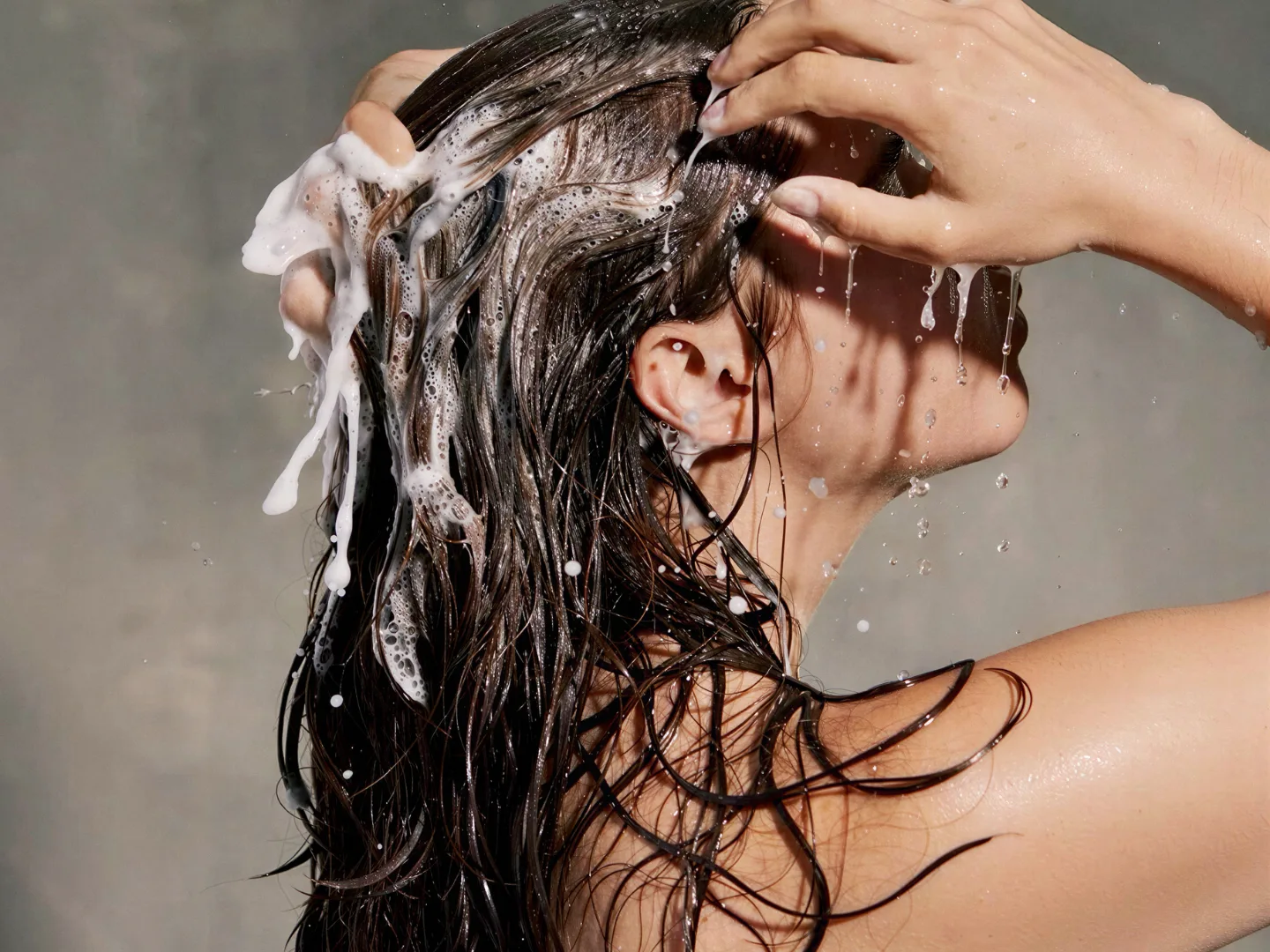
Hair is mostly keratin, a protein held together by strong sulphur bonds. Those bonds give each strand its strength and shape. A review of how chlorine reacts with keratin found that cystine, the amino acid that forms those bonds, is one of chlorine's most vulnerable targets.
The clearest real-world evidence comes from swimmers. When researchers examined 67 elite swimmers from Japan's national team, 61% had hair discolouration, compared with none of the 54 people in the control group. Under the microscope, the discoloured hair had lost its cuticle, the protective outer layer, and chlorine was found inside the hair's inner core. The researchers linked the damage mainly to water wearing down the cuticle, with chlorine able to penetrate deeper once it did.
Pool water carries more chlorine than tap water, and a shower is shorter than a training session. The point isn't that your shower is a swimming pool. It's that the same chemistry happens at a lower dose, in hot water, every day, for years. Water swells the hair and lifts the cuticle, which gives chlorine an easier way in. Over time, that can show up as roughness, frizz, tangles and hair that won't hold its shine.
What chlorine does to hair colour
Colour-treated hair is more vulnerable than untreated hair for a simple reason. Bleaching and colouring open the cuticle to get pigment in, which leaves each strand more porous. A more porous strand absorbs more of whatever it's rinsed in.
Chlorine breaks down colour molecules through oxidation. In a pool, that happens fast. In the shower, it happens slowly, but it adds up wash after wash: toner fades sooner, brunettes lose depth and shine, and blondes drift warm or brassy as the cool tones wash out.
If you invest in regular colour appointments, your shower water may be quietly working against that investment between visits.
What about green hair?
Chlorine usually gets the blame when blonde hair turns green, but the green actually comes from copper. It can reach hair through tap water flowing through copper plumbing or from pool algaecides. It's rare, but it's a good reminder that what runs through your pipes can end up in your hair.
The benefits that show up once chlorine is gone
Here's what people most often notice after switching to filtered shower water. Results depend on your water, your skin and your routine, so think of these as likely, not guaranteed.
Skin that stays comfortable longer
Less tightness right after the shower, less flaking, and moisturizer that seems to go further. The difference tends to be most noticeable for dry, sensitive or eczema-prone skin, which lines up with where the research is strongest.
Softer, more manageable hair
With less oxidation at the cuticle, hair often feels smoother, detangles more easily and holds its shine. Many people find they can ease off heavy masks and conditioners.
Colour that lasts between appointments
Toner and gloss hold longer, and colour fades more evenly. For blondes, that usually means less brassiness creeping in before the next visit.
Cleaner steam with fewer chlorine byproducts
This is the benefit almost nobody expects. When chlorine reacts with natural organic matter in water, it forms disinfection byproducts called trihalomethanes (THMs). The main one is chloroform. THMs evaporate easily, especially from hot water, and they can pass through skin.
Health Canada cites research suggesting a 10-minute warm shower can deliver about the same chloroform dose as drinking 2.7 L of the same water, with roughly 30% of it absorbed through the skin. It also notes that chloroform levels can climb further inside household hot water tanks.
In Montreal, the city's 2022 report for the network served by the Atwater and Charles-J.-Des Baillets plants showed an annual THM average of about 51 µg/L. That's under Quebec's limit of 80 µg/L. It's also not zero. To see the THM levels reported for your area, check Purely's Water Report. (Curious about drinking water specifically? Our guide on fluoride, lead and PFAS covers it.)
A shower that smells like nothing
No pool smell on your skin or lingering in the bathroom after a hot shower. It's a small change, but you notice it every single day.
What a shower filter won't do
Being clear about limits is part of choosing well.
- It won't soften hard water. Carbon-based filters target chlorine and chemical contaminants, not calcium and magnesium. Montreal's water averaged about 123 mg/L of hardness in 2022, which is moderately hard. Hard water has its own, separate link to dry skin and eczema.
- It won't replace good habits. Lukewarm water, shorter showers, a gentle cleanser and moisturizer applied within a few minutes of drying off all protect your skin barrier too.
- It only works while the cartridge does. An exhausted filter is just a fitting. Replace it on schedule. Purely's app tracks capacity in real time and reminds you when it's time.
Chlorine in your shower at a glance
| Area | What chlorine does | What tends to change when it's filtered |
|---|---|---|
| Skin | Can reduce the skin barrier's ability to hold water, especially in eczema-prone skin | Less tightness and dryness after showering |
| Scalp | Adds an oxidizer to daily washing, on top of heat and shampoo | A calmer, less tight-feeling scalp for many people |
| Hair | Reacts with keratin's sulphur bonds and can reach the inner core once the cuticle wears | Smoother, softer hair that holds its shine |
| Colour | Breaks down colour molecules, especially in porous, colour-treated hair | Toner and colour last longer between appointments |
| Air | Forms THMs like chloroform that evaporate into hot steam | Fewer byproducts in the steam you breathe |
Shower filter or whole-home system?
Both remove chlorine before it reaches you. The difference is how much of your home they cover.
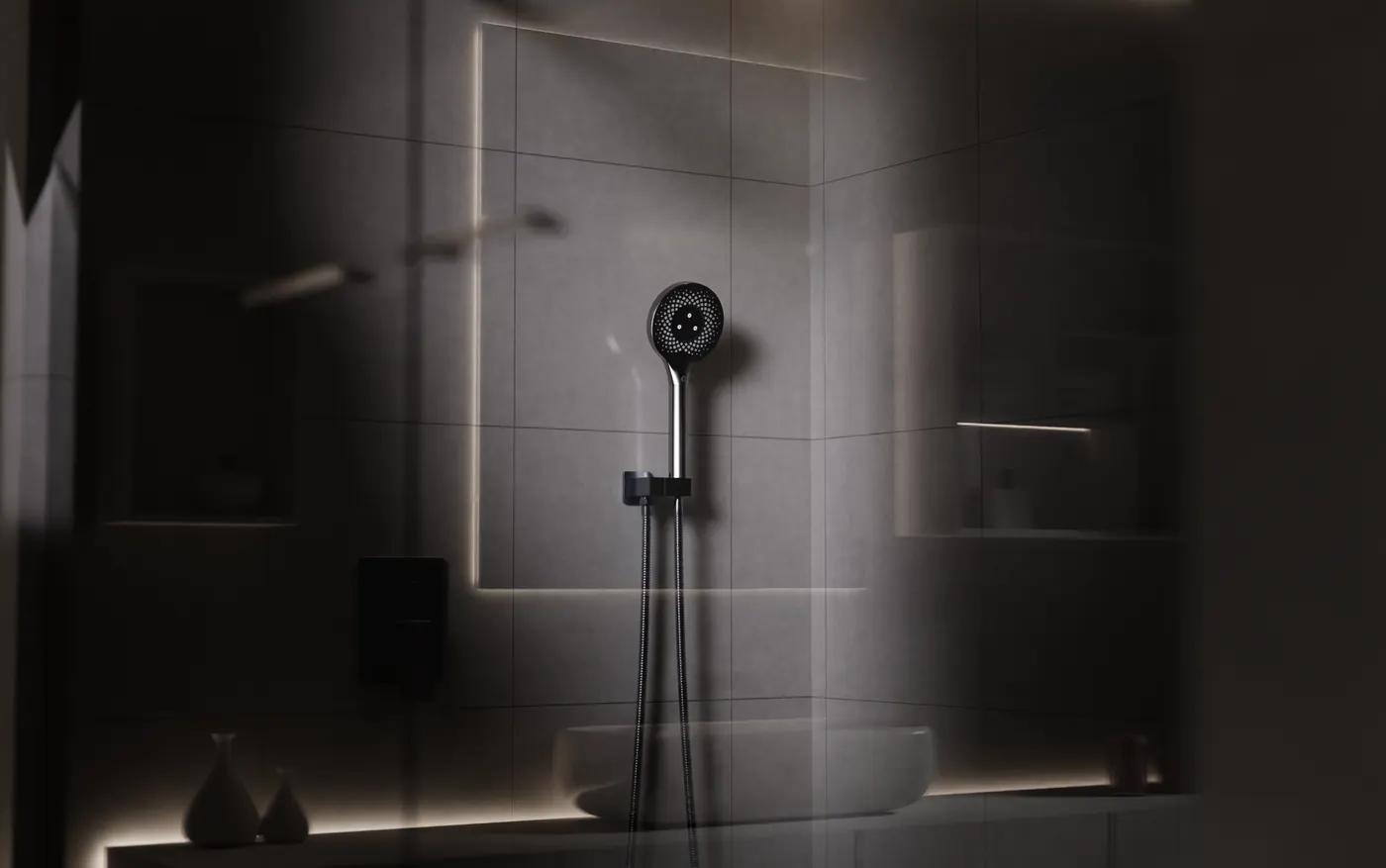
A filtered shower handle suits renters, condo owners, homes with one main bathroom, or anyone who wants to try filtered shower water first. The S1 Shower-Handle connects to your existing shower hose in minutes, with no tools. It uses NanoFiber™ media, keeps full water pressure, helps reduce chlorine, lead, PFAS and VOCs, and lasts up to 12 months for one to two people.
A whole-home system suits families and homes with several bathrooms. The P1+ 2-Stage Defender is installed at your main water line, so every shower, bath, sink and tap gets filtered water. That covers kids' baths, washing your face at the vanity, laundry (chlorine fades fabrics too) and the water you cook with. It's sized for homes of 3 to 4 people, preserves naturally occurring minerals like calcium and magnesium, goes up to 2 years between cartridge replacements and comes with a 5-year warranty. It also includes the P1 Under-Sink System for extra filtration at your main drinking water tap.
| S1 Shower-Handle | P1+ 2-Stage Defender | |
|---|---|---|
| Covers | One shower | Every shower, bath, sink and tap |
| Installation | Tool-free, in minutes | Licensed plumber, usually 90 minutes to 2 hours |
| Best for | Renters, condos, a first step | Families in homes of 3 to 4 |
| Cartridge life | Up to 12 months for 1 to 2 people | Up to 2 years |
| Warranty | 1 year | 5 years |
| Price | From $169 | $1,695 |
Frequently asked questions
Do shower filters actually work?
A good one reliably reduces chlorine, which is the main reason most people buy one. How much you notice depends on your water and your skin. People with dry skin, sensitive skin or colour-treated hair tend to notice the most. Look for published test data and replace the cartridge on schedule.
Can a shower filter help with eczema?
It isn't a treatment. But research shows chlorine in bathing water can reduce how well eczema-prone skin holds water, so removing it is a reasonable step alongside the care plan from your doctor or dermatologist.
Does Montreal tap water contain chlorine?
Yes. Like most Canadian cities, Montreal keeps a chlorine residual in its pipes to protect water on the way to your tap. That's also why its water contains THMs, which form when chlorine reacts with natural organic matter.
Is it safe to remove chlorine from shower water?
Yes. A shower filter removes chlorine at the last moment, right before the water reaches you. With a whole-home system, water past the filter no longer carries a disinfectant residual, which is why professional installation and on-time cartridge changes matter. After a long trip, run your taps for a minute before use.
Does a shower filter soften hard water?
No. Carbon-based shower filters target chlorine and chemical contaminants, not calcium and magnesium. If hardness is your main concern, treat it as a separate decision.
How often should I replace my shower filter cartridge?
Follow the manufacturer's rating. The S1 is rated for up to 45,000 L, or about 12 months for one to two people, and the Purely app tracks capacity so you know when it's time.
Upgrade the water you shower in
You already think carefully about the products you put on your skin and hair. The water you rinse them off with deserves the same standard: not just acceptable, but optimal.
For every shower and tap in your home:
Explore the P1+ 2-Stage Defender whole-home system →
For an easy, budget-friendly first step:
Get the S1 Shower-Handle →